
September 2026 is going to be an exciting month for people who love looking at the night sky.
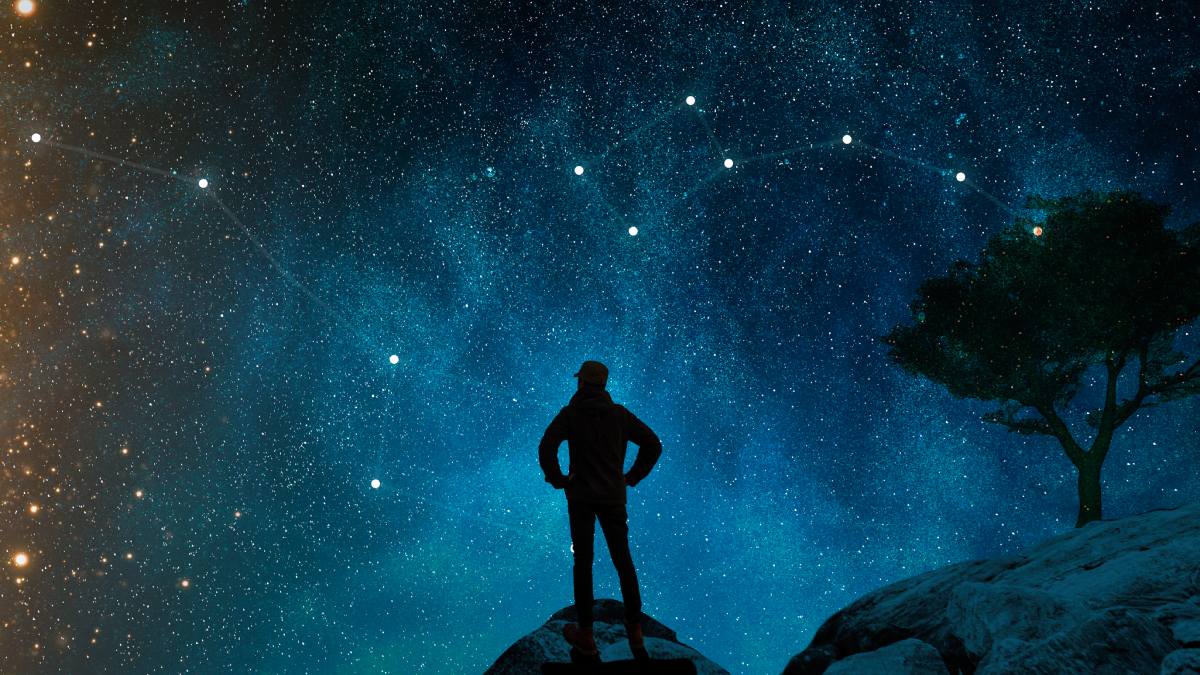
The month has many celestial events to put on your calendar from bright Venus to the Harvest Moon. Some of these events can be seen without special equipment and others are best seen with binoculars or a telescope.
These events can also be an attractive excuse for astro-travellers to leave crowded cities and go to areas with darker skies. Less artificial light can help in the night sky seeing stars, planets and other things that you can’t see from space.
Related Articles

The September skywatching guide of NASA has several events in mind, including Venus at peak brightness, the September equinox, and the Harvest Moon around Saturn and Neptune.
6 Celestial Events To Watch In September
1. Moon And Mars Come Close On September 6
We start the month with the Moon and Mars getting very close.
On September 6, the waning crescent Moon will appear close to Mars in the morning sky. The two objects will be visible near the constellation Gemini.
Related Articles
This is a relatively easy event to enjoy because the Moon and Mars alike are bright enough to stand out in the sky.
If you are planning a visit for stargazing, choose a place away from bright city lights. The eastern sky will be the best place to see the pair.
2. Moon And Jupiter Meet On September 8
The Moon will have another planetary meeting on September 8, this time with Jupiter.
The two will appear close together in the early morning sky. In some places of the world, the Moon will even pass in front of Jupiter in an event called a lunar occultation.
The exact visibility of the occultation depends on your location. Even in the absence of the occultation, the Moon and Jupiter appearing close together can still be quite a beautiful skywatching scene.
3. Moon and Venus on September 14
Venus is one of the brightest objects in the night sky, and September offers several good opportunities to spot it.
On September 14, the Moon and Venus will appear close together. Venus will also be visible from some parts of the world in the lunar occultation.
This could be one of the more photogenic events of the month, especially for travellers who like astrophotography.
So take a look up at the western sky after sunset and find a place with a clear horizon.
4. Venus At Its Brightest Around September 18
Venus will be another major highlight in September.
NASA says Venus will reach peak brilliance on the evening of September 18. It will appear as a very bright point low in the western sky shortly after sunset.
You do not need a telescope to enjoy this sight. A clear western horizon and a location away from strong artificial lights should be enough.
For photographers, this is also a good opportunity to capture Venus above a landscape or city skyline.
5. September Equinox: September 23
The September equinox will take place on September 23.
During an equinox, the Sun crosses the celestial equator. It is the beginning of autumn in the Northern Hemisphere and spring in the Southern Hemisphere.
The equinox is not necessarily a dramatic visual event like a meteor shower or eclipse. However, it is an important astronomical event and can be a great time to plan a nature-focused trip.
It also marks a seasonal change that affects daylight hours around the world.
6. Harvest Moon Near Saturn And Neptune On September 26
The biggest skywatching highlight towards the end of the month will be the Harvest Moon.
On September 26, the full Harvest Moon will rise near Saturn and Neptune. NASA says Saturn will be visible with the naked eye, while Neptune will be much harder to see and require binoculars or a telescope.
The bright Moon will bring out the scene most easily, but its light will make fainter objects hard to see.
For the best view, one should look at an open eastern horizon. A beach, hilltop, desert, or countryside location away from major city lights can be a better place to be.
Best Places For Astro-Travellers
You don’t necessarily need to go to a famous observatory to enjoy these events. And the most important thing is to find a place with dark skies and a clear view of the horizon.
National parks, remote villages, mountains, beaches, and desert areas may all be good options.
If you are going to be heading to stargazing for a long time, check the weather forecast before you leave. Clouds can ruin a perfect night for you. It’s also useful to know the local light pollution and when the Moon and planets will rise from your location.
September 2026 will not have the spectacular eclipses that made August so exciting for skywatchers, but there are still lots of reasons to look up.
They are beautiful: Venus and the Harvest Moon, and with the Moon meeting different planets to brilliant Venus and the Harvest Moon the month will provide a mix for new and experienced stargazers.
So in September, if you were looking for an excuse to plan a quiet getaway, I think it could be the perfect month for you to pack a camera, find a dark-sky destination, and spend an evening under the stars.



Comments 0