
Skywatchers around the world are set to witness a spectacular astronomical event in August 2026, when a total solar eclipse will cross parts of the Northern Hemisphere. The Solar Eclipse 2026 is scheduled for August 12, 2026, and is expected to attract considerable interest from astronomy enthusiasts, photographers and casual skywatchers.
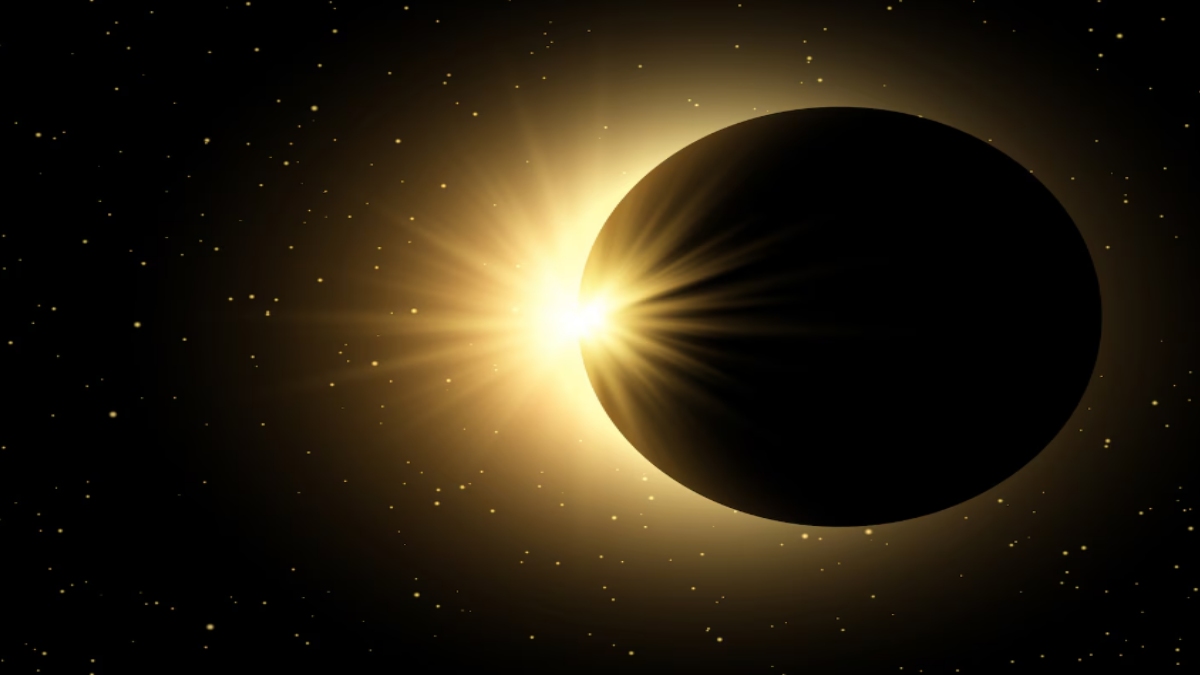
A solar eclipse occurs when the Moon moves between the Sun and Earth and temporarily blocks some or all of the Sun's light. During a total solar eclipse, the Moon completely covers the visible disk of the Sun for observers located within the narrow path of totality. Outside that path, observers may see a partial eclipse.
Solar Eclipse 2026 Date
The total solar eclipse will take place on Wednesday, August 12, 2026. The eclipse will be visible in different forms from several parts of the world, with totality occurring along a comparatively narrow path.
Related Articles


The path of totality will pass through areas including Greenland, Iceland and parts of Spain, while a partial solar eclipse will be visible across a much wider region. The event will also be observable from portions of the Atlantic and Arctic regions.
Will the Solar Eclipse Be Visible in India
For people in India, the key point is that the August 12, 2026 total solar eclipse will not be visible from India. The eclipse's path does not extend over the Indian subcontinent during local daylight hours.
This means skywatchers in cities across India will not be able to observe the eclipse directly from their locations. As a result, there will not be a local viewing window or India-specific visible eclipse phase for this event.
Related Articles
People in India who want to experience the event can instead follow online coverage and livestreams provided by astronomy organisations, observatories and reputable space and science platforms.
Solar Eclipse 2026 Timings
In India Standard Time (IST), the eclipse will occur primarily during the evening and night of August 12. The global eclipse begins at approximately 9:04 PM IST, reaches its maximum around 11:48 PM IST, and concludes at approximately 2:32 AM IST on August 13.
Because the eclipse will not be visible from India, these timings describe the global progression of the event rather than a local viewing opportunity.
The exact experience will vary depending on geographical location. Observers situated within the path of totality will see the dramatic phase when the Moon completely covers the Sun, while locations farther away may experience only a partial eclipse.
Where Can People Watch the Total Eclipse
Some of the most notable locations along or near the path of totality include parts of Greenland, Iceland and Spain. Spain is expected to be particularly significant for eclipse watchers because portions of the country will experience totality.
The duration and appearance of totality will differ from one location to another. During totality, the sky can become noticeably darker, temperatures may drop temporarily and the Sun's corona can become visible around the Moon.
Solar Eclipse 2026 Livestream Details for India
Since the eclipse will not be visible from India, online livestreams will be the easiest way for Indian viewers to follow the event.
Astronomy organisations, observatories, science channels and space agencies are expected to provide live or recorded coverage around the eclipse. Viewers should check the official NASA website, NASA's social media channels and reputable astronomical organisations closer to the event for confirmed livestream schedules and links.
Online coverage can be particularly useful because professional livestreams may include views from multiple locations along the path of totality, commentary from astronomers and explanations of the science behind the eclipse.
Why Is a Total Solar Eclipse Special
A total solar eclipse is relatively rare at any particular location because the Moon's shadow covers only a narrow portion of Earth's surface. The Moon and Sun also appear almost the same size in Earth's sky, allowing the Moon to temporarily cover the Sun despite being much smaller.
During totality, observers within the path may see the Sun's outer atmosphere, known as the corona. This is one of the most visually striking features of a total solar eclipse and is normally difficult to observe because the bright solar surface overwhelms it.
Solar Eclipse Safety Precautions
Anyone observing a solar eclipse directly must take eye safety seriously. Never look directly at the Sun through ordinary sunglasses, cameras, binoculars or telescopes without appropriate solar protection. Looking at the Sun without proper protection can cause serious and permanent eye damage.
Special-purpose eclipse glasses or certified solar viewers designed for direct solar observation should be used. Optical equipment also requires appropriate solar filters specifically designed for the equipment.
For viewers in India watching the event online, these concerns are largely avoided because there is no need to look directly at the Sun.
Solar Eclipse and Indian Traditions
Solar eclipses, or Surya Grahan, have also held cultural and religious significance in India for centuries. Traditional beliefs surrounding eclipses vary between communities, with some people observing fasting, prayer or other customs.
These cultural practices are separate from the astronomical explanation of an eclipse. Scientifically, a solar eclipse is a predictable celestial event caused by the alignment of the Sun, Moon and Earth.
The August 12, 2026 total solar eclipse promises to be a major astronomical event for observers in its path. Although it will not be directly visible from India, skywatchers across the country can still follow the phenomenon through reliable livestreams and expert coverage. Checking official astronomy and space-agency sources close to the date will help viewers find the most accurate livestream timings and coverage details.




Comments 0