
Janmashtami celebrations are incomplete for many families without traditional festive foods, and panjiri holds a special place on the occasion. Made with ingredients such as coriander seeds, coconut, nuts, seeds, flour, ghee and edible gum, panjiri is traditionally prepared as a prasad and enjoyed as a nourishing festive food.
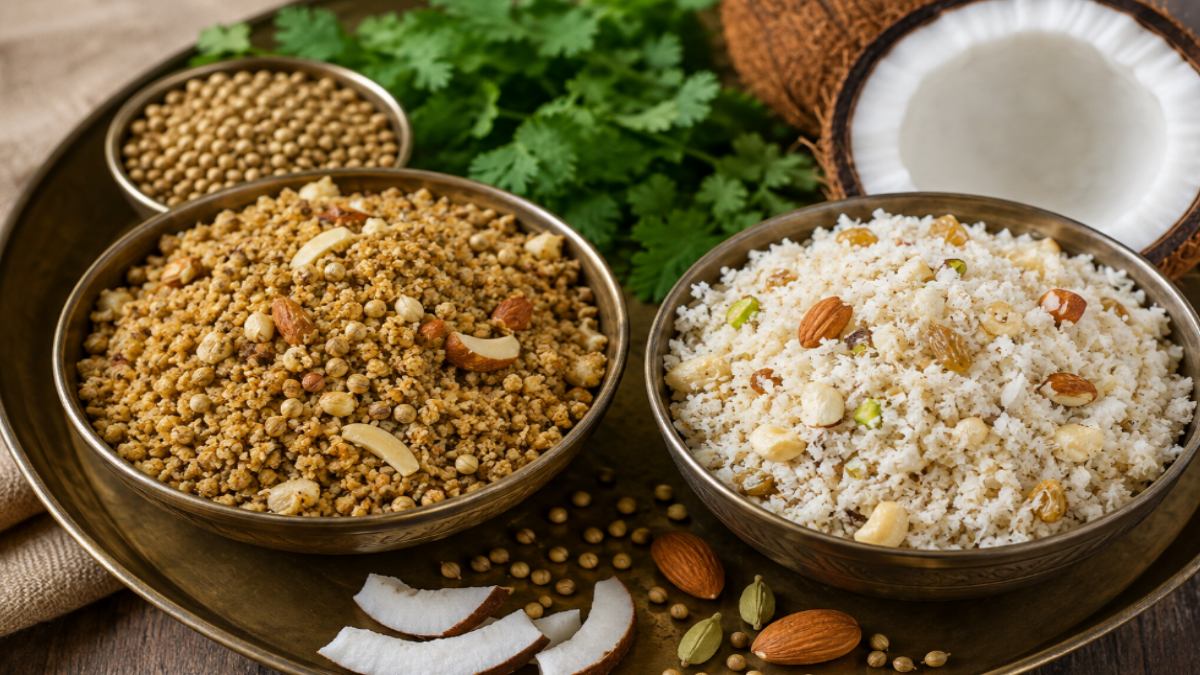
Nutritionist Simrun Chopra has highlighted simple panjiri variations that can bring both flavour and nutritional value to the Janmashtami table. From aromatic dhaniya panjiri to naturally rich nariyal versions, these recipes show that festive food can be delicious while still incorporating nutrient-dense ingredients.
While panjiri is nutritious, it is also energy-dense because many versions contain ghee, nuts, seeds and jaggery or sugar. Portion size remains important, especially for people managing blood sugar or calorie intake.
Related Articles


1. Dhaniya Panjiri
Dhaniya panjiri is one of the traditional preparations associated with Janmashtami. It is made using roasted coriander seeds or coriander powder, along with ingredients such as powdered sugar or jaggery, ghee and nuts depending on the recipe.
Coriander seeds contribute dietary fibre and plant compounds, while nuts can provide protein, healthy fats and minerals. Roasting the ingredients brings out their aroma and creates the characteristic flavour of panjiri.
For a more balanced version, the quantity of added sugar can be moderated and nuts or seeds can be included for additional texture and nutrients.
Related Articles


2. Nariyal Panjiri
Nariyal, or coconut, is another popular ingredient in festive panjiri. Grated or desiccated coconut gives the preparation a naturally rich flavour and satisfying texture.
Coconut contains fat and fibre, while also adding a distinctive festive taste without requiring complicated cooking techniques. Nariyal panjiri can be prepared with roasted coconut, nuts, seeds and a small amount of sweetener.
Because coconut and nuts are energy-dense, a small serving can be enough to enjoy the dish without overdoing it.
3. Makhana Panjiri
Makhana, also known as fox nuts or lotus seeds, has become a popular ingredient in Indian healthy-snacking recipes. Roasted makhana can be crushed or used in pieces to create a lighter-textured panjiri.
Makhana provides carbohydrates and some protein, while its versatility makes it useful in both sweet and savoury preparations. Combining it with nuts and seeds can create a more nutritionally diverse festive snack.
For Janmashtami, makhana panjiri can be prepared with ingredients suitable for the family's fasting traditions.
4. Gond Panjiri
Gond, or edible gum, is traditionally used in several Indian panjiri preparations. It is usually fried or roasted in ghee until it puffs before being combined with flour, nuts and sweeteners.
Traditional recipes often use gond as part of rich winter preparations, although variations are enjoyed during festivals as well. Nuts and seeds in the recipe can contribute healthy fats, minerals and some protein.
Since gond panjiri can contain substantial amounts of ghee, sugar and nuts, it is best treated as a festive food rather than an everyday snack.
5. Atta Panjiri
Atta panjiri is made using whole-wheat flour, ghee, nuts and a sweetener such as sugar or jaggery. The flour is roasted slowly until it develops a nutty aroma before the remaining ingredients are added.
Whole-wheat flour provides carbohydrates and some fibre, while nuts can increase the protein and healthy-fat content of the preparation. Adding seeds such as pumpkin, sunflower or sesame can further diversify its nutrient profile.
The recipe can be adjusted according to family preferences and dietary needs, although traditional versions tend to be rich.
Why Panjiri Can Be a Nutrient-Dense Festive Food
The nutritional value of panjiri comes largely from its ingredients. Nuts and seeds can provide unsaturated fats, protein, fibre and minerals. Whole grains can contribute complex carbohydrates and fibre, while ingredients such as coconut and coriander bring distinctive flavours and plant compounds.
Ghee also plays an important role in traditional recipes by providing richness and helping with roasting. However, because ghee is a concentrated source of fat and calories, using it in moderation can make the overall preparation easier to fit into a balanced diet.
How to Make Panjiri Healthier
Traditional festive recipes do not necessarily need to be completely changed. Small adjustments can make them more suitable for everyday dietary preferences.
Use a moderate amount of ghee, increase the proportion of nuts and seeds, and avoid adding excessive sugar. Unsweetened coconut can be used when appropriate, while jaggery can be used according to taste. However, jaggery is still an added sugar and should not be considered a sugar-free alternative.
Portion control is equally important. Enjoying a small serving as prasad allows you to appreciate the traditional food without turning the festive treat into a large meal.
People with diabetes or other conditions requiring dietary restrictions should consider their individual nutritional needs and follow advice from their healthcare professional.
A Festive Food With Tradition and Nutrition
Panjiri represents more than just a sweet dish. Its combination of roasted ingredients, nuts, seeds and aromatic spices reflects the diversity of Indian culinary traditions. During Janmashtami, different families and regions prepare their own versions, often adapting recipes according to local customs and fasting practices.
The five variations dhaniya, nariyal, makhana, gond and atta offer different flavours and textures while sharing the same basic idea of combining wholesome ingredients into a festive preparation.
This Janmashtami, panjiri can be enjoyed as part of the celebration while keeping mindful portions and balanced eating in mind. Traditional food and healthy eating do not have to be opposites; with thoughtful ingredients and sensible portions, both can comfortably have a place on the festive table.

Comments 0