
Antibiotic resistance is fast becoming a public health problem in India as medicines used routinely and for serious infections become less effective against several bacteria. A new report by Indian Council of Medical Research (ICMR) has shown worrying resistance patterns among Escherichia coli and Klebsiella pneumoniae which cause urinary tract infections, pneumonia and bloodstream infections respectively.
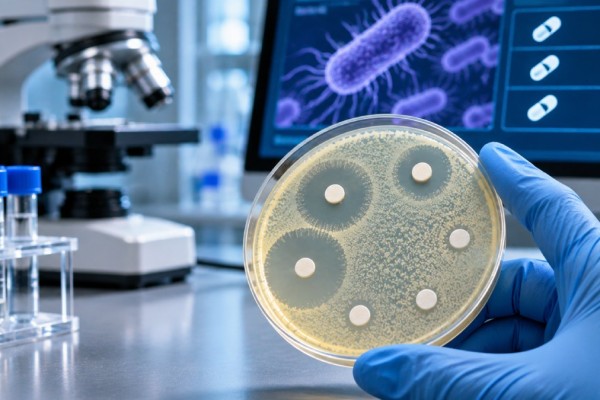
These data come from the ICMR Antimicrobial Resistance Surveillance and Research Network (AMRSN) Annual Report 2025 released in November 2026. It also includes data for smaller secondary care hospitals for the first time so that understanding of antibiotic resistance extends beyond large specialised medical institutions.
The findings have focused attention on responsible antibiotic use, early diagnosis, stronger infection-control practices and better public awareness.
Related Articles


This concern is particularly timely during World Antimicrobial Resistance (AMR) Awareness Week November 18–24, 2026 under the theme One Health, One Action: Prevent AMR Now.
What Is Antibiotic Resistance?
Antibiotic resistance occurs when bacteria learn how to survive medicines that were previously effective against them.
Antibiotics are used to treat bacterial infections. But when these medicines are used unnecessarily or incorrectly susceptible bacteria can be eliminated and resistant bacteria survive and multiply.
Related Articles


Over time this can make some infections harder to treat.
AMR is a broader term than antibiotic resistance (AR). AMR includes resistance in bacteria, viruses, fungi and parasites. Antibiotic resistance refers to bacteria that no longer respond effectively to antibiotics.
People don’t become resistant to antibiotics. Bacteria that cause infections do— so treatment gets more complicated.
What Does the Latest ICMR Report Reveal?
ICMR AMRSN Annual Report 2025 presents surveillance data collected during January to December 2025.
The report analysed:
- 1,13,008 culture-positive bacterial isolates from 30 tertiary-care hospitals.
- 20,529 isolates from 34 secondary-care hospitals.
The inclusion of secondary-care hospitals is important because it adds information about resistance patterns in healthcare facilities beyond major specialised hospitals.
The report listed E. coli and Klebsiella pneumoniae as bacteria commonly isolated in infections.
One of the concerning findings was that E. coli was not susceptible to certain third generation cephalosporins (a group of antibiotics commonly used to treat bacterial infections).
Only 18.4% of E. coli isolates tested in tertiary-care hospitals were cefotaxime susceptible; 24.7% ceftazidime susceptible.
These results suggest that some commonly used antibiotics may not work well against certain bacterial isolates.
But these figures are hospital based surveillance samples and should not be used to say that the resistance rate is among all infections or people in India.
Why Are Common Infections Getting Harder to Treat?
Antibiotics have been an important part of modern medicine. They allow doctors to treat bacterial infections and make surgery and cancer treatment safer (e.g., by preventing infection).
However, increasing resistance can reduce the number of effective treatment options doctors have.
Bacteria such as E. coli and Klebsiella pneumoniae can cause infections in different parts of the body.
These include:
- Urinary tract infections: Bacterial infections of the urinary system (bladder and kidneys).
- Pneumonia: Infection of the lungs that causes breathing problems.
- Bloodstream infections: Serious infections in which bacteria enter the bloodstream and may cause sepsis.
- Hospital-acquired infections: Infections that occur during healthcare treatment (especially in patients who are already seriously ill).
If bacteria develop resistance to commonly used antibiotics doctors may have to use alternative medicines. Some alternatives are more expensive; others carry greater risks of side effects or require closer monitoring.
In severe cases, limited treatment options increase risk of complication.
Why Is Antibiotic Misuse Such a Problem in India?
Misuse and overuse of antibiotics are major contributors to antimicrobial resistance.
Union Health Ministry during the launch of World AMR Awareness Week 2026 in India said there are concerns over antibiotic sales and prescribing practices.
Participants at the national observance said more than half of antimicrobial sales in India happen without a prescription and nearly half of outpatient antibiotic prescriptions are inappropriate.
A few common practices can contribute to the problem:
1. Taking Antibiotics Without Medical Advice
Some people buy antibiotics over the counter from pharmacies or use medicines they were prescribed for an earlier illness. This can lead to inappropriate treatment.
2. Using Antibiotics for Viral Infections
Antibiotics do not treat viral infections like colds and flu. Taking them for those illnesses does nothing against the virus and can lead to unnecessary antibiotic exposure.
3. Incorrect Dosage and Treatment Duration
Taking antibiotics differently from the instructions given can affect treatment outcomes. Patients should follow their doctor’s orders and if they have side effects or have concerns about treatment should seek medical advice.
4. Sharing Medicines
Using someone else’s antibiotics or sharing medicines prescribed for you can lead to inappropriate treatment because different infections require different medical assessments (different diseases).
5. Excessive Use in Animals and Agriculture
Use of antibiotics in food producing animals and agricultural systems can also promote emergence and spread of resistant microorganisms.
These practices need to be addressed by healthcare professionals, pharmacists, patients, veterinarians and policymakers.
Why World AMR Awareness Week 2026 Matters
World AMR Awareness Week is held every year from 18 to 24 November to increase public awareness of antimicrobial resistance and responsible use of antimicrobials medicines.
The 2026 theme is ‘One Health, One Action: Prevent AMR Now’.
The One Health approach recognises that human health, animal health and the environment are all connected. Resistant microorganisms can spread across these different areas so cooperation is needed.
Union Health Ministry of India has stressed on the National Action Plan on Antimicrobial Resistance 2.0 (NAP-AMR 2.0) which is a 5 year plan from 2025 to 2029.
The plan focuses on several areas, including:
- Strengthening AMR surveillance and laboratory capacity.
- Promoting responsible antimicrobial use.
- Improving infection prevention and control.
- Supporting research and innovation.
- Increasing public awareness.
- Encouraging coordination between human health, animal health and environmental sectors.
The National Centre for Disease Control (NCDC) also coordinates the National Programme on AMR Containment which supports surveillance, infection prevention and antimicrobial stewardship.
How Can People Help Prevent Antibiotic Resistance?
Responsible practices at individual and community levels are needed to prevent antibiotic resistance.
People can reduce unnecessary antibiotic use by taking a few precautions:
- Take antibiotics only when prescribed by a qualified healthcare professional.
- Never use leftover antibiotics without medical advice.
- Don’t share medicines prescribed for you with family members or friends.
- Follow the dosage and treatment instructions given to you.
- Don’t ask for antibiotics for viral illnesses (common cold).
- Practice hand hygiene and safe food-handling practices.
- Stay up to date with recommended vaccinations.
- Don’t come into contact with sick animals unnecessarily and practice food-safety appropriately.
Healthcare professionals also have an important role to play using appropriate diagnostic tests, choosing the right antibiotics and following treatment guidelines.
Why Early Diagnosis and Infection Prevention Are Important
Early diagnosis will tell doctors which bacteria are causing an infection and what medicines are likely to work.
Laboratory investigations (culture and antibiotic susceptibility testing) can provide information to guide treatment decisions.
These tests are important when patients have severe infections, recurrent infections or suspected drug-resistant bacteria.
Hospitals also need effective infection-control practices to prevent resistant microorganisms from spreading between patients.
Hand washing, sterilisation of medical equipment, safe sanitation and isolation can all reduce healthcare-associated infections.
Can Antibiotic Resistance Be Reversed?
Antibiotic resistance is a complex biological process and cannot be simply reversed by stopping the use of antibiotics.
However responsible antibiotic use, infection prevention and control, vaccination better diagnostic facilities and research can all slow down the development and spread of resistance.
Scientists are also developing new antibiotics, alternative treatments and diagnostic technologies to treat drug-resistant infections.
Preserving the effectiveness of existing antibiotics is just as important since new medicines take time and resources to develop.
Conclusion
The ICMR report shows that antibiotic resistance is a growing problem in India and stronger action is needed across healthcare settings.
When bacteria become less responsive to medicines commonly used to treat them infections that were once relatively easy to treat may require more complex medical care.
The message during World AMR Awareness Week 2026 is clear: antibiotics should be used responsibly; infections should be prevented wherever possible and treatment decisions should be made by qualified healthcare professionals.
Doctors and hospitals aren’t the only ones who have a role in protecting the effectiveness of antibiotics. Individuals, communities, pharmacies, farmers and policymakers all play a part in preventing AMR.




Comments 0