
Fruit juice, fruit puree and powdered fruit are used in packaged foods to sweeten and flavour them. Because these ingredients come from fruit consumers might think products with them are automatically healthier than foods made with regular sugar but a new study shows that the sugar story is more complicated than ingredient lists suggest.
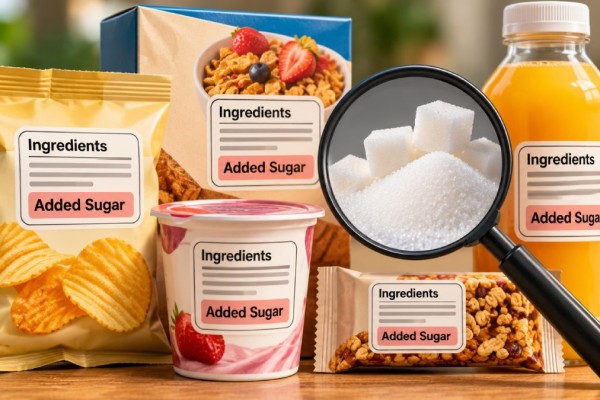
In a study published in the journal Nutrition Bulletin fruit-derived ingredients on packaged food labels were analysed in Brazil. They found that 15.7% of the products tested contained at least one processed fruit ingredient which might be classified as a source of free sugars from fruits.
The findings show that there may be a gap between how consumers understand fruit ingredients and how different food labelling systems classify sugars.
Related Articles


What Are Fruit-Based Free Sugars?
Not all sugars in fruit are the same. The difference largely depends on how the fruit is processed and whether its natural cellular structure is preserved.
Whole fruits contain naturally occurring sugars in their cells. When you eat an apple, orange or other whole fruit you are also eating fibre and other nutrients.
However processing can break down this structure and release the sugars.
Related Articles


Free sugars are sugars added to foods and beverages as well as sugars naturally found in honey, syrups fruit juices and fruit juice concentrates according to the World Health Organization (WHO).
Some public health authorities use a broader definition that also includes sugars in fruit purees, pastes and similar processed ingredients.
This distinction matters because a packaged product with fruit juice or puree might contribute to free sugar intake even if its ingredients sound natural.
What Did the New Study Discover?
The study The Diversity of Fruit-Based Free Sugar Ingredients on Food Labels was conducted by researchers from Brazil, Uruguay and Australia.
The team looked at packaged food labels collected from a major supermarket chain in Brazil. The original survey covered 7,828 products; after exclusions we had 5,276 in the final analysis.
They found 398 different terms used to describe fruit related ingredients on food labels.
Key findings included:
- 15.7% of products: Fruit-based free sugar ingredient appeared on the ingredient list.
- Almost two thirds: of products with these ingredients the fruit-derived ingredient was in the first three places on the list.
- Fruit juice: This was the most frequently declared category of fruit-based free sugar.
- Purees and pulp: These were the next most common categories.
- Powdered fruit and extracts: These were less common.
Ingredients are generally listed in descending order of weight. An ingredient near the top of a list may be present in relatively more than ingredients later on in the list.
But we cannot know its exact quantity just from its position.
Which Packaged Foods Contained These Ingredients?
The researchers found that there was a lot of variation in different food categories.
Products containing fruit based free sugar ingredients were:
- Juices, nectars and fruit drinks: All products sampled in this category contained at least one such ingredient.
- Fruit pieces, jams and similar products: 62% contained these ingredients.
- Dairy drinks, yogurts and dairy desserts: Around 52% had them.
- Sweet spreads: 48% had fruit based free sugar ingredients.
The prevalence was much lower in some savoury categories. About 1.3% of savoury snacks and 1.7% of gravies, sauces and ready-to-eat dishes had these ingredients.
The findings show that processed fruit ingredients aren’t restricted to products marketed as fruit drinks or desserts. They can also be found in foods where consumers might not expect them to appear.
Why Can Fruit Juice and Puree Be Different From Whole Fruit?
The main difference is the structure of the food.
People eat whole fruit when they eat it. Sugars are found in the natural cellular structure of the fruit; fibre is provided by the fruit which helps maintain normal digestive health.
Juicing and some other processing processes break that structure down so naturally occurring sugars are more readily available.
Fruit puree and pulp can also be processed heavily (although the effects are different depending on how they are prepared).
This does not mean that every processed fruit ingredient has the same nutritional effect or that whole fruit and fruit products should be treated in exactly the same way.
The researchers stressed that classification should be clearer because processing methods and ingredient composition can vary widely.
Why Food Labels May Not Show the Complete Sugar Picture
One of the central concerns addressed by the study is what is the difference between added sugars and free sugars.
Added sugars generally refer to sugars added during food manufacturing or preparation. Free sugars include some naturally occurring sugars released from processed fruit ingredients (depending on definition used).
In Brazil the researchers reported that the applicable added-sugar labelling rules excluded fruit juice, puree, pulp and powdered fruit from the category of added sugar used in their analysis.
As a result, the added-sugar declaration may not reflect all of the free sugars in a product.
This is not to say that manufacturers are breaking labelling rules. It just shows how definitions and regulatory requirements can shape what consumers see on packaging.
The researchers suggested that this distinction should be given further attention when governments review food labelling policies.
Could manufacturers substitute conventional sugar with processed fruit ingredients?
The study suggests manufacturers could use processed fruit ingredients as alternatives to conventional added sugars.
For example fruit juice concentrates and purees can add sweetness to packaged products.
However, the researchers could not say that manufacturers were deliberately replacing added sugar with these ingredients. Nor did they measure whether substitutions had occurred after changes to Brazilian labelling rules.
The research therefore identifies a regulatory issue rather than that food companies are systematically using fruit ingredients to hide sugar content.
What Does This Mean for Consumers?
The findings are a useful reminder that just because the word ‘fruit’ is on the package of food it doesn’t mean it’s low in sugar.
Consumers should look beyond front-of-package descriptions and read the full ingredient list and nutritional information as well.
Some practical points to remember include:
Check the ingredient list: fruit juice concentrate, fruit puree, fruit pulp and fruit powders.
- Compare total sugars: Check the total sugar content per 100g or 100ml. Compare sugars per litre: Check total sugars per litre. Compare sugars per 100g: Check total sugars per 100g.
- Look at added sugars: Where the label has this information compare it to total sugars.
- Know the ingredients: Whole fruit, fruit juice and fruit concentrate are not nutritionally equivalent.
- Prefer whole fruits regularly: Whole fruits contain fibre and their cellular structure is intact.
- Don’t just rely on marketing claims: Words like natural, fruit-based or made with real fruit don’t mean low sugar.
Reading the whole nutrition label helps you understand what a packaged product contains.
Does This Mean Fruit-Based Foods Are Unhealthy?
No. The study does not show that all foods with fruit juice, puree or pulp are unhealthy.
It looked at ingredient declarations and classified some processed fruit ingredients as potential sources of free sugars but didn’t measure how much free sugars each ingredient contributed or what the health outcomes were for people consuming these products.
The nutritional value of a food depends on many factors such as its overall composition, processing, portion size and frequency of consumption.
Whole fruits are still part of a healthy diet. The findings are really just a reminder that processed fruit ingredients should not be equated with whole fruit.
Limitations of the Research
The study has some important limitations.
First, the data came from a supermarket survey in Brazil in November 2020. The results may not be representative of packaged foods available in other countries or current product formulations.
Second, the researchers didn’t measure exactly how much free sugars were contributed by the identified ingredients.
Thirdly, 23.7% of fruit ingredient declarations did not explicitly state the processing method so researchers had to classify some products based on product category.
Finally, the research focused on food labels instead of the health effects of consuming these products.
More research will be needed to find out how processed fruit ingredients impact on overall sugar intake and whether current labelling systems are sufficient.
Conclusion
Fruit juice, purees and other processed fruit ingredients can also contribute to free sugar intake (even though they sound healthier than conventional sweeteners).
A study published in Nutrition Bulletin found that 15.7% of the packaged foods surveyed in a Brazilian supermarket were at least partially processed with such an ingredient.
The findings show why consumers should pay attention to the complete ingredient list and nutritional information on packaging rather than fruit claims made on packaging.
Whole fruit and processed fruit ingredients are not interchangeable from a nutritional point of view. Knowing that difference can help consumers make better food choices.




Comments 0