
India has kicked off a major national preparedness initiative to respond to emerging animal diseases spreading across international borders. The Department of Animal Husbandry and Dairying (DAHD), Union Government in collaboration with ICAR-National Institute of Veterinary Epidemiology and Disease Informatics (ICAR-NIVEDI), Bengaluru, inaugurated a two-day national mock consultation exercise VAJRA-SAT on Saturday to prepare India against the outbreak of SAT-1 serotype Foot-and-Mouth Disease (FMD) virus which is highly contagious viral disease affecting livestock. International concerns have been growing over the spread of the disease from Africa to 17 countries in West Asia recently raising possibility of introduction into India.
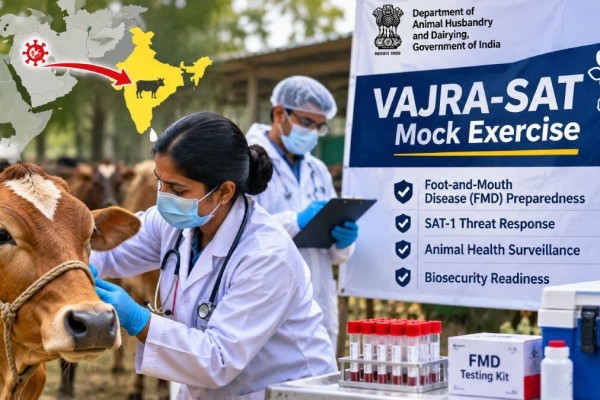
Objectives of the VAJRA-SAT National Mock Exercise
VAJRA-SAT exercise has two objectives — develop a coordinated national response strategy to contain entry and spread of FMD SAT-1 serotype in the country (so far infection has not been reported in India); and prepare for preparedness since India has more than 530 million animals so animal health security is part of agricultural economy. If SAT-1 outbreak occurs it would hit livestock productivity, dairy based livelihood systems, animal trade and progress made under NADCP hard. There are no domestic vaccine production facilities for SAT-1 serotype.
The national mock consultation exercise is being held under the theme “Detect Early, Confirm Fast and Contain Together”. Policymakers, veterinary epidemiologists, disease control specialists, diagnostic laboratories, security agencies and vaccine manufacturers are expected to participate in this exercise. They will evaluate existing response mechanisms and gaps in India’s animal disease management system. The exercise aims at strengthening early detection capability, confirmation of suspected infections fast and coordination among agencies so that action can be taken together. By simulating disease outbreak scenarios it intends to increase national response capacity and make authorities ready with containment measures in case of emergency.
Related Articles


Officials Highlight Surveillance, Diagnostics and Coordinated Response
Dr Naveena B.M., Animal Husbandry Commissioner, Department of Animal Husbandry and Dairying said that a coordinated practical national strategy to counter the threat from foreign FMD serotypes needs to be developed. Preparedness against emerging animal diseases is necessary and the existing Crisis Management Plan for animal diseases will protect India’s livestock sector. Coordination between central and state authorities, veterinary professionals and institutions concerned will be critical in case of any outbreak (department). Emergency response systems need strengthening and disease control protocols should be such that they can be implemented quickly.
Dr Baladev R Gulati, Director ICAR-NIVEDI Bengaluru said the global epidemiological situation around FMD SAT-1 serotype was changing and risk based surveillance, epidemiological intelligence and early warning systems were needed to prevent introduction of emerging animal diseases into India. Veterinary surveillance networks identify unusual disease patterns and help authorities take preventive action. The exercise will increase exchange of epidemiological information and collaboration between institutions monitoring animal health. Strong surveillance framework can improve country’s ability to detect and respond transboundary animal diseases experts said.
Dr J.K Mohapatra, Director ICAR-National Institute of Foot-and-Mouth Disease said laboratory preparedness, rapid diagnostic capabilities and vaccine development are needed to tackle foreign FMD serotypes challenges. Diagnostic labs confirm suspected infections and differentiate between different disease serotypes so that authorities can take control measures early on in outbreak instead of unnecessary delays later on. Effective vaccines and strengthening domestic production capacity are also part of India’s long-term animal disease preparedness strategy.
Related Articles


Strengthening India's Livestock Health Security Against SAT-1 Threat
VAJRA-SAT launch is an important step in strengthening India’s veterinary health security and protecting its livestock-based economy. It shows how preparedness, scientific surveillance, inter-agency coordination and rapid response mechanisms are needed for transboundary animal diseases; livestock are central to rural livelihoods, dairy production and agricultural trade so preventing entry of FMD SAT-1 is a major national priority; the two day exercise will help authorities assess existing systems, identify operational challenges and develop practical strategies for responding to outbreaks (SAT-1 has not been detected in India but the initiative highlights need for vigilance against emerging international animal disease threats).




Comments 0