
No Pain No Gain is a phrase that is part of gym culture. Whether you’re a beginner lifting weights or an elite athlete following a hard training programme many people think feeling pain after exercise means their training is working (or failing).
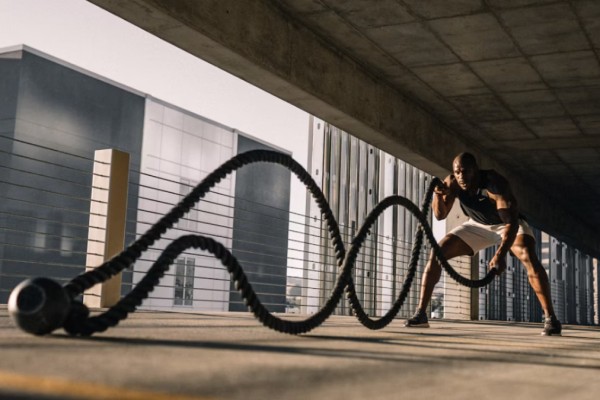
However, fitness experts and orthopaedic specialists warn against taking pain as a measure of workout effectiveness. Some muscle soreness after exercise is normal but sharp pain, persistent discomfort and joint pain can be an injury that shouldn’t be ignored.
The idea that every good workout has to make you hurt can lead people to push themselves beyond their limits, compromise exercise technique and shorten recovery time.
Related Articles


The important point is that there’s a difference between pushing the muscles and damaging the body.
Is Muscle Soreness After a Workout Normal?
Muscle soreness is normal (especially after starting a new exercise program, increasing weights or trying movements the body hasn’t done before).
This delayed discomfort is called Delayed Onset Muscle Soreness (DOMS). It usually occurs between 12 and 24 hours after exercise, becomes more noticeable over the next one to three days and improves gradually.
Related Articles


DOMS is associated with microscopic changes and damage to muscle fibres after unfamiliar or demanding physical activity. It may cause:
- Muscle tenderness when touched
- Stiffness and reduced flexibility
- Discomfort while climbing stairs or performing everyday movements
- Temporary weakness in the muscles that were exercised
Most people have mild DOMS within a few days. It doesn’t necessarily mean total inactivity but reducing the intensity of exercise and letting the muscles recover may help.
Soreness is not a prerequisite for muscle growth. You can improve strength, endurance and fitness without being sore after every workout.
Why Pushing Through Pain Can Be Dangerous
Exercise puts stress on muscles, tendons ligaments and joints. The body adapts to this stress when training is planned properly and recovery time is adequate.
Problems can occur when people ignore pain signals repeatedly or increase workout intensity too quickly.
Sharp pain during exercise that comes on suddenly may be an acute injury and persistent pain around joints can indicate underlying musculoskeletal problems as guidance published by US DoD’s Health.mil states.
Exercising with such symptoms can make an existing injury worse and prolong recovery.
Some common risks include:
- Muscle strains: too much load, sudden movements or poor technique can overstretch or tear muscle fibres.
- Tendon injuries: Stress repeated without proper recovery can irritate or damage tendons resulting in persistent pain.
- Joint problems: Poor technique and overloading can put unnecessary stress on knees, shoulders hips etc.
- Overuse injuries: Repetition of demanding workouts without recovery can cause injuries to muscles, bones and connective tissues over time.
The problem is not working hard. It’s confusing uncontrolled pain with productive training.
How to Tell the Difference Between Muscle Soreness and an Injury
Knowing what kind of discomfort occurs during or after exercise is important to decide whether or not to continue training.
Normal DOMS develops after a workout, not during one (suddenly during movement). It usually affects the muscles that were exercised and improves over a few days.
Pain associated with an injury may behave differently.
Warning signs include:
- Sudden or sharp pain during an exercise
- Pain concentrated around a joint rather than the exercised muscle
- Swelling, bruising or unusual tenderness
- Difficulty moving or putting weight on the affected area
- Pain that becomes worse instead of gradually improving
- Persistent discomfort that interferes with normal daily activities
If muscle pain is severe (with lots of swelling), unusual weakness or dark tea-coloured urine then see a doctor immediately as this can be rhabdomyolysis (muscle breakdown).
People with severe or ongoing symptoms should be seen by a doctor rather than trying to train through them.
Does a workout have to make you sore in order for it to work?
No. Soreness isn’t a reliable way to measure workout quality.
A good strength training programme has gradual progression, correct technique, consistency and recovery. All these things improve muscle strength and physical performance.
As the body adapts to a certain exercise routine, the same workout may produce less soreness. This doesn’t mean that muscles have stopped developing or that training has become ineffective.
People can still make fitness progress even if they don’t get DOMS after exercise, says Cleveland Clinic.
Instead of judging a workout by how much it hurts people should track measurable improvements such as:
So instead of judging a workout on how much it hurts we should track measurable improvements:
- Increasing the weight lifted with proper technique
- Performing more repetitions comfortably
- Improving exercise control and movement quality
- Building endurance and maintaining consistency
- Recovering adequately between training sessions
These indicators give you a more meaningful picture of progress than post-workout pain does.
How to Exercise Without Increasing the Risk of Injury
A safe workout routine doesn’t mean avoiding difficult exercises. It means gradually increasing physical demands and giving your body time to adapt.
1. Start with a proper warm-up
Spend five to ten minutes warming up the body with light cardio and dynamic movements. A warm-up increases circulation and prepares muscles and joints for exercise.
2. Increase intensity gradually
Don’t suddenly increase weights, repetitions or workout duration. Allow your body to adjust first before making training more intense.
3. Prioritise correct technique
If you perform an exercise in bad form it can put unnecessary stress on muscles and joints. Beginners should learn basic movements before heavy lifts or advanced exercises.
4. Allow adequate recovery
Muscles need rest between hard training sessions. Don’t train the same muscle groups too hard when they are sore or fatigued.
5. Pay attention to pain signals
Muscle fatigue and mild soreness are not reasons to stop exercising. Sharp pain, joint pain or symptoms that worsen with movement should not be ignored either.
6. Maintain proper nutrition and hydration
A diet rich in protein, carbohydrates, healthy fats and micronutrients ensures exercise performance and recovery. Hydration is also key (especially during intense workouts).
Why Beginners Should Be Particularly Careful
People who are new to strength training often make the mistake of copying advanced workout routines or lifting heavy weights before having the strength and technique.
Social media can perpetuate unrealistic expectations by making intense workouts and extreme physical challenges the standard for fitness progress.
However, beginners generally get more out of learning basic movements; building consistency; increasing exercise difficulty slowly.
A routine which can be followed consistently is better than an extremely demanding programme which causes repeated injuries or stops someone training altogether.
Fitness is a process that takes time. The goal should not be to prove how much pain the body can take but rather to become stronger and healthier.
The Bottom Line: Progress Should Not Come at the Cost of Injury
The No Pain, No Gain mentality can set the wrong expectations about exercise. Some muscle soreness is a normal reaction to unfamiliar or demanding physical activity but pain is not a condition for building strength or improving fitness.
A good workout should push the body but not repeatedly beyond its capacity to recover.
Consistency, progressive training, good technique and rest are more reliable foundations for long term fitness than pain through exercise.




Comments 0