
Children are growing up in a world surrounded by screens. Smartphones, tablets, televisions, computers and gaming devices are now part of everyday life, making it natural for parents to worry about their children's eyesight. Questions such as whether screens permanently damage the eyes, whether wearing glasses makes vision weaker and whether blue-light glasses are necessary are increasingly common.
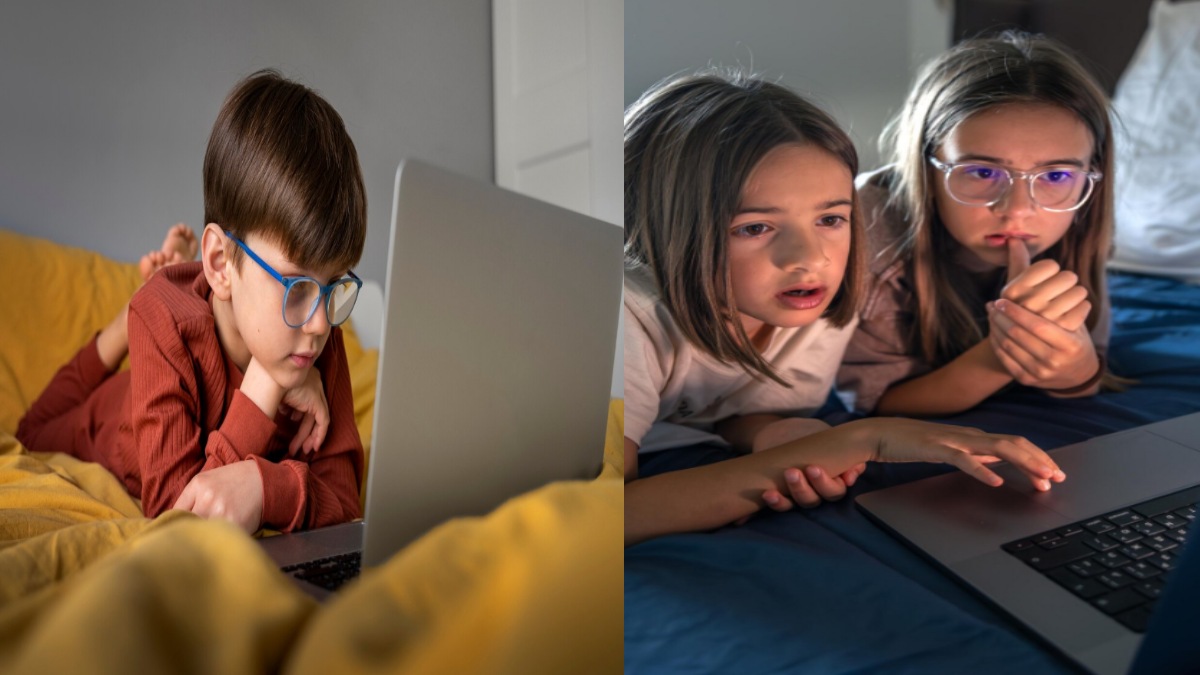
While excessive screen use can contribute to discomfort and unhealthy routines, several popular beliefs about children's eyesight are either exaggerated or misleading. Understanding the difference between temporary digital eye strain and genuine vision problems can help parents make better decisions about their children's eye health.
Myth 1: Screens permanently damage children's eyes
Looking at a screen for prolonged periods can cause symptoms of digital eye strain, including tired eyes, dryness, headaches, temporary blurred vision and difficulty refocusing. Children may also blink less frequently when concentrating on a screen.
Related Articles


However, experiencing eye strain after extended screen use is not the same as permanent eye damage. Encouraging children to take regular breaks, blink frequently and alternate screen activities with outdoor play can help reduce discomfort.
Parents should focus on healthy screen habits rather than assuming that every period of screen exposure is permanently harming their child's eyes.
Myth 2: Wearing glasses makes children's eyesight weaker
Prescription glasses do not make a child's eyes weaker or dependent on glasses. They correct refractive errors by helping focus light appropriately so that the child can see clearly.
Related Articles


If an ophthalmologist recommends glasses, children should wear them according to the prescribed instructions. Avoiding glasses does not strengthen the eyes and may make it harder for a child to see clearly at school or during everyday activities.
Children may also need their prescription reviewed periodically as their eyes develop.
Myth 3: Sitting too close to the television causes glasses
The idea that sitting too close to a television automatically causes a child to need glasses is a long-standing belief. Sitting close to a screen may cause temporary discomfort, but it is not generally considered a direct cause of permanent vision loss.
However, if a child consistently sits extremely close to the television or brings books and devices very close to the face, it may be worth checking their vision. Such behaviour can sometimes indicate difficulty seeing clearly at a distance.
Myth 4: Blue-light glasses are essential for children
Blue-light-blocking glasses are widely marketed to people who use digital devices, but there is no universal recommendation that every child who uses a screen needs blue-light glasses to protect their eyes.
For digital eye strain, basic measures can be more useful. Ensure the screen is at a comfortable distance, reduce glare, maintain suitable brightness and encourage regular breaks.
Parents should consult an eye-care professional if a child has persistent symptoms rather than relying solely on speciality eyewear marketed online.
Myth 5: Eye exercises can eliminate the need for glasses
Eye exercises can have a role in certain specific vision conditions when prescribed by an appropriate professional. However, they cannot generally eliminate refractive errors such as myopia, hyperopia or astigmatism.
Parents should be cautious about claims that particular exercises, diets or home remedies can permanently eliminate the need for prescription glasses. Children with suspected vision problems should receive a proper eye examination.
Myth 6: Screen time is the only cause of myopia
Myopia, or short-sightedness, is influenced by several factors, including genetics and environmental influences. Screen use and prolonged near work may be part of a child's overall visual environment, but it is inaccurate to say that smartphones alone cause every case of myopia.
Outdoor time appears to be particularly important. Research has found an association between spending more time outdoors during childhood and a lower risk of developing myopia.
Encouraging children to play outdoors, participate in sports and spend time away from close-up activities can therefore be beneficial.
How can parents reduce digital eye strain
Parents can introduce simple habits into a child's daily routine. Encourage regular breaks from close-up work and use the 20-20-20 approach: after approximately 20 minutes of near work, look at something around 20 feet away for about 20 seconds.
Children should also avoid using screens continuously for long periods when breaks are possible. Proper lighting, comfortable screen positioning and appropriate viewing distance can further improve comfort.
Most importantly, screen use should not replace sleep, physical activity, outdoor play, schoolwork or face-to-face interaction.
When should a child see an ophthalmologist
Parents should arrange an eye examination if a child frequently squints, complains of blurred or double vision, gets headaches while reading, sits unusually close to screens, struggles to see the classroom board, frequently covers one eye or shows a noticeable change in visual behaviour.
Regular professional eye examinations can identify refractive errors and other vision problems that may not be obvious to parents.
Children do not need to be completely separated from screens to protect their eyesight. Instead, families should aim for balanced routines that include adequate sleep, outdoor activity, regular breaks from near work and appropriate screen habits.
Digital eye strain is a genuine concern, but it is different from permanent eye damage. Glasses do not weaken children's eyes, blue-light glasses are not automatically necessary, and eye exercises cannot generally replace prescription lenses.


Comments 0