
Lord Ganesha is one of the most beloved deities in Indian tradition, and few images are as familiar as the elephant-headed god holding a modak in his hand. During Ganesh Chaturthi, homes and temples across India prepare and offer these sweet dumplings as naivedya, making modak one of the festival's most recognisable foods.
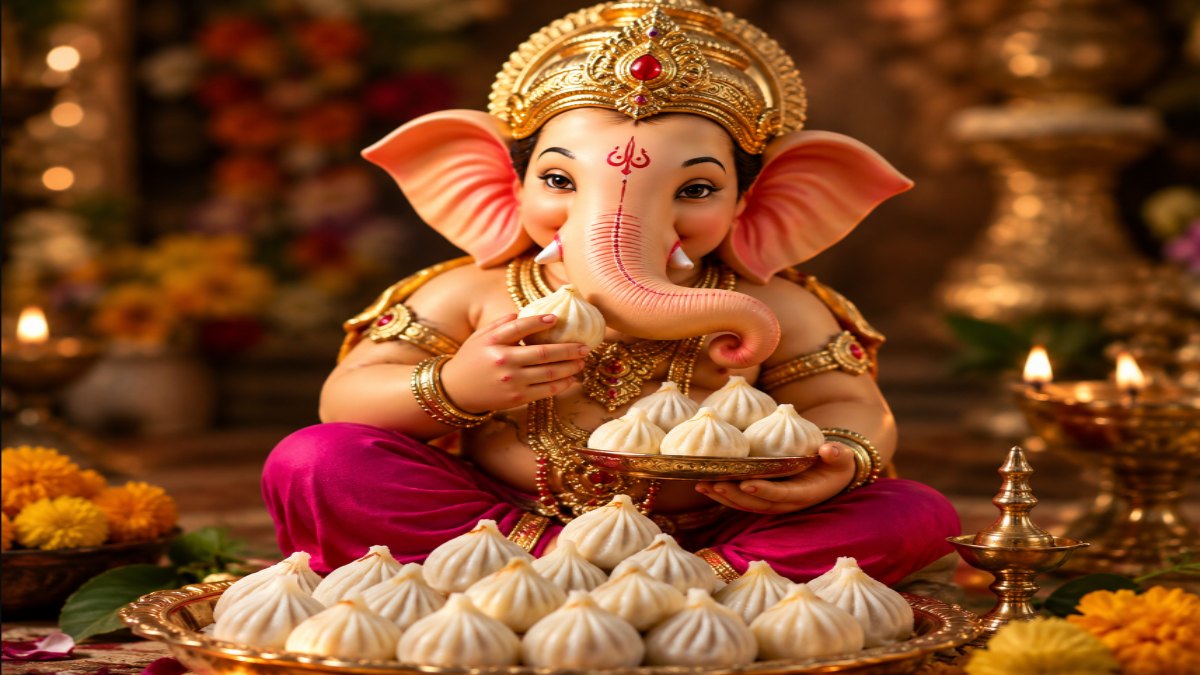
But why are modaks considered Lord Ganesha's favourite sweet? The answer is found in a combination of traditional stories, regional customs and symbolism. While different traditions tell the story in different ways, modaks have come to represent wisdom, spiritual knowledge and the sweetness of life.
What Is a Modak
A modak is a traditional Indian sweet with a distinctive dumpling-like shape. One of the best-known varieties is ukadiche modak, particularly popular in Maharashtra.
Related Articles


The outer covering is commonly made from rice flour, while the filling may contain freshly grated coconut and jaggery, often flavoured with cardamom. The mixture is shaped into pleats and steamed.
There are also fried versions and numerous regional variations made with ingredients such as wheat flour, dry fruits, chocolate or other modern fillings.
Despite these variations, the traditional coconut-and-jaggery modak remains strongly associated with Ganesh Chaturthi.
Related Articles


The Mythological Connection
Several traditional stories explain Lord Ganesha's love for modaks. One popular belief describes the modak as a special sweet associated with spiritual knowledge and divine wisdom.
According to one traditional account, a sacred modak represented the ultimate reward of knowledge. Lord Ganesha's love for the sweet therefore came to symbolise his status as the deity of wisdom and intellect.
Another popular story connects Ganesha's fondness for modaks with his mother, Goddess Parvati. Traditional narratives describe Parvati preparing or offering special sweets to Ganesha, reinforcing the association between the deity and the beloved treat.
The details differ across regional and religious traditions, so there is no single universally accepted origin story for the connection.
Why the Shape Matters
The distinctive shape of a traditional modak is also associated with symbolism. Its rounded base and pointed top are sometimes interpreted as representing the gradual journey toward higher knowledge or spiritual awareness.
The sweet filling hidden inside the outer layer can similarly be viewed as a metaphor: wisdom and inner sweetness may not always be visible from the outside.
Because Ganesha is traditionally associated with intelligence, learning and the removal of obstacles, the modak has developed a deeper meaning beyond simply being a festive dessert.
Modak and Ganesh Chaturthi
During Ganesh Chaturthi, devotees often prepare modaks as an offering to Lord Ganesha. The number offered can vary according to family and regional traditions.
The offering is presented with devotion before being shared as prasad after the worship. Sharing the food reflects an important aspect of Indian festival traditions: offerings made to the deity become something that can be enjoyed collectively by family and community.
In Maharashtra, the preparation of ukadiche modak is particularly associated with Ganesh Chaturthi. Families may gather together to make the sweets, turning the cooking process into part of the celebration itself.
Why Coconut and Jaggery
Traditional ukadiche modaks often contain coconut and jaggery. These ingredients provide a naturally sweet and aromatic filling.
Jaggery has long been used in Indian festive cooking, while coconut is an important ingredient in many regional religious offerings. Together, they create a simple filling that contrasts beautifully with the soft rice-flour exterior.
The combination also highlights the traditional Indian approach to festival foods, where familiar ingredients are transformed into dishes with cultural and religious significance.
Modern Modaks
Today, modaks have evolved beyond traditional recipes. During Ganesh Chaturthi, sweet shops often offer chocolate modaks, dry-fruit modaks, mawa varieties and other creative versions.
While these modern interpretations may differ from traditional ukadiche modaks, they reflect the way Indian food traditions continue to evolve.
For many families, however, making traditional modaks at home remains a cherished part of the festival.
More Than Just a Sweet
The connection between Lord Ganesha and modaks is ultimately about more than food. The sweet represents devotion, celebration and the pursuit of wisdom.
Offering a modak to Ganesha can be understood as an expression of gratitude and faith. After the puja, sharing the modak as prasad adds another layer of meaning, turning an individual offering into a collective celebration.
The symbolism also fits naturally with Ganesha's role as the remover of obstacles and the deity associated with knowledge and new beginnings.
Lord Ganesha's association with modaks has been strengthened through centuries of stories, traditions and festival practices. Whether prepared as traditional steamed ukadiche modaks or enjoyed in a modern form, the sweet remains an important part of Ganesh Chaturthi celebrations.
For devotees, the modak represents sweetness, wisdom and devotion. For families, preparing and sharing these treats creates moments of togetherness. And for the festival itself, the humble modak has become one of the most recognisable symbols of celebrating Ganpati Bappa.
So, when you see Lord Ganesha holding a modak, remember that this little sweet dumpling carries a much bigger story one connecting food, faith, family and the timeless celebration of wisdom and happiness.

Comments 0