
Artificial intelligence is becoming more and more part of everyday communication people use it to draft emails, organise thoughts and find the right words. But when romantic relationships start to rely on AI chatbots we ask a personal question: Is it OK for an AI chatbot to write messages to someone you love?
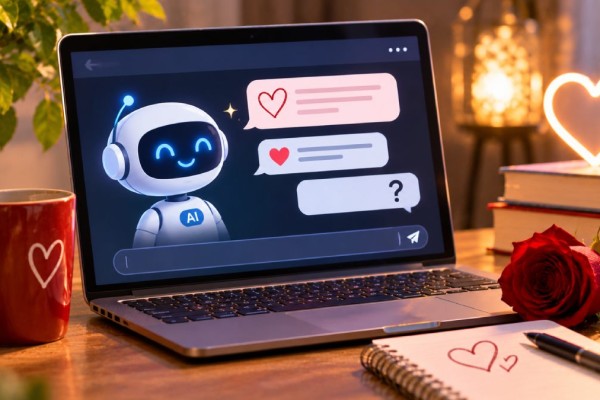
Birthday wishes and romantic texts to apologies and breakup messages people are turning to chatbots for help with conversations that used to take personal effort and emotion. AI makes communication easier but it also asks questions about honesty, emotional authenticity and trust between partners.
An Associated Press story published on November 17, 2026 explored this trend through personal confessions and research on how people interpret AI-generated messages. The takeaway is that technology can be a tool for expressing oneself but recipients may wonder if the words were really written by the person sending them.
Related Articles


Why Are People Using AI to Write Romantic Messages?
Not everyone can write affectionate messages, apologise after an argument or express difficult feelings without sounding harsh.
AI chatbots provide a convenient way to address these problems. Users describe a situation and ask the chatbot what message would sound caring, thoughtful or appropriate?
Common uses include:
Related Articles


- Writing good morning and good night messages.
- Preparing birthday wishes and anniversary notes.
- Expressing affection through romantic messages.
- Finding the right words to apologise after an argument.
- Expressing feelings that are hard to explain.
- Writing sensitive messages (e.g., breakup texts).
For some people AI is a writing assistant, not an emotion replacement. They know what they want to say but don’t know how to organize their thoughts.
But then it gets harder when someone relies on AI to create almost every personal message or uses words that don’t accurately express their feelings.
Why AI-Written Messages Can Raise Trust Issues
One of the central concerns about AI-generated romantic messages is whether they give the impression that the sender cares emotionally.
People read personal communication as attention and effort. A well written message makes someone feel valued because it shows that the sender took time to understand your feelings and express his own.
When a chatbot writes the message, the recipient may wonder if that was really what he or she was doing.
This is one of the things that the Associated Press story talks about Danielle Hass, a consumer behaviour researcher at Kennesaw State University ran experiments on how people react to AI-written personal messages. She found that people felt guilty for being dishonest and manipulating others with AI communication.
Researcher Scott Claessens of the University of Bristol also talked about how people might think of those using AI for personal messages. His research shows that AI users may be seen as less competent, less trustworthy or less willing to make an effort.
This doesn’t mean every AI-assisted message is dishonest. But it shows why using AI in intimate communication matters — how people interpret sincerity and emotional investment.
Can AI Make Romantic Communication Less Personal?
Romantic relationships are built every day: conversations, disagreements, small gestures and expressions of affection.
Not every message needs to be perfect. Sometimes a sentence with imperfect wording feels more meaningful than a polished paragraph because it’s the person’s natural way of communicating.
When people rely on AI to express their emotions over and over again they may start feeling less confident about communicating independently. Their partners may also wonder if what’s being said is real feelings or well-crafted responses written by a chatbot.
Receiving a beautifully written apology might feel reassuring at first. But if the recipient later finds out that the message was generated entirely by AI then its emotional content changes.
The problem is not the use of technology itself. It’s whether technology is helping someone communicate honestly or whether it allows them to present emotions and intentions they don’t actually have?
When is it OK to use AI in a relationship?
Using AI for personal communication doesn’t automatically make a message dishonest. It depends on purpose and extent of use.
There are times when AI can be of use without replacing personal expression.
1. When Someone Struggles to Express Feelings
Someone may care about their partner but not know how to express affection. AI can help organise those feelings into clearer sentences.
2. When Language Is a Barrier
People from different linguistic backgrounds may use translation and writing tools to communicate more comfortably. AI can make conversations easier when partners do not speak the same native language.
3. When Someone Needs Help With Sensitive Conversations.
Apologising, talking about boundaries or explaining a difficult situation can be hard. AI may help users consider what they are saying and avoid too hurtful language.
4. When writing or learning difficulties are involved it is important to consider how these can impact on students’ literacy learning.
People with dyslexia or other learning difficulties might use AI to organise and communicate their thoughts more effectively.
In these cases AI is best used as a support. The feelings, intentions and final message belong to the person sending it not AI.
How Couples Can Maintain Honesty While Using AI
As AI becomes more integrated into everyday communication couples may need to find their own boundaries around it.
There is no universal rule that works for every relationship. But there are a few practical approaches we can take to maintain trust.
- Use AI for suggestions not emotional replacement: Start with your own thoughts and use AI only to clarify or word things better.
- Don’t pretend to feel something: Don’t send emotionally charged messages because a chatbot said so.
- Be transparent when it matters: If AI wrote an important personal message, ask yourself whether your partner would expect to know.
- Keep important conversations personal: Talk about commitment, boundaries, serious disagreements and major relationship decisions face to face.
- Respect each other’s expectations: Partners may have different views about AI-assisted communication. Talking about those differences can help avoid misunderstandings.
The goal should not be to avoid technology entirely but rather that it does not replace honesty or personal involvement.
The Future of Romance in the Age of AI
AI is changing how people communicate including dating and relationships. Chatbots can suggest conversation starters; help users understand difficult situations; make it easier to express thoughts that otherwise would be unspoken.
But romantic relationships are about more than finding the right words. They require emotional understanding, mutual effort, vulnerability and honesty.
As AI messages become more common the line between assistance and emotional outsourcing might be harder to draw. A message can be grammatically correct and emotionally convincing but not sincere.
Ultimately AI can only help people find the words but it cannot take responsibility for the feelings behind them. In a relationship authenticity may be more important than a perfectly written message.




Comments 0