
The modern Indian man's wardrobe is changing rapidly. Today's consumer is no longer looking at clothing simply as a way to dress for a particular occasion. He wants garments that reflect his personality, fit his lifestyle, perform across different environments, and offer comfort without compromising on style. This shift is creating new opportunities for textile and apparel companies to rethink how men's clothing is designed, manufactured, customised, and experienced.
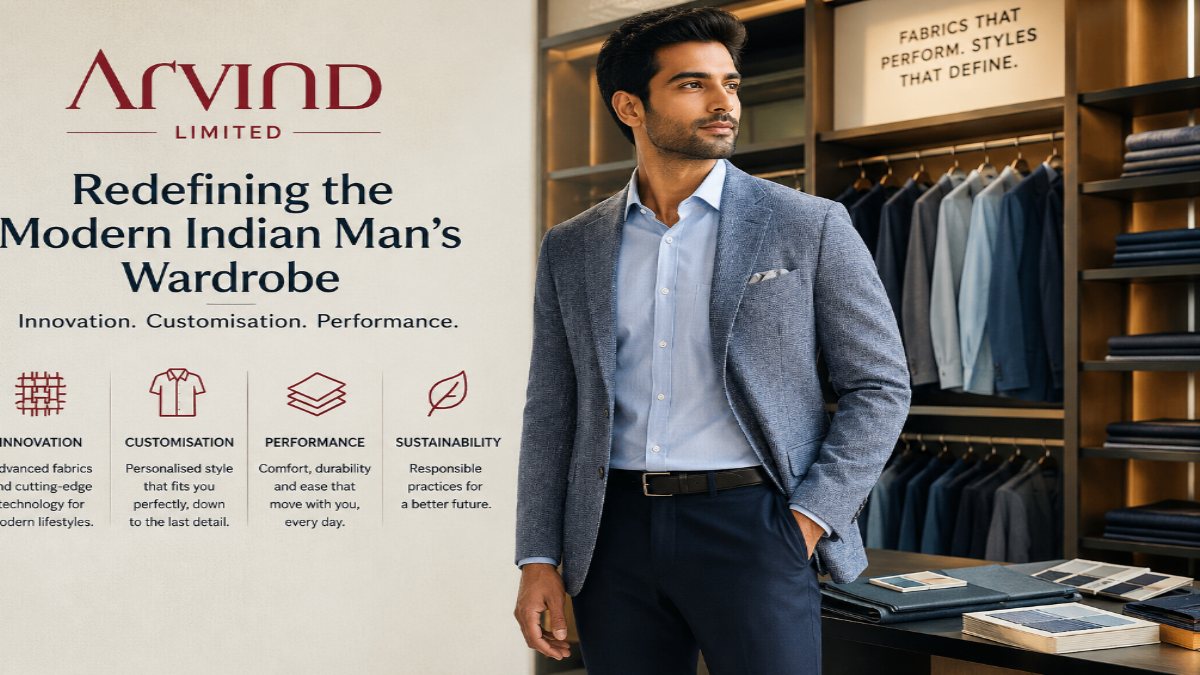
Arvind Limited has been an important name in India's textile and apparel landscape, with its evolution reflecting many of the changes taking place in the modern fashion industry. From denim and woven fabrics to apparel and textile innovation, the company has built an ecosystem that connects manufacturing capabilities with changing consumer expectations.
One of the biggest transformations in menswear is the growing importance of performance. Indian men increasingly move between multiple settings in a single day. A typical wardrobe may need to accommodate office meetings, commuting, travel, social occasions, outdoor activities, and informal gatherings. Traditional clothing categories are therefore being supplemented by fabrics and designs that provide stretch, breathability, durability, moisture management, easy maintenance, and greater freedom of movement.
Related Articles

Arvind's focus on textile innovation helps address these changing requirements. The development of fabrics with enhanced functionality allows clothing to become more adaptable to everyday life. Instead of choosing between comfort and appearance, consumers increasingly expect both. Performance-oriented textiles can make formal trousers easier to move in, shirts more comfortable through long working hours, and casual clothing more suitable for active lifestyles.
Customisation is another major force reshaping men's fashion. Consumers have become more aware of fit and increasingly understand that standard sizing does not always deliver the desired silhouette. Customisation offers an opportunity to bridge that gap by giving customers greater control over measurements, styling details, fabrics, and finishes.
This is particularly relevant in the Indian market, where body shapes, climatic conditions, professional requirements, and cultural preferences can vary significantly. A more personalised approach to apparel can help men build wardrobes that feel individual rather than mass-produced. Technology can further support this transition by making the customisation process more efficient and accessible.
Related Articles

The changing wardrobe is also closely connected to sustainability. Modern consumers are becoming increasingly conscious of how clothing is produced, how long it lasts, and what happens to it after use. For textile companies, sustainability is no longer limited to a marketing message; it increasingly involves materials, production processes, resource efficiency, product durability, and responsible innovation.
For a company with a significant textile heritage, innovation can therefore mean finding ways to create better-performing products while considering their environmental impact. Longer-lasting garments, more efficient production methods, responsible material choices, and reduced resource consumption can all contribute to a more sustainable fashion ecosystem.
Another defining feature of the modern Indian man's wardrobe is the disappearance of rigid boundaries between formal, casual, and active clothing. Hybrid lifestyles have created demand for versatile garments that can transition from one setting to another. A well-designed shirt may need to look polished in a workplace while remaining comfortable during a commute. Trousers may need the appearance of traditional tailoring while offering the flexibility associated with casual wear.
This convergence creates an important role for textile innovation. The fabric itself becomes a critical part of the fashion experience, influencing how a garment looks, feels, moves, and performs.
Arvind's broader significance lies in its ability to operate across different stages of the textile and apparel value chain. This gives the company an opportunity to connect fabric innovation with the final consumer experience. When textile development, apparel design, manufacturing expertise, and changing market insights work together, innovation can move beyond individual products and influence entire categories.
The Indian menswear market is also becoming more style-conscious. Men are experimenting with silhouettes, colours, textures, layering, and personal styling in ways that were once associated primarily with women's fashion. Social media, global fashion trends, celebrity culture, e-commerce, and changing workplace environments have all contributed to this evolution.
Yet the modern consumer does not necessarily want fashion that is difficult to wear. Practicality remains essential. The most successful innovations are likely to be those that fit naturally into everyday life. Comfort, easy care, durability, versatility, and fit can be just as important as visual appeal.
Arvind Limited's journey in textiles and apparel reflects this larger transition from conventional clothing to more responsive and consumer-focused fashion. The modern Indian man's wardrobe is becoming smarter, more personalised, more functional, and increasingly conscious of sustainability.
Ultimately, the future of menswear may not be defined by one particular style. Instead, it will be shaped by clothing that adapts to the individual. As Indian consumers seek garments that combine identity, comfort, technology, performance, and responsibility, textile innovation will remain at the heart of that transformation.
Arvind's continued focus on innovation and its long-standing presence in the textile industry position it to participate in this evolving story. The modern Indian man is asking more from his wardrobe and the industry is responding by making clothing more adaptable, personalised, and purposeful.




Comments 0