
The idea of sending jewellery into space sounds like something from a science-fiction movie, but an unusual experiment involving lab-grown diamond jewellery and space travel has brought that concept closer to reality. A Bengaluru-based founder reportedly sent lab-grown diamond jewellery into space, with the pieces surviving the journey.
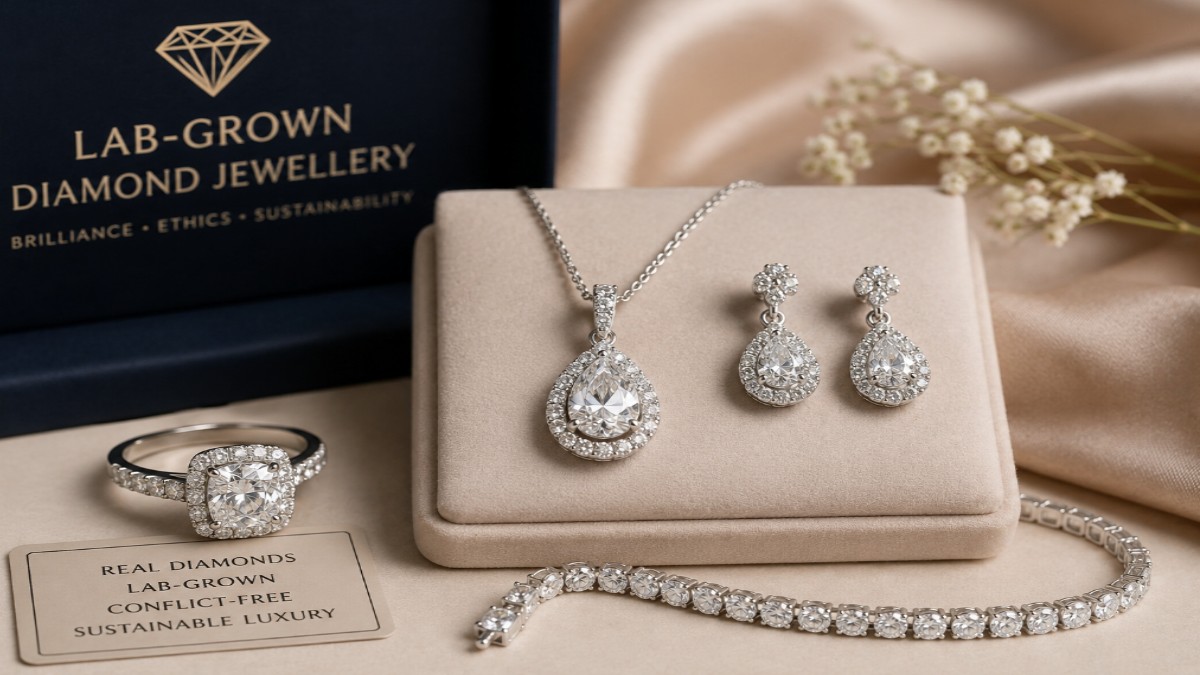
Beyond its novelty, the experiment raises fascinating questions about the durability of lab-grown diamonds, the future of luxury, sustainability and how jewellery could become part of innovative technology-driven projects.
Here are 10 things to know about the remarkable story.
Related Articles


1. The Jewellery Was Made Using Lab-Grown Diamonds
The central feature of the project is the use of lab-grown diamonds, also known as laboratory-grown or synthetic diamonds. These diamonds are created using advanced technological processes rather than being extracted from the Earth through traditional mining.
Importantly, lab-grown diamonds are real diamonds in terms of their crystal structure and chemical composition. They are not simply diamond-like substitutes such as cubic zirconia.
2. A Bengaluru Founder Was Behind the Initiative
The project has been associated with a founder from Bengaluru, India's technology and startup hub. The unusual combination of jewellery and space reflects the city's broader reputation for innovation and experimentation.
Related Articles


Rather than treating jewellery purely as a luxury product, the initiative places it in an unconventional technological setting.
3. The Jewellery Was Sent Beyond Earth
What makes the story particularly unusual is that the jewellery was reportedly sent into space, exposing it to an environment dramatically different from conditions on Earth.
Space missions require careful consideration of temperature, pressure, vibration, acceleration and other environmental factors. Anything transported on a spacecraft must withstand conditions that ordinary consumer products are never designed to experience.
4. The Diamonds Survived the Journey
According to the account behind the experiment, the jewellery survived its space journey. This is significant because diamonds are widely recognised for their exceptional hardness.
However, hardness should not be confused with being completely indestructible. A diamond can still be damaged under certain circumstances, particularly through impact or depending on the shape and characteristics of a particular stone.
The experiment therefore offers an interesting real-world demonstration of the material's resilience.
5. Lab-Grown Does Not Mean Artificial-Looking
One common misconception about lab-grown diamonds is that they are fundamentally different from mined diamonds in their physical identity.
Laboratory-grown diamonds have the same basic crystal structure as naturally occurring diamonds. Their origin is different, but specialised gemological equipment is generally needed to distinguish their growth history.
This makes lab-grown diamonds an increasingly interesting option for consumers looking for diamond jewellery.
6. The Experiment Connects Luxury With Technology
Jewellery and space exploration may seem like completely unrelated industries, but this project demonstrates how technology can create unusual intersections between them.
Diamonds already have applications beyond jewellery, including research and advanced technological fields. Their physical properties have made them subjects of interest in areas involving electronics, optics and other high-tech applications.
Sending diamond jewellery into space adds an imaginative luxury dimension to that broader conversation.
7. Sustainability Is Part of the Conversation
Lab-grown diamonds are frequently promoted as an alternative to mined diamonds because they avoid conventional diamond extraction. However, their environmental impact is not automatically zero.
Producing diamonds in laboratories requires significant energy, and the overall sustainability profile depends on factors such as the energy source used, manufacturing processes and supply chain.
Consumers should therefore look beyond simple labels and consider credible information about how a product is made.
8. The Journey Is More Than a Publicity Stunt
A space-related jewellery experiment naturally attracts attention because of its novelty. But it can also serve as a storytelling tool for a young or innovative brand.
Luxury products often compete on emotional appeal and distinctive narratives. A piece of jewellery that has travelled to space has an unusual story that conventional marketing cannot easily replicate.
9. It Highlights the Durability of Diamond
Diamonds are famous for being among the hardest naturally occurring materials known. Their hardness is one reason they have long been associated with durability and permanence.
The space journey provides a dramatic backdrop for communicating this characteristic. Still, the survival of one jewellery item should not be interpreted as proof that every diamond or every jewellery setting would automatically withstand all spaceflight conditions.
The complete spacecraft environment, mission profile and jewellery construction all matter.
10. It Could Inspire New Ideas for Jewellery
The experiment points toward a broader trend in which jewellery is becoming increasingly connected with technology, sustainability and personal storytelling.
Future jewellery may incorporate advanced materials, digital authentication, innovative manufacturing techniques or unconventional experiences. Lab-grown diamonds could play a role in that evolution as consumers become more familiar with alternative approaches to diamond production.
A Small Piece of Jewellery With a Big Story
The reported journey of lab-grown diamond jewellery into space is striking because it combines several seemingly distant worlds: Indian entrepreneurship, luxury jewellery, advanced manufacturing and space exploration.
The fact that the jewellery reportedly survived the journey adds another layer to the story, highlighting the resilience of diamond while demonstrating how modern technology can challenge traditional ideas about luxury.
Whether viewed as an engineering experiment, a branding achievement or a symbol of innovation, the project reflects a changing jewellery industry. Lab-grown diamonds are already reshaping conversations around how diamonds are produced and purchased, and unconventional projects like this show how far the idea can be taken.
For consumers, the story is also a reminder that the future of jewellery may not simply be about what a piece looks like it may increasingly be about how it was made, where it has travelled and the story it carries.




Comments 0