
Sawai Padmanabh Singh, the Jaipur royal and one of India's best-known contemporary style personalities, has challenged one of the most persistent assumptions about royal fashion: that members of royal families simply follow a prescribed wardrobe filled with traditional clothing and ceremonial dressing. Known for his polished appearance and ability to move comfortably between heritage-inspired outfits and contemporary fashion, Padmanabh Singh has offered a more personal perspective on what influences his style.
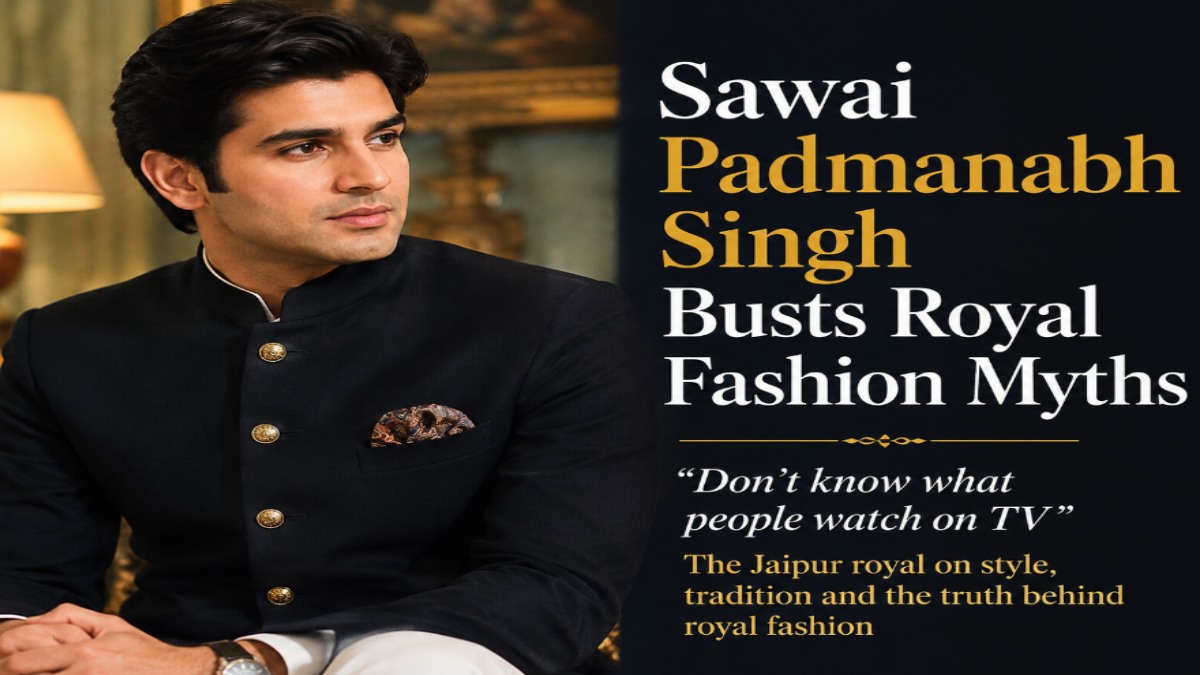
The Jaipur royal's fashion choices have frequently attracted attention because they combine elegance with a relaxed, modern sensibility. Whether he is seen in traditional Indian attire, formal ensembles or more contemporary looks, his style reflects an understanding of fashion without appearing overly dictated by trends. His comments about not knowing what people watch on television further highlight the difference between assumptions about royal life and the reality of an individual who has developed his own interests and preferences.
Royal fashion has traditionally been surrounded by a certain mystique. Images of maharajas dressed in elaborate sherwanis, embroidered textiles, jewels and ceremonial accessories have shaped the popular imagination for generations. While these elements remain an important part of India's cultural and historical legacy, modern members of royal families are not necessarily restricted to such clothing.
Related Articles

Padmanabh Singh represents this changing relationship between heritage and fashion. As a young member of the Jaipur royal family, he has become known internationally not only for his royal lineage but also for his presence in fashion and lifestyle circles. His appearances have demonstrated how traditional Indian aesthetics can coexist with contemporary menswear.
One of the most interesting aspects of his style is his ability to make formal dressing look effortless. Tailored silhouettes, classic colours, traditional Indian garments and carefully selected accessories often feature in his wardrobe. Rather than relying solely on extravagant elements, his style frequently emphasizes fit, proportion and understated sophistication.
His approach also challenges the idea that royal fashion is automatically extravagant. There is a common perception that members of royal families must dress in elaborate clothing whenever they appear in public. In reality, modern fashion is often about individual choice. A well-cut suit, a simple traditional kurta or a classic sherwani can make a strong statement without excessive embellishment.
Related Articles

Padmanabh Singh's fashion identity is also connected to Jaipur's rich cultural heritage. The Pink City has long been associated with craftsmanship, textiles, jewellery and traditional clothing. Jaipur's royal history has played an important role in preserving many of these artistic traditions. For someone with a direct connection to the city and its royal legacy, traditional design can naturally become part of a modern wardrobe.
At the same time, his style demonstrates that heritage does not have to mean remaining stuck in the past. Young Indians are increasingly experimenting with ways to reinterpret traditional clothing. Sherwanis can be styled with contemporary accessories, bandhgalas can be paired with modern silhouettes, and traditional fabrics can be incorporated into minimalist outfits. This blending of old and new has become a defining feature of modern Indian fashion.
Padmanabh Singh's comments about television and popular culture also offer an amusing glimpse into the assumptions people make about royal personalities. The public often imagines that celebrities and royals consume the same media, follow every popular trend and are constantly aware of what is being discussed online. His remark suggests that personal interests do not necessarily fit these expectations.
That individuality is perhaps what makes his fashion choices particularly interesting. Instead of dressing simply to satisfy public expectations of royalty, he appears to approach clothing as a form of personal expression. His wardrobe can reflect occasion, culture, comfort and personal taste rather than a rigid definition of what a royal should look like.
The renewed fascination with Indian royal fashion also comes at a time when heritage-inspired clothing is becoming increasingly popular among younger audiences. Designers are drawing inspiration from palace architecture, vintage silhouettes, traditional embroidery and regional craftsmanship. Social media has further transformed the way these styles are presented, allowing royal-inspired fashion to reach audiences around the world.
Padmanabh Singh's public image sits naturally within this conversation. His style illustrates how India's royal heritage can continue to influence contemporary fashion without being reduced to costumes or nostalgia. Traditional clothing can remain relevant when it is worn with confidence and adapted to modern sensibilities.
Ultimately, the biggest myth about royal fashion may be that there is a single formula for how a royal should dress. Sawai Padmanabh Singh's style suggests otherwise. His wardrobe reflects a balance between heritage and modernity, formality and ease, and tradition and individuality.
For fashion enthusiasts, his approach offers a valuable lesson: true style is not necessarily about following every trend or meeting someone else's expectations. It is about understanding what works for you and carrying it with confidence. In Padmanabh Singh's case, that confidence is shaped by both his Jaipur heritage and his distinctly contemporary outlook.




Comments 0