
Air pollution isn’t just an outdoor problem. Indoor air can be bad for your lungs, and also have fine particulate matter, dust, smoke, pollen, mould and other materials that can impact your respiratory health. With air pollution becoming a more prominent problem in many cities, air purifiers are now very prevalent household products.
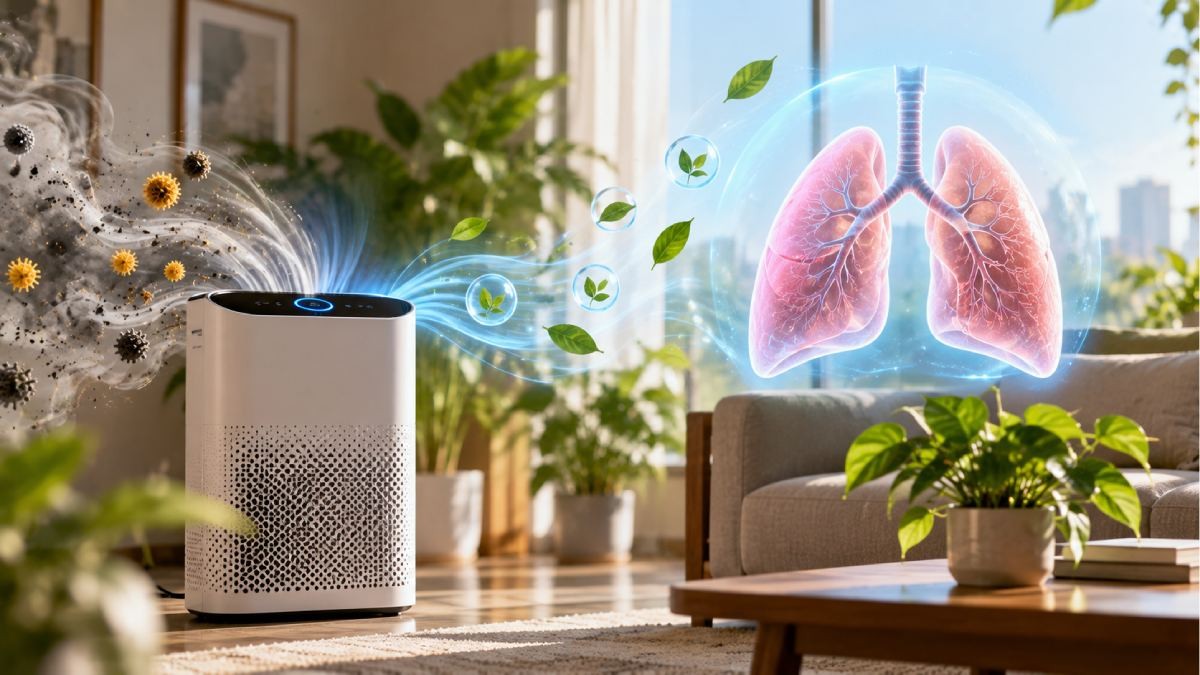
But will you be able to turn on an air purifier to save your lungs?
One answer is that a good air purifier can reduce some airborne pollution; fine particles like PM2.5. But it is not an air pollution shield and is not a substitute for ventilation and pollution control.
Related Articles


How Does An Air Purifier Help Your Lungs?
The main impact of a portable air purifier is that it always draws indoor air through a filter and releases clean air back into the room.
HEPA (High Efficiency Particulate Air) filters are most important for removing airborne particles. According to the U.S. Environmental Protection Agency, a HEPA filter is theoretically capable of removing at least 99.97% of particles with a diameter of 0.3 microns under certain testing conditions. Particles larger and smaller than this can also be captured.
And PM2.5 particles are small enough to travel deep into the respiratory system. With this, reducing their concentration indoors can reduce the amount of particulate pollution a person is inhaling.
Related Articles


The EPA notes that air cleaners remove respirable-size particles and that reducing exposure to these particles (and other particles) may help reduce health impacts, such as lung irritation and reduced lung function.
A variety of research has shown that portable air cleaners can significantly reduce indoor particulate pollution. In a systematic review of field studies, the average reduction of around 49% for PM2.5 and 44% for PM10 was found, albeit depending on the setting and device.
Does an air purifier improve lung function?
Where the answer gets more complicated.
As you can see, reducing indoor pollution does not automatically mean that an air purifier will dramatically improve lung function or prevent respiratory disease.
A systematic review and meta-analysis found that air filters reduced indoor PM2.5 levels and were associated with some improvement in peak expiratory flow in people with asthma. However, most studies did not find significant improvements in respiratory symptoms or FEV1, a commonly used measure of lung function.
More recent research has also found a distinction between reducing pollution exposure and producing measurable clinical improvements. A 2026 systematic review of randomised controlled trials found that personal interventions, such as air purifiers, significantly reduced indoor PM2.5 and PM10 but did not show significant overall improvements in multiple respiratory outcomes (FEV1, respiratory symptoms and some measures of lung function).
This means an air purifier should be regarded primarily as a tool for exposure reduction, rather than as a device that directly “strengthens” or “repairs” the lungs.
Who might benefit the most?
People living in areas with high outdoor air pollution may benefit from reducing the amount of particulate pollution entering and circulating inside their homes.
Air purification may be especially helpful for people who are sensitive to indoor particulate pollution or those with asthma. The EPA says several studies have reported improvements in one or more allergy or asthma symptoms with portable HEPA air cleaners, but the results have not been consistent across all symptoms and studies.
As a result, people should talk about chronic respiratory symptoms with a doctor, as opposed to just using an air purifier.
What An Air Purifier Can’t Do
An air purifier is not the magic solution to indoor air pollution in this day and age.
Different filters target different pollutants. HEPA filters are intended to filter out particles while gases and volatile organic compounds need other filtration, such as activated carbon. No air cleaner can remove all pollutants from a home, the EPA also says.
Air purifiers also do not eliminate the source of pollution. If someone is smoking indoors, cooking without adequate ventilation or dealing with a moisture and mould problem, simply running a purifier does not solve the underlying problem.
The World Health Organization also cautions the real-world effectiveness of portable air filters depends on elements such as outdoor pollution entering the building, indoor activities and ventilation.
Another important factor is maintenance. Filters must be replaced regularly. A dirty or overloaded filter may not work well.
Consumers should also be wary of devices that intentionally create ozone. Ozone can irritate the lungs and the EPA advises avoiding air cleaners that produce ozone.
Does an air purifier protect the lungs?
Yes, but only to a certain extent.
A good air purifier, and one that is equipped with HEPA filters, can reduce indoor concentrations of fine particulate matter very effectively. That means less exposure that can get into the lungs.
However, the evidence is not there for the purifier as a foolproof protection against respiratory disease. Its benefits can best be understood in conjunction with a wider indoor air quality strategy.
To reduce pollution at its source, ensure ventilation when outdoor air quality permits, avoid indoor smoking and maintain the purifier properly is important.
For people living in highly polluted areas, an air purifier can be a good protection but not a substitute for clean air in general.


Comments 0