
We are now seeing artificial colours on fruits become a food-safety issue and when people are seeing bright or inconsistent colouring of naturally produced food.
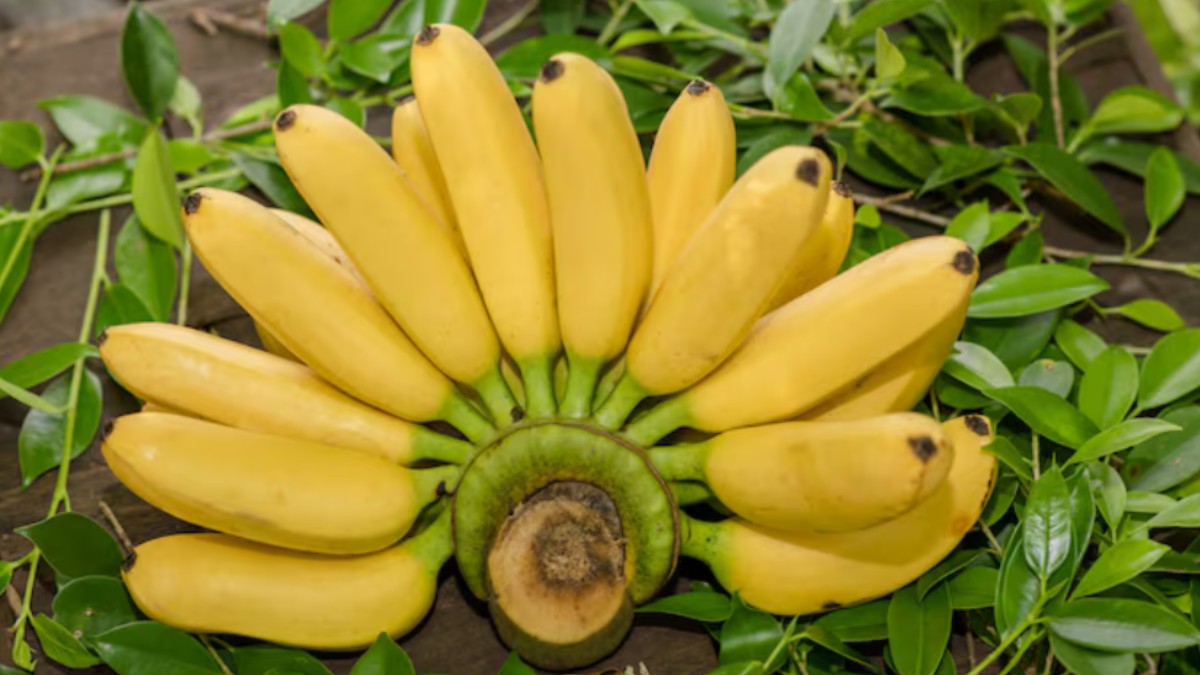
Bananas in their natural yellow colour become the colour of the fruit when ripe, and reports and social media discussions of artificially coloured banana peels have raised questions about whether such banana peels might pose a threat to human health.
Food experts and food-safety authorities in general stress that the question is not just whether a food has been coloured, but what substance has been used, whether it is legally permitted for that purpose and whether it has been done in accordance with food safety standards.
Related Articles


Naturally ripening bananas turn yellow because of biological processes inside the fruit. The peel undergoes a gradual phase change from green to yellow as the fruit matures and its texture and flavour also develop.
The colour of a banana will vary depending on the variety, growing conditions, storage and stage of ripeness. So an unusually bright yellow colour alone is not a positive sign that artificial dye has been used. So don't assume every brightly coloured banana has been chemically treated without any evidence or testing.
The issue becomes even more serious when unauthorised industrial dyes or other chemicals are used on food. Some colouring materials that are not approved for food use may have adverse health effects if exposure occurs repeatedly or at high levels. Effects depend on the chemical, amount, route of exposure and duration.
Related Articles


Certain non-food-grade dyes have been associated with allergic reactions, irritation and other health problems. Therefore food authorities regulate which colours can be used in edible products and establish conditions for the use of permitted additives.
Not every artificial food colour is intrinsically dangerous, though. Some food colours are allowed if used within defined limits and approved for use. Additives are required to meet national food safety standards. That's when prohibited chemicals are used, permitted additives are misused or foods are handled in a way that puts consumers at risk. Accordingly, consumers should distinguish between approved food additives and illegal or non-food-grade colouring agents.
Experts also advise consumers not to trust anything from viral videos or social-media tests that are purported to show fruits have chemicals in them. Small home experiments involving water, tissues, scraping and visual inspection cannot reliably identify a colouring chemical.
Proper identification requires laboratory analysis based on proven testing methods. And if the consumer is suspicious that the product is adulterated, they should report it to the correct food-safety authority or seek professional testing, which is more reliable than just googling.
But consumers can be warned about a few things that are reasonable in terms of what makes buying bananas and other fruits healthy. Buying the best products from credible sellers, looking for any unusual surface residues, washing fruits thoroughly, and avoiding visibly damaged or suspicious products are natural food safety practices. Washing the peel before handling or cutting the fruit will also remove dirt and contaminants from the surface.
Although bananas are usually peeled before eating, good hygiene is still important: people can transfer substances from the peel to their hands, knives or the edible portion of the fruit.
For families, the bigger lesson is that we need food safety to be sustained through the whole supply chain. Farmers, transporters, wholesalers, retailers and consumers all have a role in keeping food safe. There have to be effective surveillance and testing to detect adulteration and take action when it’s found. Public awareness is also important because consumers who understand normal fruit characteristics are less likely to panic over harmless variations and more likely to spot genuinely suspicious practices.
And it is important not to create any fear around bananas. Bananas are healthy food and provide carbohydrates, fibre and several micronutrients. The concern in this case is of adulteration or the misuse of colouring substances, not bananas as a food in general.
In the end, whether artificially coloured bananas are dangerous depends on the substance in question and how they have been used. If an unauthorised or hazardous dye has been used, then that is a legitimate food-safety risk. But a bright yellow banana is not enough to guarantee that dangerous chemicals have been used. Consumers need to refer to credible food-safety information, avoid unverified social-media claims and report suspected adulteration to the appropriate food-safety authority. Awareness, proper food handling and scientific testing will protect consumers from dangerous food practices.


Comments 0