
Artificial food colours are additives used to give food and beverages a certain appearance. They are found in candies, packaged drinks, desserts, confectionery, sauces and some processed snacks.
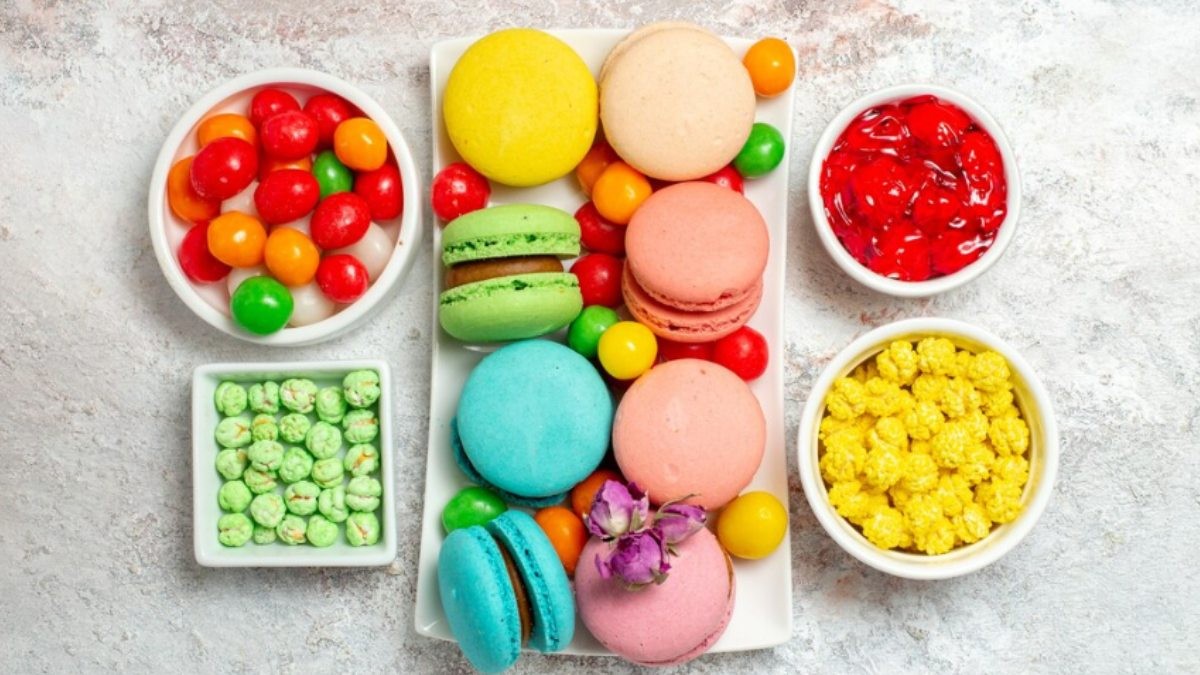
Colour can affect the way people perceive food. A bright colour may make a product look more appealing; but the appearance does not necessarily indicate nutritional quality.
This does not mean that every food with an approved colour is automatically unsafe. Food additives are regulated differently in different countries and permitted colours have specific conditions of use.
Related Articles


Why limit Artificial Colours?
For most people, the main reason to limit foods containing artificial colours is not that every permitted colour is inherently harmful, but that these colours are often found in highly processed foods. Such foods can also contain considerable amounts of added sugar, salt or saturated fat.
Hence, fewer highly processed foods and more whole or minimally processed foods have the potential to improve overall dietary quality.
Some People Are More Sensitive.
Some people may have sensitive or adverse reactions to some food additives. Children and adults respond differently depending on the individual and the substance involved.
Related Articles


Some research has also explored whether certain kinds of synthetic food colours are related to behavioral changes in susceptible children. But the evidence is complicated and reactions are not universal.
Parents who are seeing a consistent reaction after a particular food may want to talk to a healthcare professional rather than remove large numbers of foods without guidance.
Check the Food Label
One of the simplest ways to reduce exposure is to read ingredient labels. Food colours can appear under specific names, numbers or additive descriptions depending on the country’s labelling regulations.
When buying packaged food, the ingredient list can help you to understand what you’re eating.
It is also helpful to look beyond colour. Many other ingredients in a brightly coloured product may be worth the attention, such as added sugars and excess sodium.
Natural Colours Can Be An Alternative.
Natural food colours can be obtained from fruits, vegetables, spices and other plant or natural materials. Beetroot-derived pigments, turmeric and carotenoid pigments are examples of this.
But “natural” does not necessarily mean healthier in every situation. The nutritional quality of the food is much more important than any colour.
Focus on Whole Foods
A more practical solution is to add more whole and minimally processed foods to your diet. Fruits, vegetables, whole grains, pulses, nuts and other nutrient-rich foods naturally have a broad range of colours.
Instead of choosing food because it looks unusually bright, consider its nutritional content, ingredients and portion size.
Avoiding colours does not mean avoiding all packaged foods
We do not have to treat every packaged product as unhealthy just because it contains a permitted food colour. The importance of an additive depends on the substance, amount consumed and individual circumstances.
The intention should be to eat more balanced with not fear of individual ingredients.
Conclusion
Artificial food colours can make products visually attractive but colour alone adds little nutritional value. The use of fewer highly processed foods with artificial colours can be a practical part of a balanced diet, especially if it encourages more whole foods.
Instead of focusing on whether a food is brightly coloured, read labels, look over the ingredients list, and consider the whole ingredient list of nutrients in your daily diet and make nutrient-rich foods the basis for your daily diet.


Comments 0