
Children using smartphones, tablets, computers and other digital devices for long hours are now much more common. And more kids are being diagnosed with vision issues and getting corrective glasses.
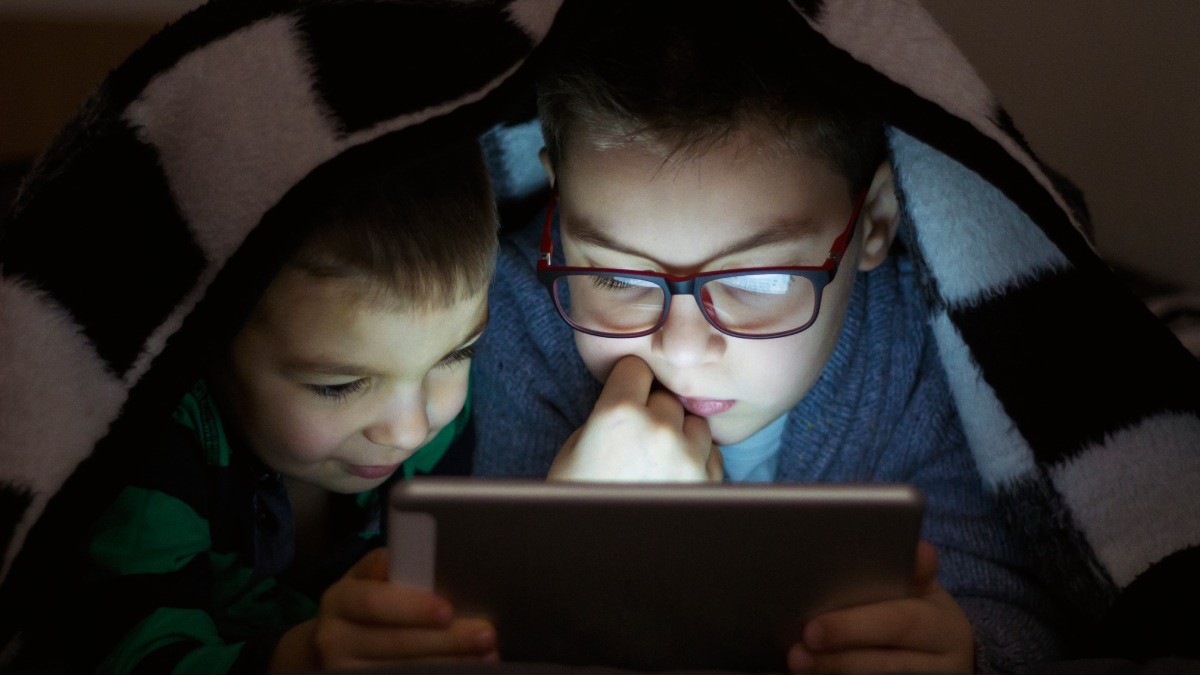
Ophthalmologist Dr Pradeep Gupta says that the concern is not just about the number of hours a child spends looking at a screen. Screen use patterns, long hours of near work, fewer breaks and less outdoor activity are all important in terms of children’s eye health.
Digital devices do not permanently damage the eyes. But prolonged and uninterrupted screen use can lead to digital eye strain, while spending less time outdoors and more time on close-up activities may be associated with a greater risk of myopia, or short-sightedness.
Related Articles


How Screen Time Can Cause Eye Strain
One of the immediate effects of prolonged screen use is digital eye strain.
When children stare at a screen for hours, they tend to blink less often. Blinking is important because it spreads the tear film across the surface of the eye. Low blinking can lead to dryness and irritation.
Children experiencing digital eye strain may have tired or uncomfortable eyes, watering, blurred vision or headaches. Dr Gupta cited studies involving 462 schoolchildren, among whom dry eye symptoms were found to be common. Children with more than three to three-and-a-half hours of cumulative daily digital-device exposure also showed a very high risk of dry eye symptoms and were significantly more likely to develop dry eye symptoms.
Related Articles


But these symptoms should not be regarded as permanent damage from screens.
The American Academy of Ophthalmology also notes that there is no evidence that regular screen use permanently harms children's developing visual systems. However, increased screen time, spending more time indoors and myopia are found to be associated.
Why Myopia Is A Bigger Concern
Myopia occurs when distant objects appear blurry because the eye focuses light incorrectly, often because the eyeball becomes too long.
The rapid rise in childhood myopia is not only due to screens. Genetics, long hours of near work, the need for studies and limited outdoor time for children to be exposed to the world can all have something to do with it.
There is evidence that more screen exposure is associated with myopia in children and adolescents. A meta-analysis published in 2024 found that screen exposure was highly correlated with myopia, but the study had limitations including publication bias.
Dr Gupta therefore believes it is crucial to look at a child’s whole daily life rather than just phones or tablets.
If screen use replaces outdoor play, physical activity and opportunities to look at objects at different distances, the overall effect may be less favourable for developing eyes.
Outdoor Time Could Help Protect Children's Vision
And one of the most basic habits parents can encourage is spending more time outdoors.
Research has increasingly identified outdoor exposure as a protective factor against the development of myopia in children. The American Academy of Ophthalmology also explains that increased outdoor activity may slow the progression of myopia.
Dr Gupta suggests that around two hours of outdoor exposure per day can be used as a practical benchmark, but the ideal amount can vary from child to child. Walking, cycling, playing sports or simply hanging out in a park can help to give some respite from the near-work environment.
The aim is not to eliminate screens. Digital devices are now part of children’s education, communication and entertainment. Rather, parents can find a better balance between screen-based activities and outdoor time.
Simple Eye-Care Habits Parents Can Encourage
There are some simple habits parents can learn to keep the strain of screen use down.
Follow the 20-20-20 rule: After every 20 minutes of near work, encourage the child to look at something around 20 feet away for at least 20 seconds. This gives the eyes a regular break.
Maintain a comfortable viewing distance: Children shouldn’t hold phones or tablets very close to their faces. Screens should be placed at a comfortable distance with adequate room lighting.
Reduce glare: Reflections and excessive brightness can make screen viewing more uncomfortable. Adjusting the screen and surrounding lighting can help.
Encourage blinking: Children may look at screens too often without realizing that they are blinking less. Reminding them to blink regularly can help reduce dryness.
Make outdoor play routine: Outdoor activities must be part of a child’s day-to-day life and not something reserved only for weekends.
Watch for warning signs: Frequent squinting, sitting unusually close to a television or screen, holding books very close, recurring headaches or difficulty seeing the classroom board can indicate that a child needs an eye examination.
Screens Are Not The Only Factor
Children's increasing use of glasses is a complex problem and is not just due to smartphone or tablet use.
There are several interacting factors, including genetics, near-work activities, education, indoor time and outdoor exposure, the evidence suggests. Screen use can contribute to the amount of close-up work children do, but it is better to see it as part of a larger lifestyle pattern.
For parents, the focus should therefore be on balance rather than completely banning technology.
Regular breaks, comfortable viewing distances, adequate lighting, frequent blinking and lots of outdoor activity should all be part of a healthy schedule. If a child’s vision is still problematic or they can’t see clearly, an eye examination is important rather than simply assuming that the problem is caused by excessive use of screens.
Protecting children’s eyesight is ultimately less about getting rid of technology entirely and as much about helping them develop healthier habits when they use it.


Comments 0