
As temperatures climb across many parts of the world, finding practical ways to protect people from extreme heat has become increasingly important. Japan, known for combining technology with everyday problem-solving, has attracted attention with an unusual cooling concept described as a “human fridge.” Designed to provide workers with relief from oppressive heat, the innovation reflects how companies and engineers are exploring new approaches to workplace safety during increasingly hot summers.
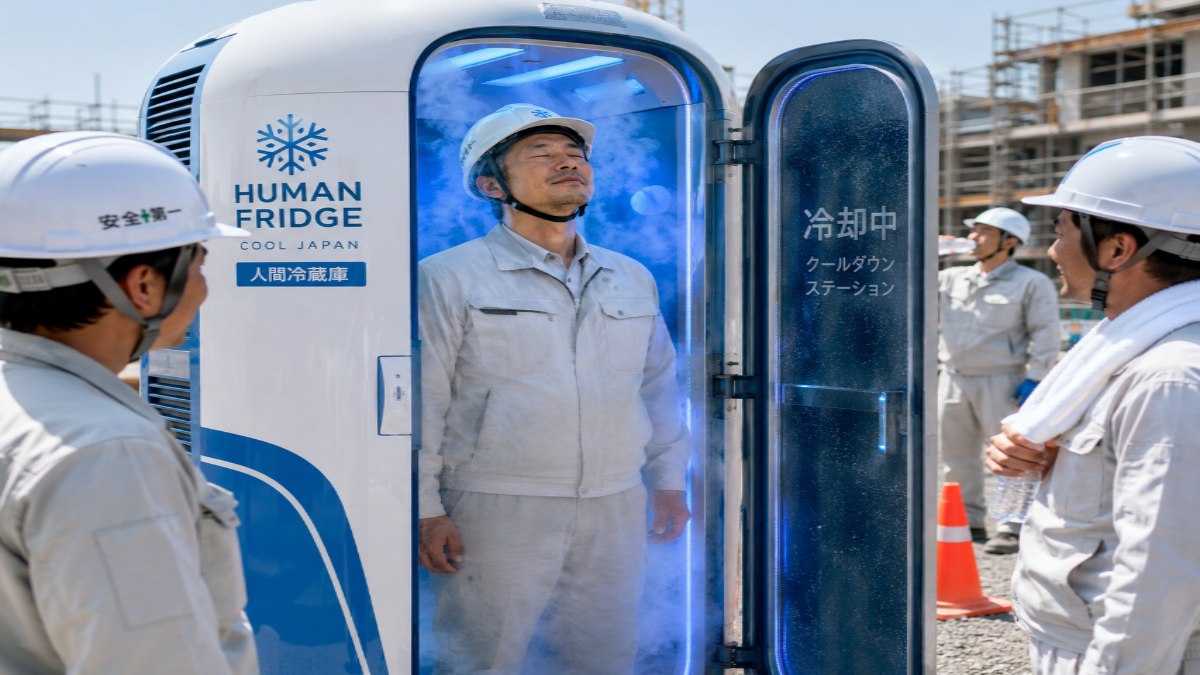
The idea behind the human fridge is relatively straightforward: instead of requiring workers to remain inside an air-conditioned room, the cooling system is designed to help lower body temperature while they continue performing their duties. This can be particularly useful for people who spend long periods outdoors or work in environments where conventional air conditioning is not practical.
A Creative Response to Extreme Heat
Japan has experienced increasingly challenging summer conditions, making heat management a significant concern for outdoor workers. Construction workers, delivery personnel, maintenance crews, agricultural workers and other employees can face prolonged exposure to high temperatures. Working for extended periods in such conditions can increase the risk of dehydration, heat exhaustion and potentially life-threatening heatstroke.
Related Articles


Traditional measures such as drinking water regularly, taking breaks in shaded areas and using portable fans remain important. However, technological solutions can provide an additional layer of protection. The human fridge concept represents this broader movement toward developing cooling systems specifically designed for people who cannot simply escape the heat.
The technology has generated interest because of its unusual appearance and straightforward purpose. The term “human fridge” immediately captures attention, but the underlying idea is serious: creating a controlled cooling environment that can help workers recover from heat exposure and remain more comfortable during demanding tasks.
How Cooling Technology Can Help Workers
Personal cooling technology has become increasingly diverse. Depending on the design, systems can use refrigerated air, cooling surfaces, circulating air or other temperature-management techniques. Some technologies are wearable, while others create a small cooling zone around the user.
Related Articles


The goal is not necessarily to make a person feel cold. Instead, effective cooling solutions aim to reduce excessive heat accumulation and help the body cope with demanding environmental conditions. This can be especially valuable when workers have limited opportunities to enter an air-conditioned building.
Such technologies could eventually become part of wider workplace heat-safety programmes. Employers may combine cooling equipment with scheduled rest periods, hydration stations, protective clothing and temperature monitoring to reduce heat-related risks.
Why Japan Is Exploring New Cooling Solutions
Japan has a long history of developing practical technologies designed around everyday challenges. From compact electronics to innovative home appliances, Japanese engineering often focuses on efficiency, convenience and adaptation to changing circumstances.
Extreme heat presents a particularly complex challenge because it affects multiple industries. Workers cannot always stop operations when temperatures rise, and some jobs require continuous outdoor activity. As a result, employers and technology developers are looking for solutions that allow work to continue while placing greater emphasis on employee wellbeing.
The human fridge concept also highlights a broader global issue. Climate change is contributing to more frequent and intense periods of extreme heat in many regions. This means cooling innovations could become increasingly relevant far beyond Japan.
Technology Is Not a Replacement for Basic Heat Safety
Despite the excitement surrounding new cooling devices, technology should not be considered a complete solution to heat-related health risks. Workers still need access to drinking water, appropriate rest breaks, shade and suitable working conditions.
Employers also need to monitor environmental conditions and recognise warning signs of heat-related illness. Confusion, dizziness, severe weakness, nausea, headache and unusually heavy sweating can indicate that someone needs immediate attention. In severe cases, heatstroke can become a medical emergency.
The most effective approach is therefore likely to combine innovative cooling technology with established workplace safety practices.
A Glimpse Into the Future of Workplace Cooling
The human fridge concept demonstrates how unusual ideas can emerge in response to changing environmental conditions. What sounds like a futuristic invention may represent a practical direction for industries facing increasingly difficult summer temperatures.
As heatwaves become a growing concern, personal cooling systems, wearable technologies and portable climate-control solutions could become more common. Japan's experiment with innovative cooling is therefore part of a much larger conversation about adapting workplaces to a hotter world.
Ultimately, the appeal of the “human fridge” lies not only in its novelty but also in the problem it seeks to address. Keeping workers safe and comfortable in extreme heat will require creativity, responsible workplace policies and continued investment in technology. As temperatures continue to challenge conventional working conditions, innovations such as these could play an increasingly important role in protecting people from the dangers of extreme heat.


Comments 0