
A healthy smile begins in childhood. Good dental care is critical to children’s health, as it prevents cavities, aids in speech development, feeding and nutrition, and lifelong oral hygiene. Baby teeth do fall out eventually, but these little teeth are the ones that guide permanent teeth into their proper positions and build healthy jaw development.
Parents and caregivers are the ones who need to teach children how to care for their teeth. Healthy habits in children are more likely to develop strong teeth and healthy gums at an early age, but at the same time, children will also develop healthy habits over time.
Why is oral care so important for kids
Children are especially susceptible to tooth decay as they are attracted to sugary snacks and are still learning proper brushing techniques. Poor oral hygiene can cause cavities, gum problems, pain, infections, and difficulty eating or speaking.
Related Articles


Great oral health is important for many benefits: keeping good oral health has many benefits:
- Strong and healthy teeth
- Healthy gums
- Fresh breath
- Better chewing and digestion
- Improved confidence and smile
In this way, lower risk of dental treatments later in life.
Early oral hygiene habits for children will help children maintain healthy teeth through adulthood.
Related Articles


Should dental care begin
Dental care should begin even before a baby's first tooth appears. After feeding, parents can gently clean a baby’s gums with a soft, clean, damp cloth.
Once the first tooth erupts, use a soft-bristled toothbrush with a tiny smear of fluoride toothpaste (or as recommended by your dentist). As children grow older, they can gradually learn to brush independently while being supervised.
Most dental experts recommend scheduling a child's first dental visit by their first birthday or within six months of the appearance of the first tooth.
Teach Proper Brushing Habits
Brushing twice a day is one of the best ways to prevent cavities.
Encourage children to:
- Brush every morning and before bedtime
- Brush for at least two minutes
- Use a soft-bristled toothbrush
- Replace the toothbrush every three to four months or longer if the bristles get worn out
- Brush all tooth surfaces, including the front, back, and chewing surfaces
- Gently brush the tongue to remove bacteria
Parents should supervise brushing until children have the coordination to brush thoroughly on their own.
Don't Forget Flossing
Flossing helps remove food particles and plaque from between the teeth that a toothbrush cannot reach.
When the two teeth touch one another, start flossing as part of your child's daily oral care routine. Child-friendly floss picks can make the process simpler and more enjoyable.
Healthy Eating for Strong Teeth
Diet plays a significant role in oral health.
Offer foods that support healthy teeth, such as:
- Fresh fruits and vegetables
- Milk, yogurt, and cheese
- Whole grains
- Eggs
- Lean proteins
- Nuts and seeds (for older children, considering age-appropriate safety)
Limit sugary foods and drinks, including candies, chocolates, soft drinks, and sticky snacks, as they increase the risk of tooth decay.
Make sure children drink lots of water, especially after meals, to help rinse away food particles.
Make Dental Care Fun
Children are more likely to develop good habits when oral care feels enjoyable.
Try these ideas:
- Let them choose a colorful toothbrush
- Use a toothpaste with a child-friendly flavor suggested for their age
- Play a two-minute brushing song or set a timer
- Reward consistency with stickers or a brushing chart
- Brush together as a family to set a good example
Positive reinforcement can help kids see brushing as a fun daily activity instead of a chore.
Regular Dental Check-Ups
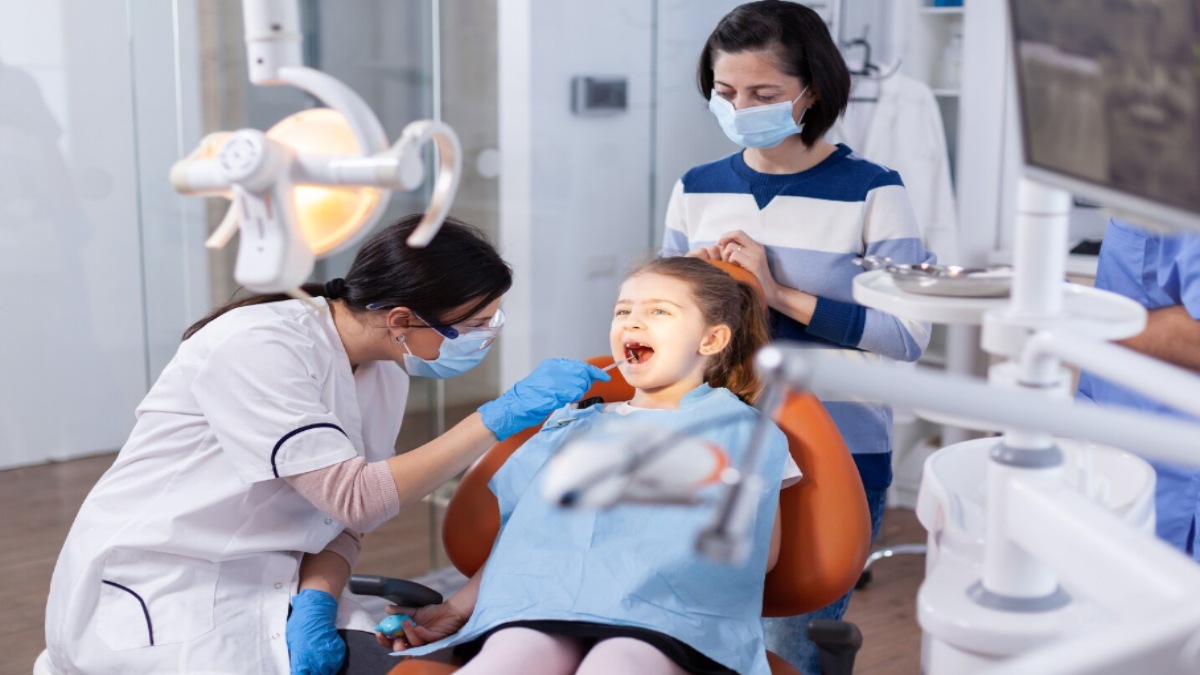
Dental visits are necessary for detecting problems early.
Dentists can:
- Check for cavities
- Monitor tooth development
- Clean teeth professionally
- Provide fluoride treatments when appropriate
- Make dental sealants for cavity prevention
- Provide tips on proper oral hygiene
Regular check-ups, usually every six months unless otherwise advised, help keep teeth healthy and identify potential issues before they become serious.
Preventing Common Dental Problems
Parents can minimize the risk of dental problems by encouraging consistent oral hygiene and healthy eating habits.
Other preventive measures include:
- Avoid sending children to bed with bottles containing milk, juice, or sweetened drinks
- Encourage drinking from a cup as children grow
- Use protective mouthguards during contact sports
- Discourage thumb sucking beyond the recommended age if advised by a healthcare professional
These simple steps can help protect children’s teeth from unnecessary damage.
Dental care is a huge part of a child’s health and well-being. Early development of good oral hygiene habits, a balanced diet, regular dental check-ups, and making brushing enjoyable all help to greatly reduce the risk of cavities and other dental problems.
By investing in children's oral health today, parents can help ensure strong teeth, healthy gums, and confident smiles that last a lifetime.


Comments 0