
Getting a stronger, more stable core does not always require a gym, expensive equipment or a long workout. A simple bodyweight routine can target the major muscle groups around your midsection, including the rectus abdominis, deeper core muscles and obliques. With consistency, good technique and a balanced lifestyle, these exercises can become an effective part of a home fitness routine.
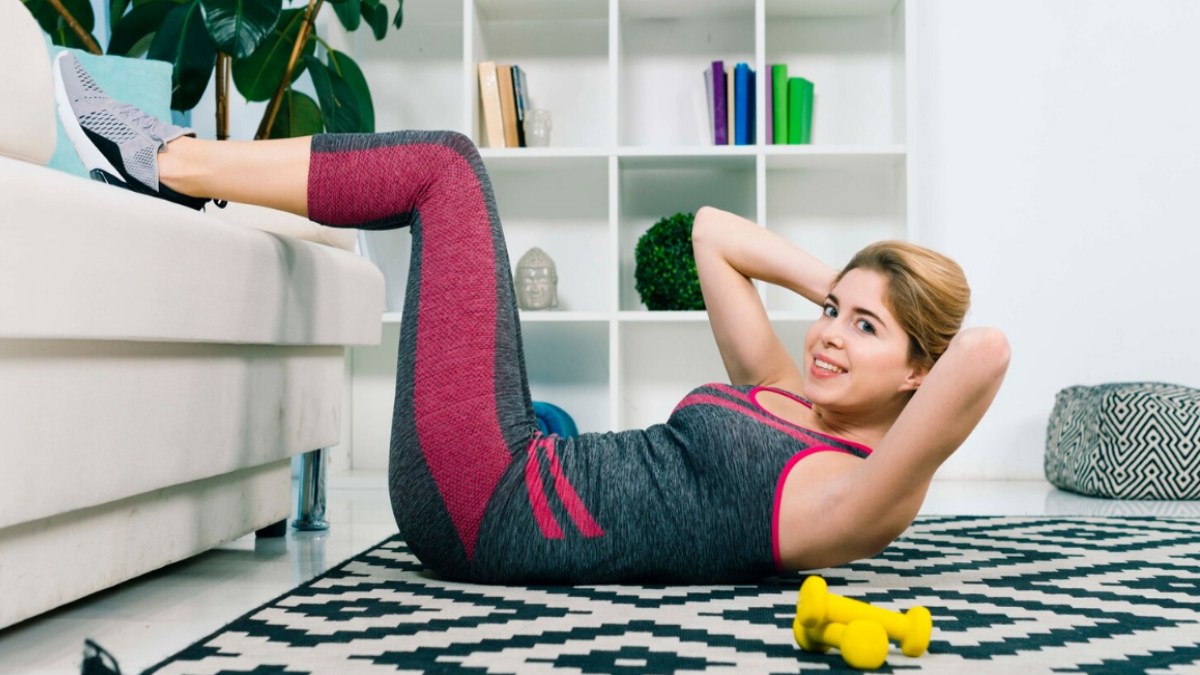
It is important to remember that exercise alone cannot guarantee a completely flat stomach. Where the body stores fat is influenced by genetics, hormones, age and other factors. You also cannot reliably reduce fat from only one area by exercising that area. Instead, focus on strengthening your core while combining regular physical activity with nutritious eating, adequate sleep and sustainable habits.
Here is a simple no-equipment routine that targets different areas of the core.
Related Articles


1. Dead Bug for Deep Core Stability
The dead bug is a beginner-friendly exercise that challenges the core while requiring controlled movement.
Lie on your back with your knees bent and lifted above your hips. Extend your arms toward the ceiling. Slowly lower one arm and the opposite leg toward the floor while keeping your lower back comfortably supported. Return to the starting position and switch sides.
Perform 8 to 12 controlled repetitions per side.
Related Articles


Avoid rushing through the movement. The goal is to maintain core control rather than lower your limbs as far as possible.
2. Reverse Crunch for the Lower Abs
Lie on your back with your knees bent. Keep your arms beside your body or place your hands underneath your hips for gentle support. Engage your abdominal muscles and slowly draw your knees toward your chest, lifting your hips slightly from the floor.
Lower your hips with control rather than dropping them.
Try 10 to 15 repetitions.
The movement should come from your abdominal muscles rather than momentum. If you feel discomfort in your lower back, reduce the range of motion.
3. Bicycle Crunch for the Obliques
Bicycle crunches can challenge both the abdominal muscles and obliques.
Lie on your back and place your hands lightly behind your head. Lift your shoulders slightly from the floor. Bring one knee toward your chest while rotating your torso so the opposite elbow moves toward the knee. Return to centre and repeat on the other side.
Aim for 8 to 12 repetitions per side.
Do not pull on your neck while performing the exercise. Keep the movement slow enough that you can maintain good form.
4. Plank for the Full Core
The plank is a simple bodyweight exercise that challenges the abdominal muscles, shoulders and other muscles responsible for stabilising the body.
Start on your forearms and toes, keeping your body in a relatively straight line. Brace your core and avoid allowing your hips to sag or rise excessively.
Hold the position for approximately 20 to 40 seconds, depending on your fitness level. Beginners can perform a modified plank from the knees.
Quality is more important than holding the plank for as long as possible.
5. Mountain Climbers for a Dynamic Challenge
Mountain climbers combine core stability with movement and can raise your heart rate.
Start in a high-plank position with your hands underneath your shoulders. Bring one knee toward your chest, return it to the starting position and then alternate with the other knee.
Begin slowly to learn the movement. As your coordination improves, you can increase the pace while maintaining proper form.
Try 20 to 30 alternating repetitions.
6. Side Plank for the Obliques
Side planks specifically challenge the muscles along the sides of your torso.
Lie on one side and prop yourself up on your forearm. Lift your hips while keeping your body aligned. Hold for 15 to 30 seconds, then switch sides.
If a full side plank feels too difficult, bend your lower knee and keep it on the floor for additional support.
A Simple Workout Structure
You can combine these exercises into a short circuit. Start with a few minutes of gentle movement to warm up, then perform dead bugs, reverse crunches, bicycle crunches, planks, mountain climbers and side planks.
Beginners can complete one or two rounds, while people with more experience may gradually build toward three rounds. Rest whenever necessary and focus on controlled movements.
Pair Core Training With Full-Body Activity
A strong core is useful for everyday movement, posture and exercise performance, but it should not be the only focus of your fitness routine. Walking, cycling, swimming, dancing, strength training or other enjoyable forms of physical activity can help improve overall fitness.
Nutrition also matters if your goal is to reduce body fat. Rather than following extreme diets, aim for a balanced eating pattern that provides adequate protein, fibre, fruits, vegetables, whole grains and healthy fats.
Consistency Matters More Than Perfection
You do not need to perform hundreds of crunches every day to build a stronger core. A manageable routine performed consistently is generally more sustainable than an intense programme that leaves you exhausted or injured.
Give your muscles time to recover, especially if you are new to exercise. Stop if an exercise causes sharp or unusual pain, and consider professional guidance if you have an injury or medical condition.
A flat stomach should not be the only measure of fitness. Building core strength, improving movement and feeling stronger are valuable goals in themselves. With regular exercise, balanced nutrition and realistic expectations, a simple no-equipment routine can be an effective way to make core training part of your everyday lifestyle.


Comments 0