
Ghewar is one of the most distinctive sweets in India’s rich culinary landscape. With its round shape, intricate network of holes and crisp texture, this traditional delicacy has a special place in North Indian sweet shops and festive celebrations. It’s usually associated with Rajasthan and is popular across some parts of North India.
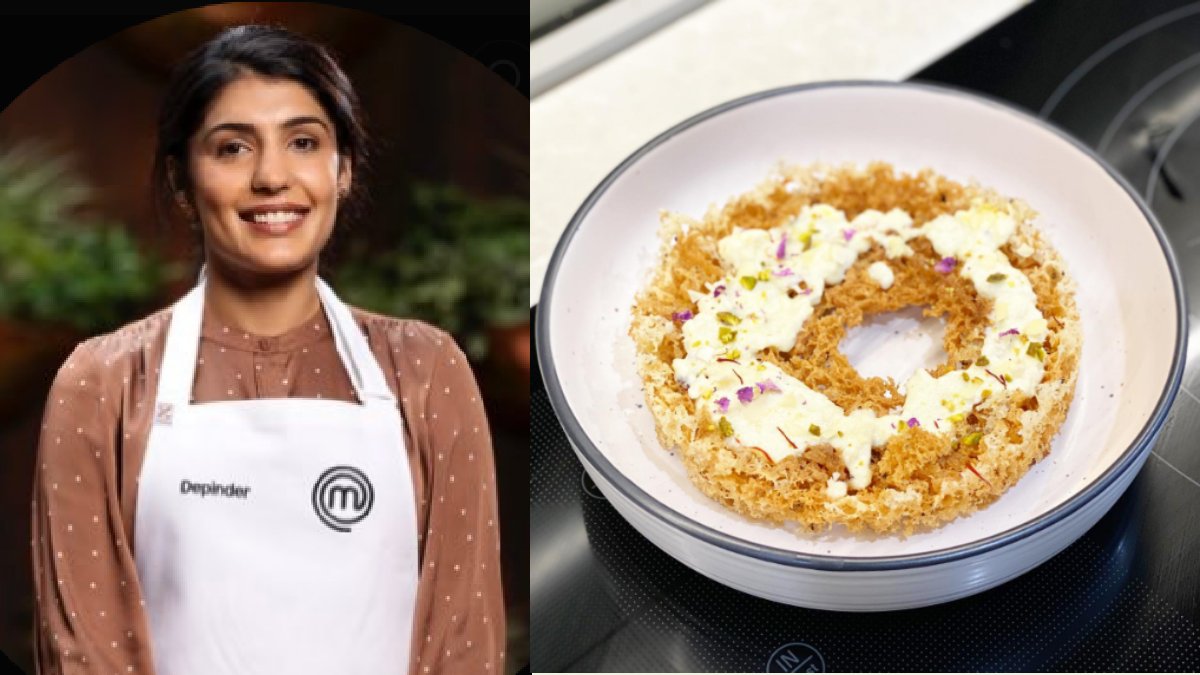
Its unusual appearance has also earned it a memorable comparison with honeycomb. When Indian-origin contestant Depinder Chhibber prepared “Indian honeycomb” for the judges on MasterChef Australia, the story became more popular and the name “Indian honeycomb” was introduced.
For many Indian viewers, the name immediately came to mind for ghewar, a sweet that looks as though it is a honeycomb but is actually made in a very different way.
What is Ghewar?
Ghewar is a round, flat and porous sweet usually made of wheat flour or refined flour, water and ghee and deep fried in oil or ghee. The batter is poured in the hot fat in stages and the lattice-like structure is formed. Once fried, the ghewar is removed and soaked or drizzled with sugar syrup and its signature sweetness comes into play.
Related Articles


The texture is one of the most defining features of the dessert. A well-made ghewar should have a crisp exterior and airy, porous interior. The numerous openings created during frying allow sugar syrup to penetrate the sweet, creating crunch and sweetness.
Although the basic preparation is quite simple in terms of ingredients, ghewar needs a lot of skill to be made. The temperature of the oil and the consistency of the batter have to be carefully controlled. Subtle changes in technique can influence how the final texture and shape looks.
Why is it called Indian Honeycomb?
The honeycomb comparison is mainly due to ghewar’s distinctive appearance. Its surface is covered by holes and cavities that are comparable to the structure of natural honeycomb. But the similarity largely comes down to its appearance.
Related Articles


Honeycomb is naturally produced by bees and can be eaten directly or as an ingredient in different foods. Ghewar is a deep-fried confection made from flour and added sugar syrup and other toppings.
Ghewar is also very interesting in the cooking process. The batter is then poured into very hot oil, and bubbles and holes appear. Chhibber explained on MasterChef Australia how temperature control is important, and hot oil and chilled batter are used to create that distinctive texture.
A Sweet That Requires Precision
Ghewar is not an easy sweet to prepare despite its simple ingredients list. The batter has to be consistent and the oil should be hot enough to get the porous shape.
Usually, the batter is poured into the centre of a deep wide vessel filled with hot oil. Slowly and naturally the layers are built around the existing structure. The process involves patience and precision because pouring too quickly or using oil at the wrong temperature can affect its shape.
When the ghewar is crisp, it is removed carefully. Sugar syrup is added, and the sweet liquid slowly seeps into the porous structure. Depending on the variety, it can be mixed with saffron, chopped nuts, cardamom or edible silver varak.
Popular Varieties of Ghewar
Old style ghewar is still popular but it has been replaced by a number of alternative flavours such as malai ghewar, which is also very popular, with a rich layer of creamy malai or rabri. The contrast between the crisp ghewar and smooth creamy topping makes it so popular during festive celebrations.
Plain ghewar is relatively simple and uses the crisp texture and sugar syrup to take centre stage. Other versions may include saffron, nuts, dry fruits or dairy-based toppings.
Today’s sweet shops also experiment with presentation and taste, introducing variations to appeal to changing tastes. But the traditional round honeycomb-like structure is still central to ghewar's identity.
Ghewar and Indian Festivals
Ghewar is closely associated with celebrations in North India. It is particularly popular during Teej and Raksha Bandhan festivals where families exchange sweets and celebrate. In Rajasthan, ghewar is very much an integral part of seasonal and cultural celebrations.
During the festival, sweet shops often display big stacks of freshly prepared ghewar, decorated with nuts, saffron, rabri and silver varak. The sweet is also frequently bought as a gift when visiting friends and relatives.
Ghewar’s associations with festivals have helped keep it relevant across generations. Even as Indian dessert preferences have grown, the traditional sweet is still seen on festive tables and in gift boxes.
From Traditional Sweet Shops to Global Kitchens
Ghewar’s appearance on MasterChef Australia demonstrated how Indian desserts can attract attention beyond the country’s borders. The term “Indian honeycomb” provided a good comparison for international consumers who are unaccustomed to the sweet.
At the same time, ghewar is deeply linked to the regional food traditions of India. Its preparation reflects the skills of traditional halwais, while its association with festivals indicates the importance of sweets in Indian social and cultural life.
Ghewar can be enjoyed plain, with rabri or with saffron and dry fruits, and it offers a unique combination of texture, sweetness and visual appeal. Its honeycomb-like shape may make it instantly recognizable, but its cultural history and festive significance are what truly give this dessert its enduring place in Indian cuisine.
From North Indian sweet shops to international television kitchens, ghewar continues to prove that traditional Indian sweets can be both culturally rooted and globally fascinating.


Comments 0