
People with high blood pressure are frequently advised to exercise regularly, and one simple exercise may be particularly helpful. Wall sits (wall squats) are a type of isometric exercise that can help reduce blood pressure when done regularly.
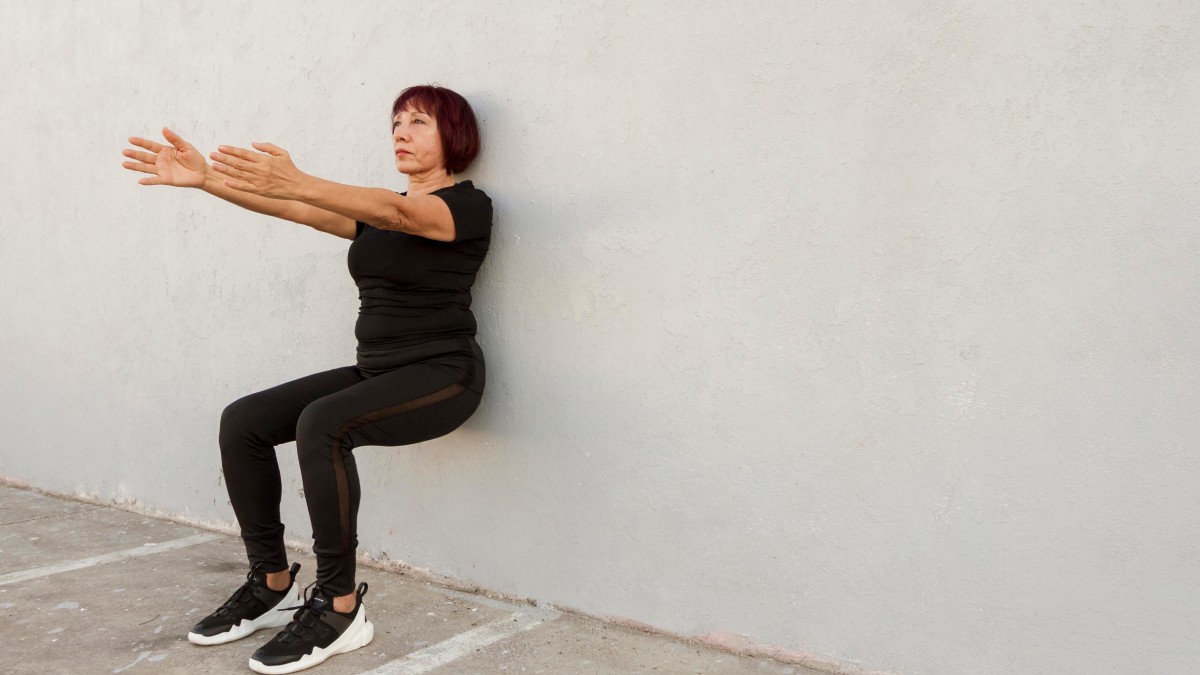
A wall sit does not require any equipment. You simply lean on a wall for support and hold your body in a seated position.
Research in the British Journal of Sports Medicine found that isometric exercises (including wall sits and planks) were associated with significant reductions in blood pressure. The results of 270 trials involving more than 15,000 people showed that isometric exercise was more effective than other forms of exercise.
Related Articles


But wall sits can’t replace blood pressure medication or medical treatment. They can be considered as part of a regular exercise routine.
How can a wall sit help lower blood pressure?
A wall sit is an isometric exercise, so the muscles are under tension without the joints moving significantly.
When you wall sit, your thighs, glutes, and core muscles work continuously to hold your body in position.
Related Articles


Therefore, researchers believe that temporarily restricting blood flow during an isometric exercise can result in changes in blood vessels when the exercise ends, and the blood vessels are relaxed and lower blood pressure over time.
A large review of exercise studies found that isometric exercise produced some of the largest reductions in resting blood pressure among the exercise types studied.
High blood pressure puts a lot of pressure on your heart and blood vessels. Heart disease, stroke and other health problems are more likely to come along with uncontrolled hypertension.
Wall sits also have another advantage: they are simple and require very little space.
You do not need a gym, weights or specialised equipment. A solid wall is enough.
But people should not assume that holding a wall sit for as long as possible is better. Blood pressure can increase significantly during wall sits and planks, even though regular isometric exercise may lower resting blood pressure over time.
This distinction is important for hypertension patients particularly.
How to do a wall sit safely?
In a starting position, you have your back against a wall and your feet shoulder-width apart.
Bend your feet slightly forward and slowly slide your back down the wall. Bend your knees so that you are sitting on an invisible chair.
Your knees should be roughly above your ankles, and your back should stay against the wall.
At least beginners do not have to aim for a 90-degree knee angle immediately. A less demanding position can be easier to maintain and may be less stressful on the body.
Start with a short hold (20 seconds) and gradually increase the duration as you get comfortable. Mayo Clinic Health System suggests aiming for longer holds and incorporating isometric exercises into a wider exercise routine.
Most importantly, keep breathing normally.
Do not hold your breath while doing a wall sit. Breath holding during strength exercises can cause blood pressure to rise sharply.
You can build up strength as you go and not have to hold the position for several minutes from the beginning.
Wall sits are not the only option. Planks are another common isometric exercise that has been studied for its potential effect on blood pressure.
Regular aerobic activities such as walking, cycling or swimming are still very important for cardiovascular health. Isometric exercises should therefore complement rather than replace other forms of physical activity.
As a new exercise routine starts, a person with uncontrolled hypertension, heart disease or other medical conditions should consult a doctor if they want to start a new exercise routine.
This is especially important because blood pressure can temporarily increase during intense isometric exercises. In a recent study, wall sits caused high blood pressure during exercise, but the participants did not experience adverse events.
The takeaway is fairly straightforward: a wall sit is a good addition to an exercise routine for people who want to improve blood pressure but will not achieve a fast cure for hypertension.
In the present context of high blood pressure, a good diet, weight management, salt restriction, and proper treatment are very important.
When doing a new exercise, starting with a short, comfortable wall sit and slowly building up may be a practical way to get isometric exercise into your routine.


Comments 0