
Food that is a little overcooked or has a dark, crispy edge is a part of the dinner table. From toast and roasted potatoes to grilled vegetables and barbecued meat, many people enjoy the smoky flavour and crunchy texture resulting from high-temperature cooking. But does eating food that has been slightly burned increase cancer risk.
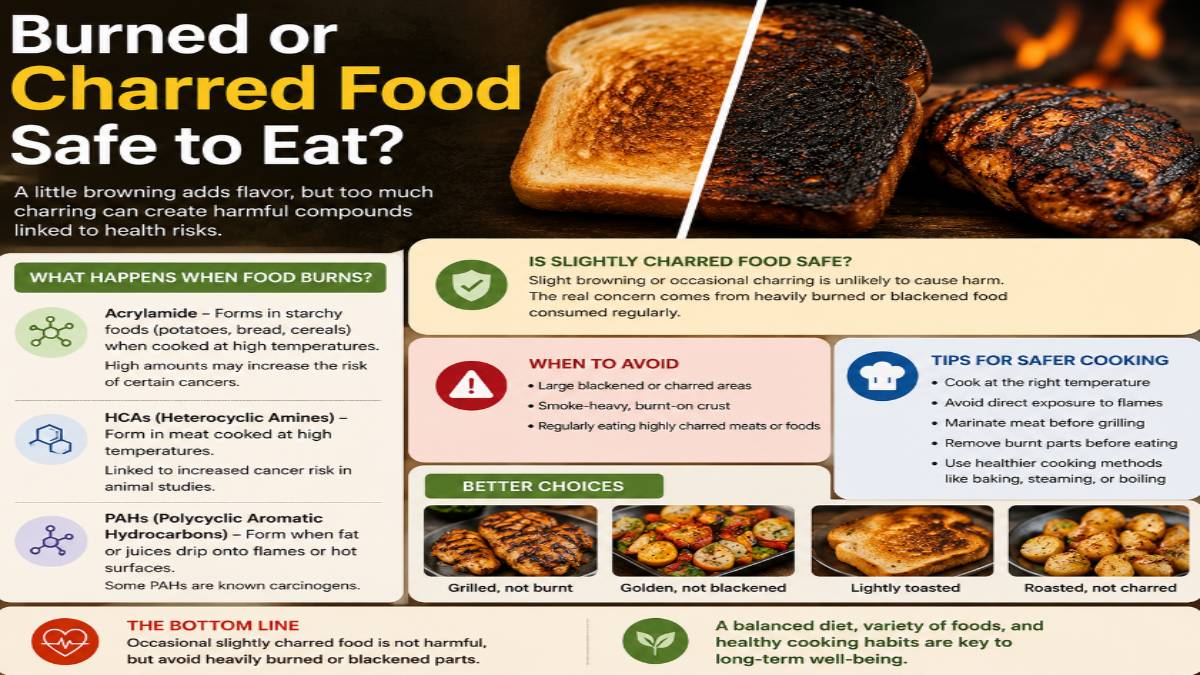
The answer is more nuanced than simply saying that every darkened piece of food is dangerous. Health experts generally distinguish between occasional consumption of lightly browned or slightly charred food and regularly eating heavily burned foods. Several potentially harmful compounds can develop during high-temperature cooking, so avoiding excessive charring is a sensible part of a balanced approach to food safety.
What will happen when food gets very dark
High temperatures can trigger chemical reactions in food. Some of these reactions result in good flavours and smells, but other compounds can also be produced depending on the type of food and cooking method.
Related Articles


A compound of particular interest is acrylamide, which can form when some carbohydrate-rich foods like potatoes and grains are cooked at high temperatures. The Maillard reaction is involved in browning and flavour development.
Acrylamide exposure from food has been studied extensively because high levels have caused cancer in laboratory animals. However, the amount typically consumed through food and cancer risk in humans is more complicated. That is why it is not accurate to say that eating one piece of burnt toast will cause cancer.
What about grilled or barbecued meat
Meat cooked at very high temperatures is a different problem. If meat is directly exposed to flames or very high heat, heterocyclic amines (HCAs) and polycyclic aromatic hydrocarbons (PAHs) can form.
Related Articles


HCAs can develop when components of meat react at high cooking temperatures. PAHs can form when fat and juices drip onto a hot surface or flame, creating smoke that deposits compounds back onto the food.
Both groups of compounds have been studied for their potential carcinogenic properties. This doesn’t mean that grilled meat is necessarily causing cancer, but it does provide a reason to avoid eating heavily blackened meat frequently.
Is it safe to eat very slightly charred food
Not necessarily. Exposure and the frequency of exposure matter, and diet-related cancer risk is influenced by many factors.
If one piece of toast (or something else in general) has a little dark edge, it is not a bad idea to cut away the thick browned part. Just as vegetables may get slightly over-browned during roasting, cutting off the darkest parts may be a reasonable precaution.
The bigger problem is eating heavily burned or blackened food so frequently when it is a major part of the diet.
It is therefore better to avoid intentionally burning food and to treat heavily charred portions as something to remove rather than eat.
What are the practical ways to decrease exposure
You do not need to stop grilling, roasting, or toasting to cook. Small changes could be made to reduce the creation of unwanted compounds.
Avoid excessive browning
Instead of dark brown and black food, do try golden brown foods. When making toast, if possible, take a lighter setting.
Remove heavily charred sections
If food goes blackened, trim away the burned areas before eating. This would be particularly useful for grilled and heavily charred foods.
Control cooking temperature
High temperatures can lead to the formation of certain compounds. Food cooked thoroughly at the right temperature but not too much to burn the exterior provides a better balance between flavour and food safety.
Reduce direct exposure to flames
When grilling meat, keeping it away from direct flames can help reduce intense charring. Turning meat regularly and controlling flare-ups can also help.
Marinate meat
Some research has shown that certain marinades reduce the formation of HCAs during cooking. Marinades are not a guarantee of safety but do add flavour and don’t require excessive charring.
Eat a varied diet
Dietary variety is one of the most important elements of healthy eating. Vegetables, fruits, whole grains, legumes, nuts, and other minimally processed foods provide a wide range of nutrients.
As opposed to just eliminating one food completely, it is generally better to look at a whole pattern of eating.
Should you give up grilled food
For most people, there is no need to eliminate grilled or roasted food entirely. Cooking methods can be varied, including steaming, boiling, baking, roasting, sautéing, and grilling.
If you enjoy barbecued food, avoid excessive charring and balance it with plenty of plant-based foods. Choosing leaner cuts of meat and including vegetables can also make meals more nutritionally balanced.
Cancer risk factors are influenced by tobacco exposure, alcohol consumption, body weight, physical activity, infections, genetics, environmental exposures, and overall dietary patterns. No single meal can determine whether someone will develop cancer.
A little browning does not make food suddenly dangerous. But very burned and blackened food is best avoided, especially when it is consumed regularly.
The easy way is to cook food properly, avoid burning it deliberately, keep cooking temperatures low, minimize flare-ups when grilling, and remove charred foods before eating. For carbohydrate-rich foods such as toast and potatoes, aim for golden rather than very dark browning.


Comments 0