
Even if a desk job can seem like a part of a regular work life, a sedentary lifestyle does have other effects: long hours at a desk can be worse: back or neck pain. Little to no movement, less sunlight exposure and fast meals can cause musculoskeletal health to suffer and possibly make you have weaker bones.
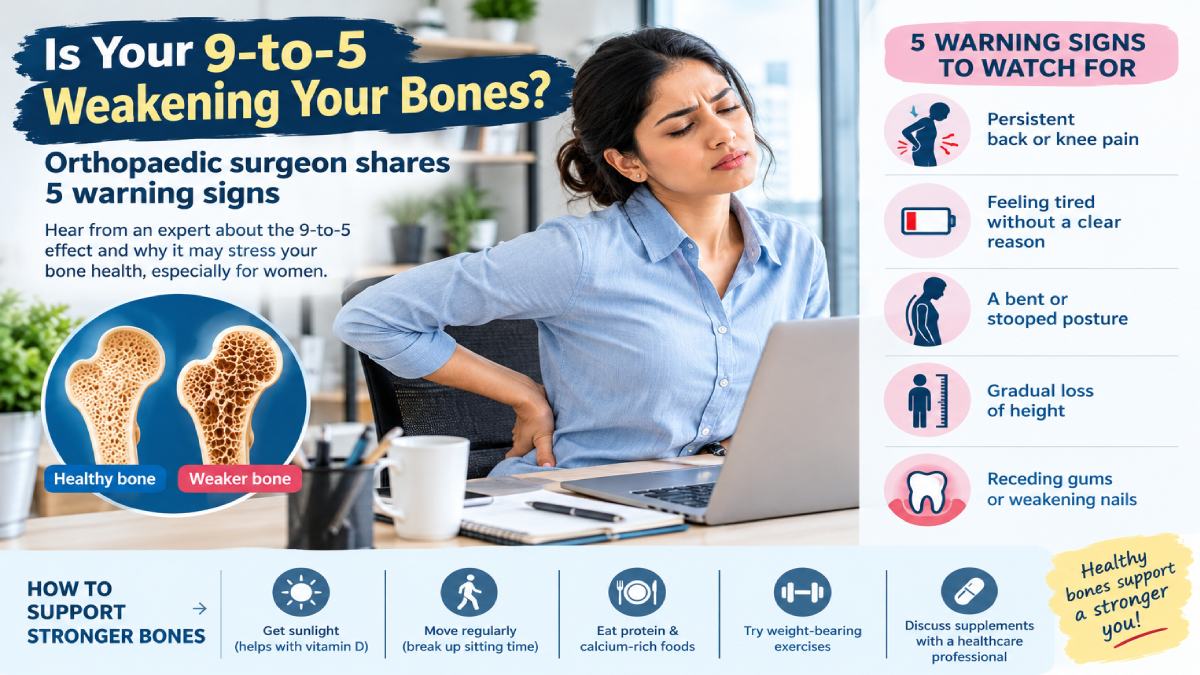
Orthopaedic surgeon Dr Harsh Bhargava of Indraprastha Apollo Hospitals, Delhi, has warned that body soreness can be a rather early and easily missed telltale sign of poor bone health, especially among working women.
Dr Bhargava noted that the problem is not limited to older adults. Women in their twenties and thirties are beginning to show signs of bone weakness, which he says is known as the “9-to-5 effect.”
Related Articles


What is the 9-to-5 effect?
Desk work often involves sitting for many hours with very little physical movement. Walking, exercise and outdoor activity can be dramatically reduced once this becomes a daily habit.
“Bones need regular movement to keep strong,” Dr Bhargava said. He also said that limited sunlight exposure and rushed meals could be some potential problems. Sunlight helps the body to produce vitamin D, which is involved in calcium absorption and bone health.
Hence, meals without sufficient protein and calcium during a busy work schedule are present. Tea or coffee consumption is also bad if it replaces nutrient-rich foods or contributes to an unbalanced diet.
Related Articles


5 warning signs of weakening bones
Bone loss can progress slowly, which means early symptoms can be dismissed. Dr Bhargava highlighted several signs working women should pay attention to:
1. Persistent back or knee pain
But chronic pain and aches from sitting at a desk are not always due to sitting at a desk. Back or knee pain can be caused by many things, but repeated symptoms must be evaluated by a professional.
2. Unexplained tiredness
The feeling of being particularly tired without an obvious reason may indicate that your health and lifestyle need to be watched. Fatigue does not necessarily involve bone weakness, but repeated symptoms should be discussed with a doctor.
3. Bent or stooped posture
A very noticeable change in posture, especially stooping and increased stooping, is sometimes related to spinal changes and bone loss.
4. Gradual loss of height
A measurable decrease in height over time should not be considered as aging. Some spinal changes associated with osteoporosis can contribute to height loss.
5. Receding gums or weakening nails
Gums or nails can change for many reasons and are not necessarily an indication of weak bones. But when combined with other issues, discussing nutritional and bone health with a healthcare professional may be necessary.
Why women need to pay attention
Bone health is closely linked to hormonal health. Oestrogen helps maintain bone strength, while diminishing levels during perimenopause and menopause can increase the risk of bone loss.
That may be why irregular periods, long missed cycles or early menopause should be discussed with a doctor. Another risk factor for osteoporosis is family history.
Dr Bhargava advised women with risk factors to discuss with their doctor whether a bone-density scan is necessary. A bone-density test is a simple, non-invasive test that can help to identify reduced bone mineral density.
How to support stronger bones
Small lifestyle changes can help in bone health. Try to:
1. Get enough sunlight exposure.
2. Stand up and move around in the office.
3. Include protein and calcium-rich foods in your diet.
4. Walk regularly or take the stairs when required.
5. Get weight-bearing and resistance exercises into your routine.
6. Discuss vitamin D or calcium supplementation with a healthcare professional if needed.
Your desk work does not have to determine your bone health. Breaking up long periods of sitting and prioritising nutritious meals and regular movement can help build healthier habits for the long term.
- Disclaimer: This article is for informational purposes only and is not a substitute for professional medical advice. Symptoms such as pain, fatigue or changes in posture can have multiple causes. Always consult a qualified healthcare professional for diagnosis, testing and treatment.


Comments 0