
Dehydration occurs when a baby loses more fluids than they take in. Because infants have smaller bodies and can become seriously ill more quickly than older children and adults, dehydration deserves particular attention from parents and caregivers.
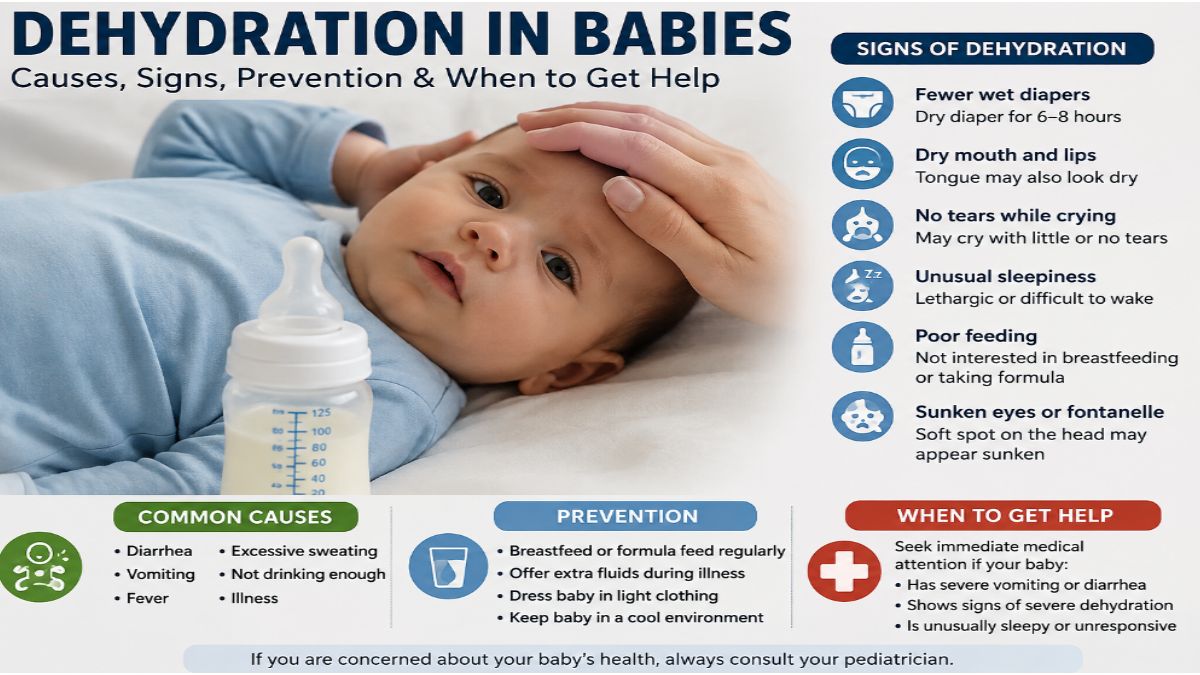
Babies may lose fluids because of vomiting, diarrhoea, fever, excessive sweating or difficulty feeding. Recognising the early warning signs can help parents seek medical advice before the condition becomes severe.
What Causes Dehydration in Babies
One of the most common causes is illness. Vomiting and diarrhoea can cause a baby to lose significant amounts of fluid and electrolytes. Fever can also increase fluid requirements, particularly when the baby is feeding poorly.
Related Articles


A baby may also become dehydrated if they are having difficulty breastfeeding or taking enough formula. Problems with feeding, nasal congestion or certain illnesses can make it harder for an infant to consume sufficient fluids.
In hot weather, excessive sweating can contribute to fluid loss. However, parents should be careful about assuming that every fussy or sleepy baby is dehydrated. Changes in behaviour can have many causes.
Signs of Dehydration in Babies
Parents should pay attention to changes in feeding, urination and general behaviour.
Related Articles


Possible signs include:
- Fewer wet nappies than usual
- Darker or stronger-smelling urine
- A dry or sticky mouth
- Fewer tears when crying
- Unusual sleepiness or reduced alertness
- Irritability or fussiness
- Poor feeding or refusing feeds
- Eyes that appear sunken
- A sunken soft spot, or fontanelle, in a young infant
- Cool or unusually dry skin
No single symptom confirms dehydration. The baby's overall condition and recent fluid intake are important.
Wet Nappies Can Provide an Important Clue
Monitoring wet nappies can be particularly useful when caring for a young baby. A noticeable reduction from the baby's usual urine output may indicate that they are not receiving enough fluid.
The expected number of wet nappies changes with age, feeding and individual circumstances, so parents should focus on a significant change from their baby's normal pattern rather than relying on one universal number.
If you are concerned that your baby is urinating much less than usual, contact a healthcare professional.
Breastfeeding and Dehydration
Breastfed babies should generally continue breastfeeding during illnesses unless a healthcare professional advises otherwise. Offering feeds more frequently may help provide fluids and nutrition.
If a baby is struggling to latch, repeatedly vomiting or refusing to feed, medical advice is important. A lactation consultant or healthcare professional may also be able to identify feeding difficulties that are contributing to inadequate intake.
Formula-Fed Babies
Babies who receive infant formula should continue to receive appropriately prepared formula unless their healthcare professional recommends another approach.
Parents should never dilute infant formula with extra water in an attempt to increase fluid intake. Incorrectly prepared formula can interfere with the balance of nutrients and electrolytes a baby needs.
Likewise, adding extra formula powder can be dangerous.
What About Water
The appropriate source of fluids depends on the baby's age and circumstances. Young infants generally obtain their required fluids from breast milk or properly prepared infant formula.
Giving plain water to a young baby without medical advice can be unsafe. When a baby has vomiting or diarrhoea, a healthcare professional may recommend an appropriate oral rehydration solution based on the child's age and condition.
Parents should not give homemade electrolyte mixtures or sports drinks to babies unless specifically instructed by a healthcare professional.
Dehydration During Vomiting or Diarrhoea
When a baby is vomiting or has diarrhoea, dehydration can develop more quickly because fluids are being lost.
Continue offering breast milk or formula as appropriate, and seek medical advice if the baby cannot keep feeds down, is refusing feeds or has significantly fewer wet nappies.
A doctor may recommend an oral rehydration solution for some babies. These solutions contain carefully balanced amounts of water and electrolytes and are different from ordinary drinks.
When Is Dehydration an Emergency
Severe dehydration can be life-threatening and requires urgent medical care.
Seek urgent medical attention if a baby is extremely sleepy, difficult to wake, unusually weak, has very little or no urine, has trouble breathing, appears seriously ill, cannot keep fluids down or shows other concerning symptoms.
A very young baby with fever also requires prompt medical assessment. In infants, particularly those younger than three months, fever can sometimes indicate a serious infection.
Parents should trust their instincts. If a baby looks significantly unwell or you are worried about their condition, seek medical care rather than waiting for symptoms to worsen.
How Can Parents Help Prevent Dehydration
During normal days, regular breast milk or formula feeding is generally sufficient for young babies. During hot weather or illness, monitor feeding and wet nappies more closely.
Keep babies comfortably cool in hot conditions and avoid excessive clothing or overheating. If your baby becomes ill, ask a healthcare professional for guidance about feeding and fluids, especially if vomiting, diarrhoea or fever is present.
Dehydration in babies can develop quickly, particularly when an infant is vomiting, experiencing diarrhoea, has a fever or is feeding poorly. Changes in wet nappies, feeding, tears, mouth moisture and alertness can provide useful clues.
Because babies are vulnerable to fluid and electrolyte imbalances, suspected dehydration should be taken seriously. Do not dilute formula or give water, electrolyte drinks or other fluids to a young baby without appropriate medical advice.
If your baby is difficult to wake, has very little urine, cannot feed or appears seriously unwell, seek urgent medical care.




Comments 0