
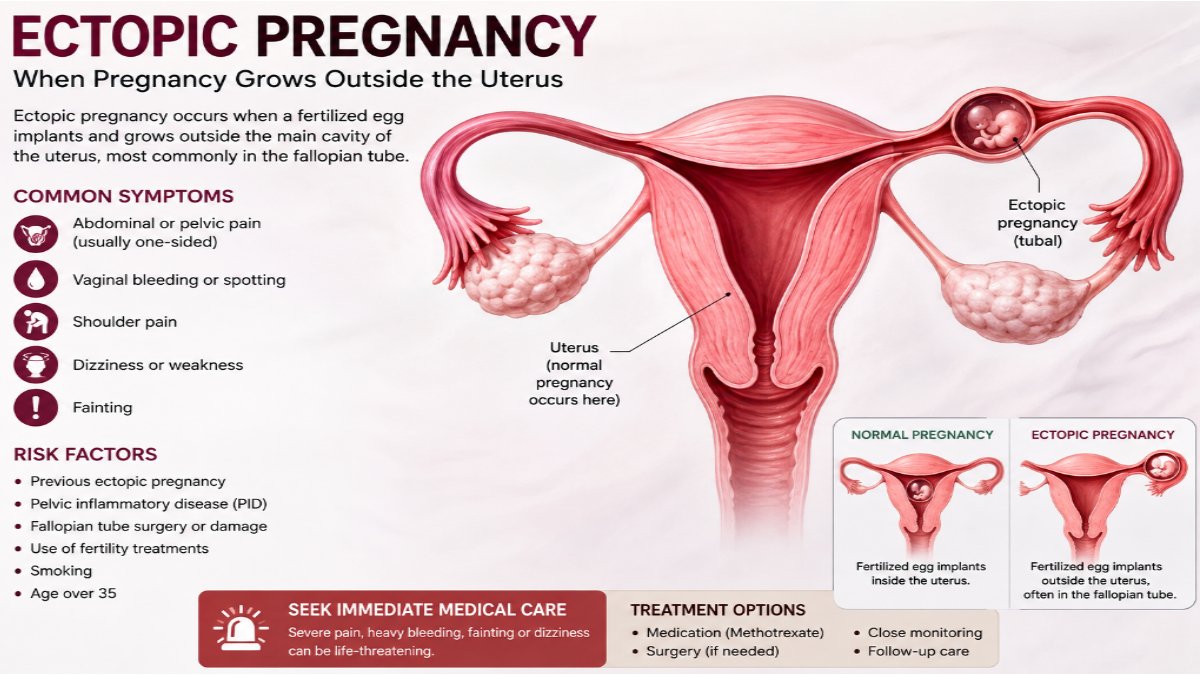
An ectopic pregnancy is a pregnancy that develops outside the main cavity of the uterus. Most ectopic pregnancies occur in a fallopian tube, which is why they are sometimes called tubal pregnancies. Because a pregnancy cannot develop normally outside the uterus, an ectopic pregnancy can become a serious medical emergency if it causes internal bleeding.
Recognising the warning signs and obtaining medical care early is extremely important. With appropriate diagnosis and treatment, most people can recover successfully, and future pregnancy may still be possible.
What Is an Ectopic Pregnancy
Normally, after fertilisation, the developing embryo travels through a fallopian tube and implants in the lining of the uterus. In an ectopic pregnancy, implantation occurs somewhere outside the uterine cavity.
Related Articles

Around most ectopic pregnancies occur in a fallopian tube, although implantation can rarely occur in other locations, such as the cervix, ovary, abdominal cavity or a previous caesarean-section scar.
An ectopic pregnancy cannot develop into a normal pregnancy and requires medical management.
What Are the Symptoms of Ectopic Pregnancy
Early symptoms can sometimes resemble those of a normal pregnancy, making an ectopic pregnancy difficult to identify without medical assessment.
Related Articles

Possible symptoms include:
- A missed period or other signs of pregnancy
- Vaginal bleeding or spotting
- Pain in the lower abdomen or pelvis
- Pain that may be stronger on one side
- Shoulder-tip pain
- Dizziness or weakness
- Fainting
- Rectal pressure or discomfort in some cases
Symptoms may develop during the early weeks of pregnancy. Some people may initially have few or no noticeable symptoms.
When Is Ectopic Pregnancy an Emergency
A ruptured ectopic pregnancy can cause significant internal bleeding and requires immediate emergency medical attention.
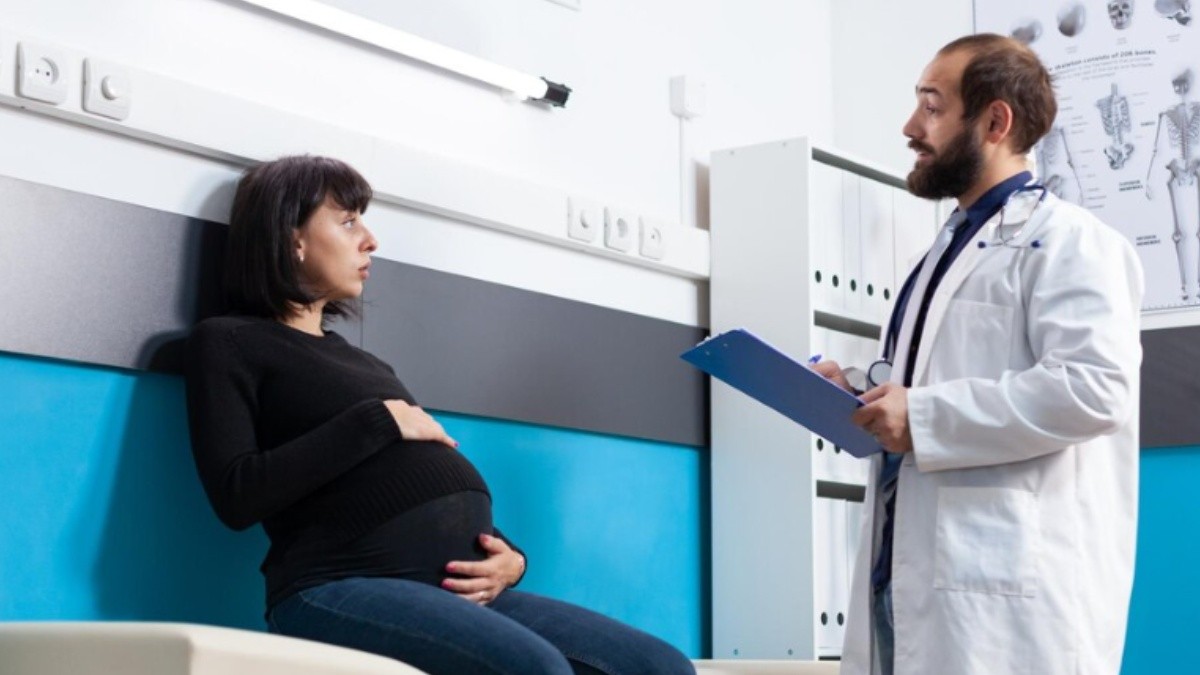
Seek emergency care if you are pregnant or could be pregnant and develop severe or worsening abdominal or pelvic pain, heavy bleeding, shoulder pain accompanied by other concerning symptoms, severe dizziness, weakness or fainting.
A sudden collapse or severe pain should never be ignored during early pregnancy.
What Causes an Ectopic Pregnancy
In many cases, the exact cause cannot be identified. Anything that affects the normal movement of a fertilised egg through the fallopian tube may increase the likelihood of ectopic implantation.
Potential risk factors include a previous ectopic pregnancy, damage or surgery involving the fallopian tubes, pelvic inflammatory disease and certain fertility treatments.
Smoking is also associated with an increased risk. Some people can develop an ectopic pregnancy even when they have none of these recognised risk factors.
Having a risk factor does not mean that an ectopic pregnancy will definitely occur.
Ectopic Pregnancy and Fertility Treatment
Some fertility treatments, including assisted reproductive technologies such as IVF, are associated with an increased risk of ectopic pregnancy.
People undergoing fertility treatment are often monitored closely in early pregnancy. If you have conceived following fertility treatment, your healthcare provider may recommend early blood tests and ultrasound examinations depending on your individual circumstances.
How Is an Ectopic Pregnancy Diagnosed
Diagnosis usually involves a combination of symptoms, pregnancy testing, blood tests and ultrasound.
A healthcare professional may measure levels of human chorionic gonadotropin (hCG) over time. In a normally developing early pregnancy, hCG generally follows a predictable pattern, although levels vary considerably between individuals.
A transvaginal ultrasound may be used to determine where the pregnancy is located. In very early pregnancy, it may be too soon to see the pregnancy clearly, so repeat blood tests or ultrasound examinations may be necessary.
Doctors may also consider other causes of abdominal pain or bleeding before confirming a diagnosis.
How Is Ectopic Pregnancy Treated
Treatment depends on factors such as the location and size of the pregnancy, hCG levels, symptoms, whether there is internal bleeding and the person's overall health.
Expectant Management
In selected cases, an ectopic pregnancy may resolve naturally without medication or surgery. This approach is sometimes called expectant management and requires careful medical monitoring.
It is only appropriate when specific clinical criteria are met.
Medication
A medicine called methotrexate may be used for certain unruptured ectopic pregnancies. It works by stopping the pregnancy tissue from growing, allowing the body to absorb it gradually.
Not everyone is suitable for methotrexate treatment. Follow-up blood tests are necessary to ensure that hCG levels fall appropriately.
Surgery
Surgery may be required when the ectopic pregnancy has ruptured, there is significant internal bleeding, medication is unsuitable or the clinical situation requires immediate treatment.
Depending on the circumstances, surgery may involve removing the ectopic pregnancy and, in some cases, the affected fallopian tube.
Can You Get Pregnant After an Ectopic Pregnancy
Having an ectopic pregnancy does not necessarily mean that future pregnancy is impossible. Many people go on to have healthy pregnancies.
Future fertility depends on several factors, including the health of the remaining fallopian tube, underlying conditions and the treatment received.
After an ectopic pregnancy, discuss future conception with your healthcare professional. Early assessment in a subsequent pregnancy may be recommended to confirm that the pregnancy is developing inside the uterus.
Emotional Recovery Matters Too
An ectopic pregnancy can be physically and emotionally difficult. Even when the pregnancy was very early, experiencing pregnancy loss and undergoing medical treatment can bring grief, anxiety, anger or sadness.
There is no single correct way to process the experience. Speaking with a partner, trusted person, counsellor or healthcare professional can provide support.
It is important to remember that an ectopic pregnancy is not caused by something the person did or failed to do.
Can Ectopic Pregnancy Be Prevented
There is no guaranteed way to prevent an ectopic pregnancy. However, reducing the risk of pelvic infections, avoiding smoking and seeking appropriate treatment for reproductive health conditions may help protect overall reproductive health.
People with known risk factors should discuss them with their healthcare provider, particularly when planning a pregnancy.
Ectopic pregnancy is a potentially serious early pregnancy complication in which a fertilised egg implants outside the uterus, most commonly in a fallopian tube. Symptoms can include vaginal bleeding, pelvic or abdominal pain and, in more serious cases, dizziness, fainting or shoulder pain.
Early diagnosis and treatment can reduce the risk of dangerous complications. If you are pregnant or think you may be pregnant and experience significant pain, bleeding, dizziness or fainting, seek urgent medical care rather than waiting for symptoms to improve.
An ectopic pregnancy can be frightening, but timely medical treatment can protect the person's health and, in many cases, preserve the possibility of future pregnancy.




Comments 0