
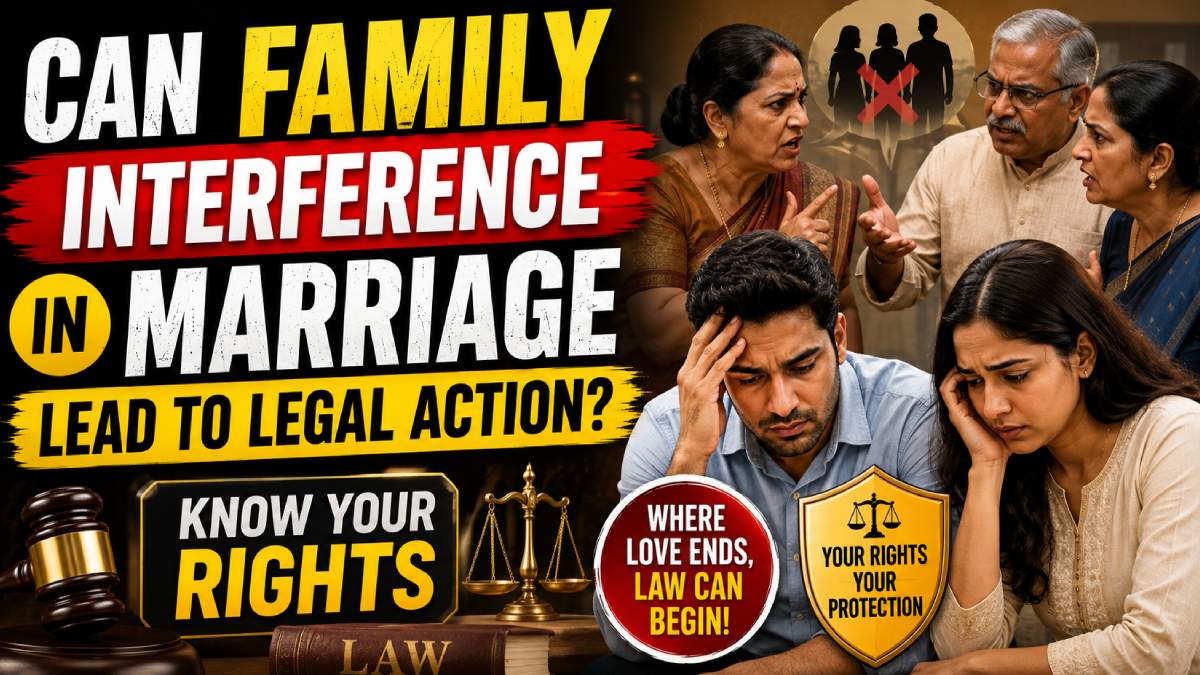
Family is a pillar of marriage, but when interference is persistent harassment or deliberate attempts to damage the relationship, legal action can take place. Indian law recognizes that mental cruelty, not just physical abuse, can be a ground for legal action in some circumstances.
Mental Cruelty Under Indian Law
Under section 498A of the Indian Penal Code (IPC), which now operates under the Bharatiya Nyaya Sanhita (BNS) framework for offences committed after the new criminal laws came into force, cruelty by a husband or his relatives is a punishable offence. It previously carried a punishment of up to three years' imprisonment and a fine.
Related Articles


Mental cruelty might mean repeated harassment, intimidation, humiliation, or a spouse’s emotional distress. If a family member continues to instigate disputes, spread false information, or try to sabotage a marriage, such conduct can be considered by a court in the context of mental cruelty.
Evidence Is Essential
While the law does protect against genuine harassment, courts have repeatedly emphasized that allegations alone are not enough. Evidence that is credible to make such claims—messages, emails, audio or video recordings (where legally permitted), witness testimony, medical records, or other evidence that supports the allegations.
Related Articles


The Indian courts have constantly warned of the misuse of criminal provisions and said that each case should be decided based on its own facts and evidence.
Civil Remedies for Interference in Marriage
But there is another legal aspect that has drawn attention. In September 2025, the Delhi High Court observed that a spouse may claim “alienation of affection” against a person who intentionally intrudes into or damages his or her relationship and receive money.
The court’s observation was that if intentional and wrongful interference causes demonstrable harm to a marriage, civil remedies may be available, depending on the particular facts and the applicable legal principles.
But such claims are fact-specific and are not automatic. In general, a good civil action needs a convincing case of intentional interference and harm.
Every Dispute Is Different
Not every dispute with in-laws or extended family is mental cruelty or will lead to legal action. Family disputes are common, and courts are very careful to distinguish between the routine conflict of domestic relationships and behavior that is beyond the bounds of harassment or cruelty.
As a serious marital harassment case should be documented, and any legal issue should be looked at and addressed by a professional before legal action is initiated.
Knowing how your legal rights are beneficial for your marriage and your interests, and how disputes are resolved through the correct legal process based on evidence and not on assumption can protect not just your marriage but your interests.




Comments 0