
Divorce is a legal process that formally dissolves a marriage and allows the spouses to progress by themselves under the law. In India, divorce is governed by personal laws of different religions, from the Hindu Marriage Act, 1955 to the Special Marriage Act, 1954 to the Indian Divorce Act, 1869 (which is also the law of many Christians), the Parsi Marriage and Divorce Act, and Muslim personal law, among others.
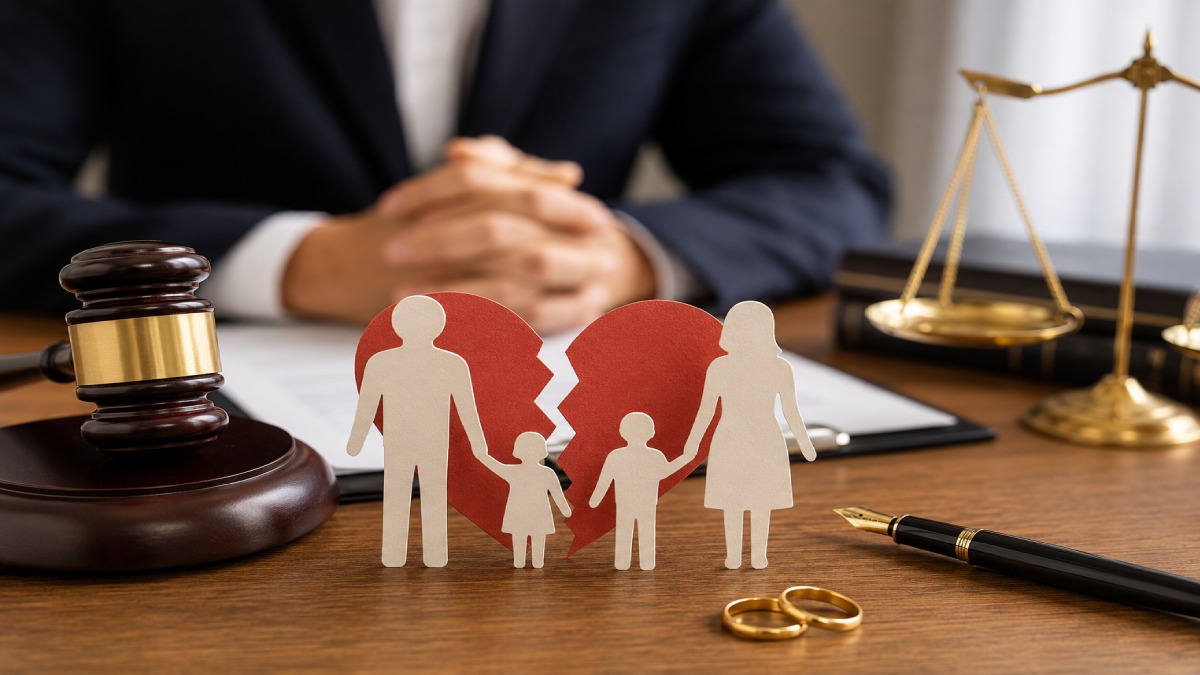
The legal system depends on the law but from a legal perspective, the goal of divorce is to be a legal means to end a marriage and to provide for child custody, maintenance, property, etc. Knowledge of the divorce process will help people to make decisions intelligently and at a time when it is a very difficult and emotionally challenging one.
In general, divorce in India falls into two categories: mutual consent divorce and contested divorce. In general, a mutual consent divorce is the easy and less painful one. It is filed if both parties have come to the conclusion that the marriage is irretrievably broken and agree to divorce. They also agree on what is the right to alimony or maintenance, child custody, visitation rights, and jointly owned assets. Many times the couple jointly files a petition at the appropriate family court.
Related Articles


The court checks the extent to which the consent has been given voluntarily and whether the settlement is fair before granting a decree of divorce in accordance with applicable legal provisions.
A contested divorce, on the other hand, is when one spouse seeks divorce but the other does not, and disputes over money, children, or the grounds for divorce are fought over. Depending on the law, cruelty, desertion, adultery, conversion of religion, mental disorder, communicable diseases in some cases, or other legal grounds recognized by the relevant law may be among the most common legal grounds of divorce. In contested cases, both sides present evidence and arguments before the court, and the process can be much longer than a mutual consent divorce.
The documents that are generally required during the divorce process are proof of marriage (a marriage certificate or wedding photographs if legal), identity and address proofs of both spouses, passport-size photographs, income documents if maintenance is involved, details of jointly owned property if relevant, and documents on children if custody is involved. All these documents might be requested as case details and applicable law is considered.
Related Articles


The time taken to get a divorce can be highly variable. Mutual consent divorces happen more quickly than contested divorces, but that time varies greatly according to legal circumstances, court rules, and case details. Contested divorces can take a lot of time because hearings, evidence, and judicial determination of disagreed issues are involved.
Child custody is one of the most sensitive aspects of divorce. Indian courts have to decide custody based on the best interests of the child, considering the child's age, education, emotional well-being, and the ability of each parent to provide a stable environment. Depending on the case, the court can grant sole custody, joint custody, or visitation rights.
Another issue is maintenance or alimony. In this case, one spouse might seek financial support from the other partner. The courts typically consider income, financial capacity, standard of living, length of marriage, health, and responsibilities of both parties in deciding maintenance or permanent alimony.
Family courts also encourage mediation and reconciliation before settling disputes over a divorce. Mediation offers a chance for spouses to resolve disputes, particularly regarding finances and child custody, without prolonged court proceedings. Even if reconciliation is not possible, mediation can help achieve a fair solution.
Individuals thinking about divorce should seek advice from a qualified legal professional who can explain the laws applicable to their specific circumstances. Legal rights vary by religion, marriage registration, property ownership, children, and the like. Support from family and friends, and even professional counselors, can also help people with the personal challenges of divorce.
Divorce is not just the end of a marriage; it is the start of a new legal and personal chapter. Knowledge of the law, documentation, and rights, and how to proceed can help minimize uncertainty and facilitate a smooth transition. People with proper legal guidance and decision-making will be able to navigate the divorce process with the best interests of both themselves and their children in mind.




Comments 0