
Family relationships are important in almost every society, but the way families interact, communicate and support one another can vary greatly across cultures. Ideas about marriage, parenting, respect, independence, responsibility and caring for older relatives are often shaped by cultural traditions, religion, history, economic circumstances and social expectations.
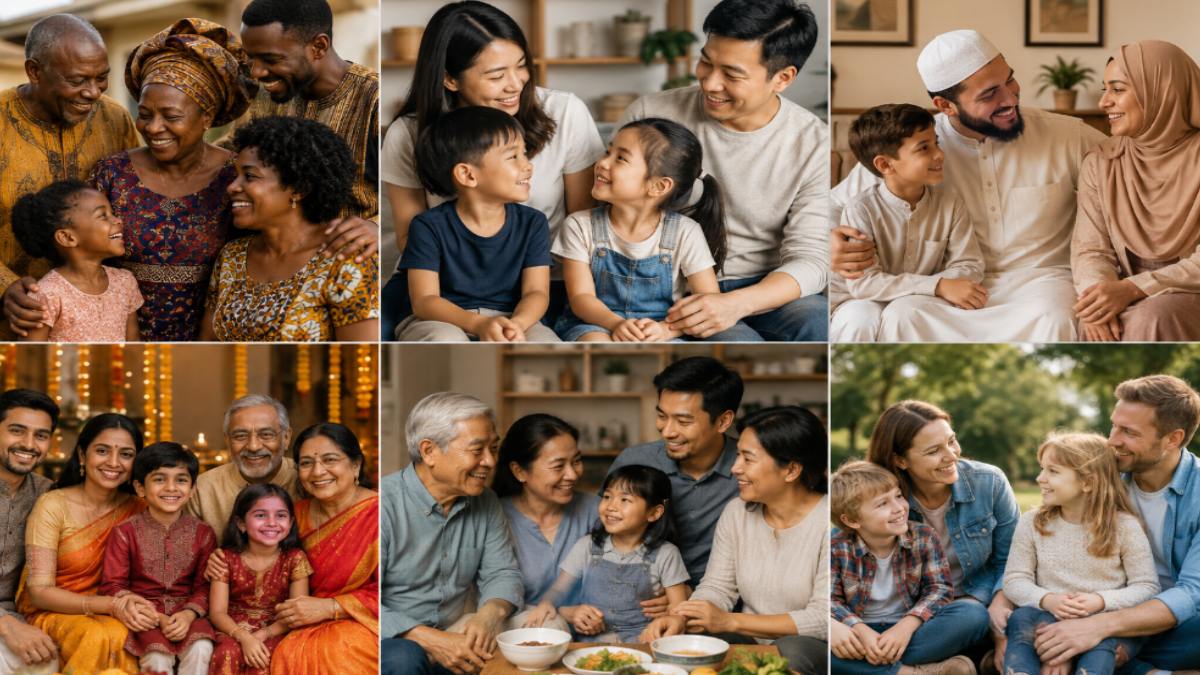
There is no single definition of a “normal” family. In some cultures, extended family members play a central role in everyday life, while others place greater emphasis on individual independence and privacy. Many families also combine traditional values with modern lifestyles, creating unique family structures that change across generations.
Understanding these differences can help people communicate more respectfully and appreciate the many ways family bonds can be formed and maintained.
Related Articles


Extended Families and Close-Knit Communities
In many parts of Asia, Africa, the Middle East, Latin America and the Mediterranean, extended family relationships have traditionally played an important role. Grandparents, aunts, uncles and cousins may remain closely involved in children's lives and major family decisions.
Living with or near relatives can provide practical support with childcare, household responsibilities and elder care. Family gatherings, celebrations and religious or cultural traditions can also reinforce a strong sense of belonging.
However, these arrangements can sometimes create challenges. Different generations may have different expectations about privacy, parenting or personal decisions. Younger family members may want greater independence, while older relatives may place greater importance on traditional responsibilities.
Related Articles


Individual Independence in Some Western Cultures
In countries such as the United States, Canada, Australia and parts of Northern and Western Europe, family life often places a stronger emphasis on individual autonomy. Children may be encouraged to become independent at a relatively early age, make personal decisions and eventually establish households of their own.
This does not mean family bonds are weak. Rather, affection and support may be expressed through emotional encouragement, regular communication and respect for personal boundaries.
Young adults moving away for education or employment may be considered a normal part of becoming independent, although families can remain closely connected through visits, phone calls and digital communication.
Parenting Styles Can Differ
Cultural expectations can influence how parents raise their children. Some families emphasise obedience, respect for elders and academic achievement, while others place greater emphasis on self-expression, independence and individual choice.
For example, parents from more collectivist cultures may encourage children to consider how their decisions affect the wider family. In more individualistic settings, children may be encouraged to express their opinions and develop personal preferences.
These are broad patterns rather than rules. Families within the same country or cultural group can have dramatically different parenting styles.
Marriage and Partner Selection
Cultural traditions also influence attitudes toward marriage and romantic relationships.
In some societies, family involvement in partner selection remains significant. Arranged marriages, for example, can take different forms, ranging from families introducing potential partners to more extensive involvement in the decision-making process.
Other cultures generally place greater emphasis on individuals choosing their own partners without substantial family involvement.
Even where traditions remain important, younger generations may negotiate between family expectations and personal preferences. This can sometimes lead to difficult conversations about relationships, marriage, career and lifestyle.
Caring for Older Family Members
Attitudes toward ageing and elder care also vary. In many cultures, caring for ageing parents within the family is considered an important responsibility. Adult children may live with their parents or remain nearby so they can provide practical and emotional support.
In other societies, older adults may be more likely to live independently or use professional residential or home-care services.
Neither approach automatically guarantees better family relationships. The quality of care, emotional connection, financial resources and individual preferences all matter.
Communication Within Families
Family communication can also reflect cultural expectations. Some cultures encourage direct discussion of personal feelings, while others may communicate affection and concern more indirectly through actions and responsibilities.
For instance, preparing meals, helping financially or taking care of household tasks may be viewed as expressions of love in some families.
Differences in communication styles can occasionally cause misunderstandings, particularly in multicultural families. One person may interpret indirect communication as caring and respectful, while another may see it as avoiding an important conversation.
Respect for Elders and Family Authority
Respect for older relatives is highly valued in many cultures. Elders may be viewed as sources of wisdom and experience, and younger family members may be expected to listen to their advice.
Other cultures may place more emphasis on equality between generations, with parents and adult children communicating more like peers.
As societies change, traditional ideas about authority are also evolving. Families increasingly have to negotiate how much influence parents and grandparents should have over decisions made by younger adults.
Religion and Family Traditions
Religion can play an important role in shaping family relationships. Religious beliefs may influence marriage ceremonies, parenting practices, celebrations, gender roles, dietary customs and expectations surrounding family responsibilities.
Festivals and rituals can provide opportunities for relatives to reconnect and pass cultural traditions to younger generations. These practices can become particularly meaningful for families living away from their ancestral communities.
Multicultural Families
Global migration, international education and intercultural relationships have created increasingly diverse families. Partners from different cultural backgrounds may bring different expectations about money, parenting, holidays, household responsibilities and relationships with relatives.
Multicultural families can benefit from openly discussing these differences rather than assuming that one person's traditions are automatically understood by the other.
Creating new family traditions can also help combine elements from both backgrounds while allowing each person to maintain a connection to their heritage.
How Modern Life Is Changing Family Relationships
Technology, urbanisation, migration and changing attitudes toward gender and work are influencing family relationships worldwide.
Video calls and messaging apps allow relatives who live in different countries to remain involved in everyday life. At the same time, demanding work schedules and geographic distance can make traditional family gatherings more difficult.
Women and men are also increasingly sharing responsibilities that were once strongly associated with particular genders. Younger generations may question expectations that previous generations accepted without discussion.
Why Cultural Understanding Matters
Learning about different approaches to family life can reduce stereotypes and encourage empathy. A family practice that seems unusual from one cultural perspective may have a long history and deep meaning within another.
At the same time, cultural traditions should not be used to excuse harmful behaviour. Healthy family relationships require respect, consent, safety and the ability to establish reasonable boundaries.
The goal of cultural understanding is not to decide which family structure is “best”. It is to recognise that families can express love, responsibility and belonging in many different ways.
Different cultures approach family relationships through a wide range of traditions and values. From close-knit extended families to households that prioritise individual independence, each approach reflects a combination of history, social expectations and changing lifestyles.
Parenting, marriage, elder care, communication and family responsibilities may look different from one society to another, but the desire for connection and support is widely shared.
As families become increasingly multicultural and geographically dispersed, understanding cultural differences can help people communicate with greater empathy. Ultimately, healthy family relationships are built not only on tradition but also on mutual respect, trust, open communication and the ability to adapt to changing circumstances.




Comments 0