
Saif Ali Khan and Kareena Kapoor Khan’s relationship has long been praised for being strong but the actor has admitted that in the early dates they had their own insecurities and difficult feelings as well. Saif spoke to me about jealousy, trust and learning to accept that someone else’s professional and personal life can also have people who can seem like potential foes.
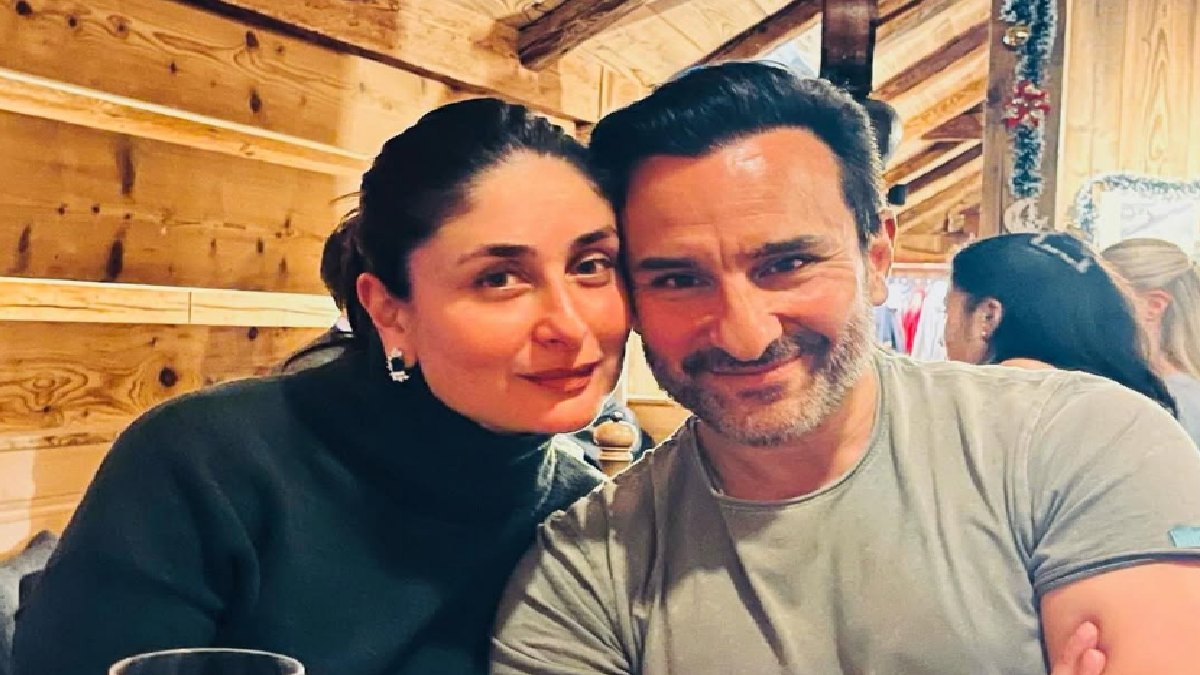
As Saif reflected on how he began his relationship with Kareena, he recalled advice he received from the actor Rani Mukerji who worked with him a lot at the time and had a good relationship with Kareena. Rani encouraged Saif to approach his relationship without being possessive or conventional notions about what a romantic partner should do.
"Just act like you’re in a relationship with a man," Rani had said to him, Saif said. The advice was not given in a chauvinistic way, he later said. He thought of it as Rani’s attempt to help him develop more trust and confidence in his relationship with Kareena.
Related Articles

Saif Ali Khan Admits He Felt Jealous And Unsure
Saif has been unusually transparent about the emotions he felt when he and Kareena became a couple. He admitted that he had trouble with Kareena’s interaction with other men and thought jealousy and insecurity were part of the learning process.
Saif said the situation was different from his previous relationships. He had dated women who were not in the film industry, so there was less professional “sharing” and fewer situations in which a partner was constantly surrounded by potential romantic or professional counterparts.
And the actor also recalled a moment when he realized that the people he might think of as professional rivals might actually be Kareena’s allies. He found that initially hard to grasp, but eventually he learned to deal with it differently.
Related Articles


“Love triumphs that,” Saif said, reflecting on how the relationship helped him overcome those feelings.
Is Jealousy Normal At The Beginning Of A Relationship?
Although Saif’s case was a public one in the public eye, relationship experts say that mild jealousy is not unusual when a relationship is new. While couples are still learning about how to be with each other at the start of dating, emotional attachment is growing and uncertainty can result in fear of losing the relationship.
Sonal Khangarot, a licensed rehabilitation counsellor and psychotherapist at The Answer Room, told Indianexpress.com that mild jealousy can be common at the beginning because people are emotionally invested in something that still feels uncertain.
However, the important factor is what someone does with that emotion.
Jealousy becomes problematic when it starts controlling behaviour. Constant questioning of a partner, checking their phone, asking for reassurance over and over again, attempting to control their friends or being emotionally reactive can point toward a deeper insecurity.
Such behaviour may be associated with unresolved self-worth issues, previous experiences with relationships, or anxious attachment patterns. Just being jealous does not necessarily mean a relationship is unhealthy. Refusing to feel or control it may be more worrying.
Trust Does Not Mean Spending Every Moment Together
One of the biggest lessons from Saif and Kareena’s early relationship is that intimacy does not mean that individuality is a requirement for intimacy either.
Khangarot said that sharing time, priorities and emotional space means understanding that a partner’s career, friendships, family and personal interests do not automatically threaten the relationship.
A good relationship allows both people to be individuals while maintaining emotional security. Partners can have separate professional circles, friendships and interests without competing for attention.
If trust is strong, couples don’t have to constantly assess who gets more time or who’s more important. A person’s sense of security shouldn’t depend on being their partner’s only priority.
How Couples Can Handle Insecurity
Difficult emotions such as jealousy and comparison don’t have to be removed completely. So, couples can learn to see what these emotions are conveying.
Khangarot says that partners should first acknowledge such feelings without shame. A non-defensive conversation can help identify the trigger and prevent an emotional reaction from turning into conflict.
If a person is not going to blame a partner for the feeling and you are going to say, “You made me feel this way,” talking from their perspective will be more useful. Saying, “This situation triggered an insecurity in me,” opens the discussion instead of accusation.
Reassurance can also help, but it can’t be a one-way street. Long-term emotional security comes from a relationship where trust is developed, boundaries are well established and a partner’s independence does not devalue the relationship.
Saif’s reflections on his early relationship with Kareena are a reminder that even good relationships can have jealousy and uncertainty. If couples let those feelings keep them apart and not move them closer, they will be left unserved.
For Saif, the process of dealing with those uncomfortable feelings was ultimately the key to maintaining his bond with Kareena. His own case also teaches us something in a much broader relationship: Love may bring two people together but trust, communication and emotional maturity are what make them grow together.




Comments 0