
Ganesh Chaturthi is one of India's most celebrated Hindu festivals in the midst of Lord Ganesha, the beloved elephant-headed deity, who is the destroyer of obstacles, a god of wisdom and a master of prosperity and new beginnings. This festival is a mixture of ancient religious traditions, mythology, grand rituals, artistic expression and a sense of community.
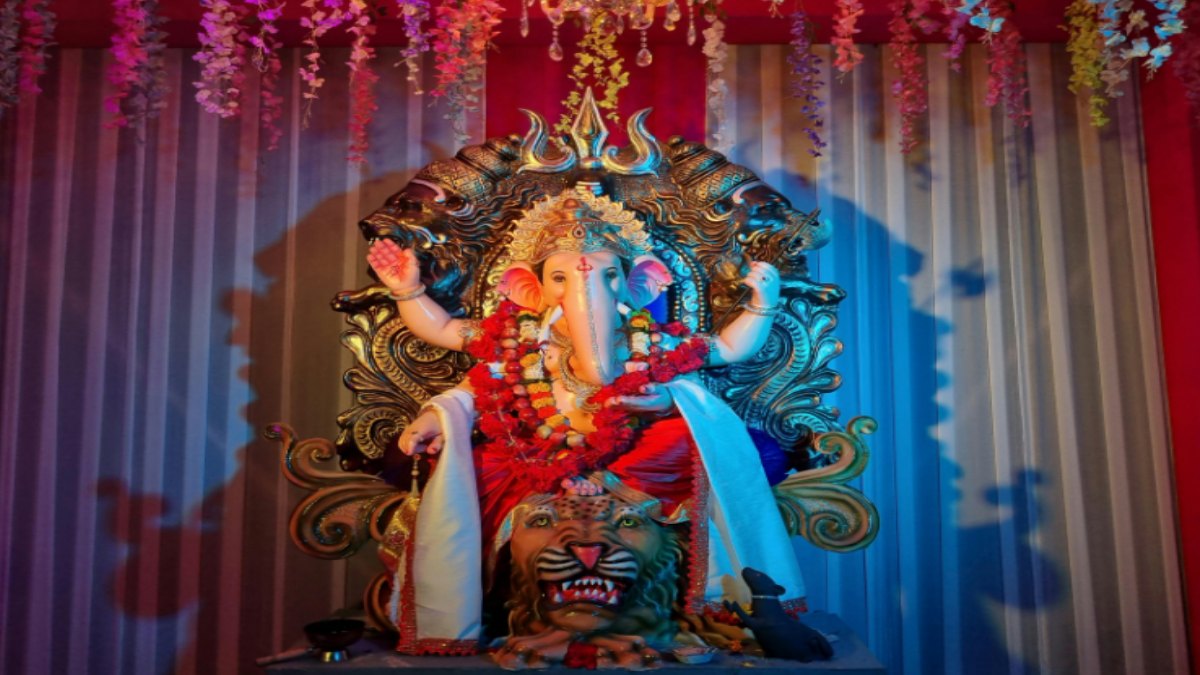
Ganesh Chaturthi is celebrated throughout India and amongst Indian people around the world; this is not only the festival of God, but also a celebration of faith, family and hope.
The Story of Lord Ganesha’s Birth
Lord Ganesha was created by Goddess Parvati according to one of the most popular Hindu legends. She has made Ganesha from sandalwood paste or turmeric and brought him to life. She instructed him to guard the entrance while she bathed.
Related Articles
When Lord Shiva, Parvati’s husband, returned and tried to come in, Ganesha stopped him because he did not recognize Shiva. A battle followed, and Shiva finally severed Ganesha’s head.
Seeing her son lifeless, Parvati was devastated and angry. Shiva promised to bring Ganesha back to life. He ordered his followers to bring the head of the first living creature they found facing north. They came back with the head of an elephant.
Shiva placed the elephant head on Ganesha’s body and brought him back to life. He then declared Ganesha worthy of being worshipped before other gods and at the beginning of important occasions. And that’s why Ganesha is traditionally invoked before starting a new venture, ceremony or journey.
Related Articles

Why is Ganesh Chaturthi celebrated
Ganesh Chaturthi is the birth or manifestation of Lord Ganesha. The festival begins on the Shukla Paksha Chaturthi, the fourth day of the waxing moon in the Hindu month of Bhadrapada, usually falling in August or September.
In this period, people believe that worshipping Ganesha, the God of wisdom and good fortune, gives them wisdom and good luck to overcome challenges. Students will often ask for his blessing for knowledge, and business owners hope for prosperity and success.
How the Festival is celebrated
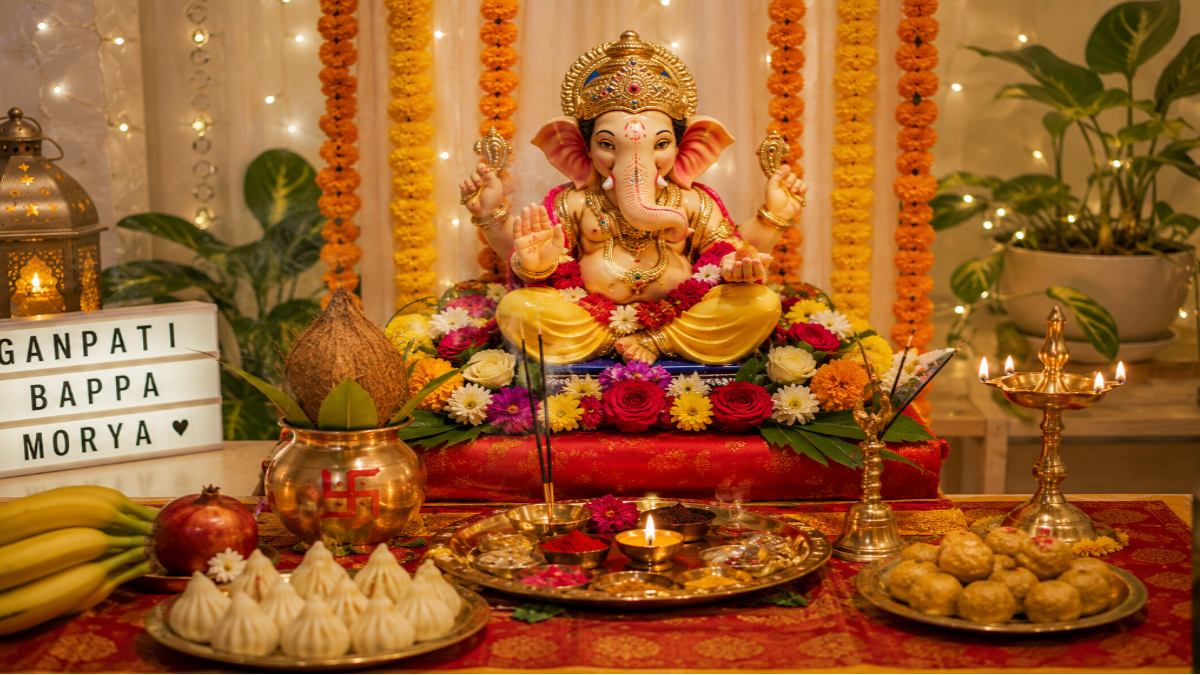
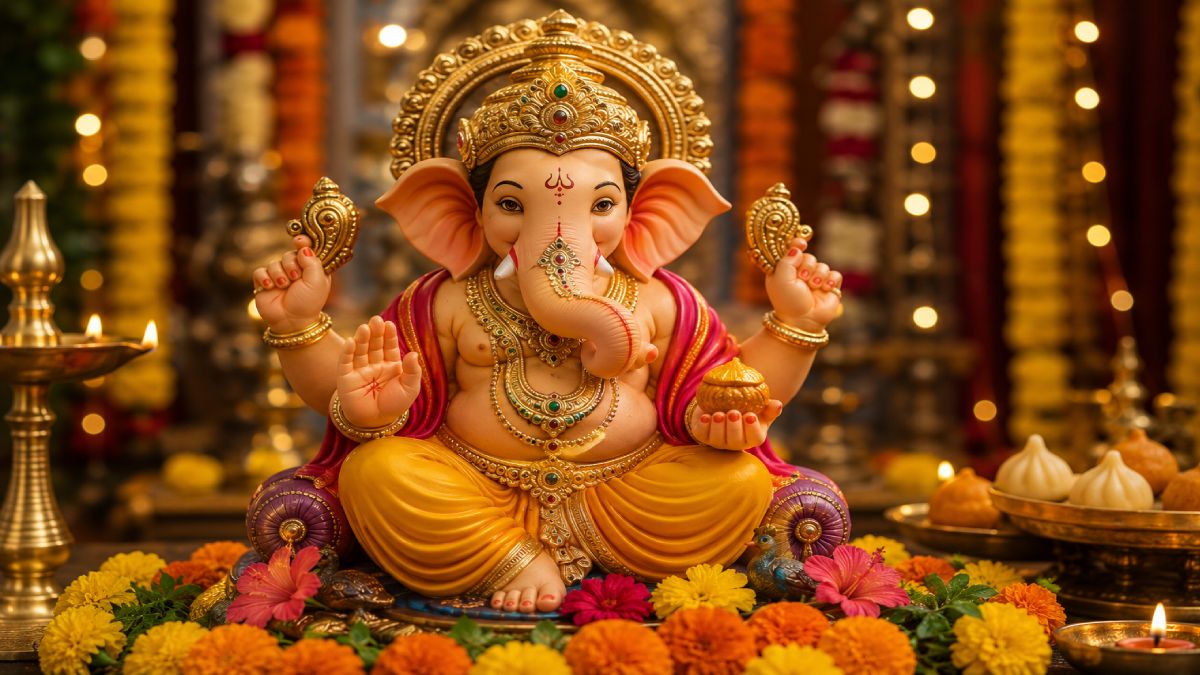
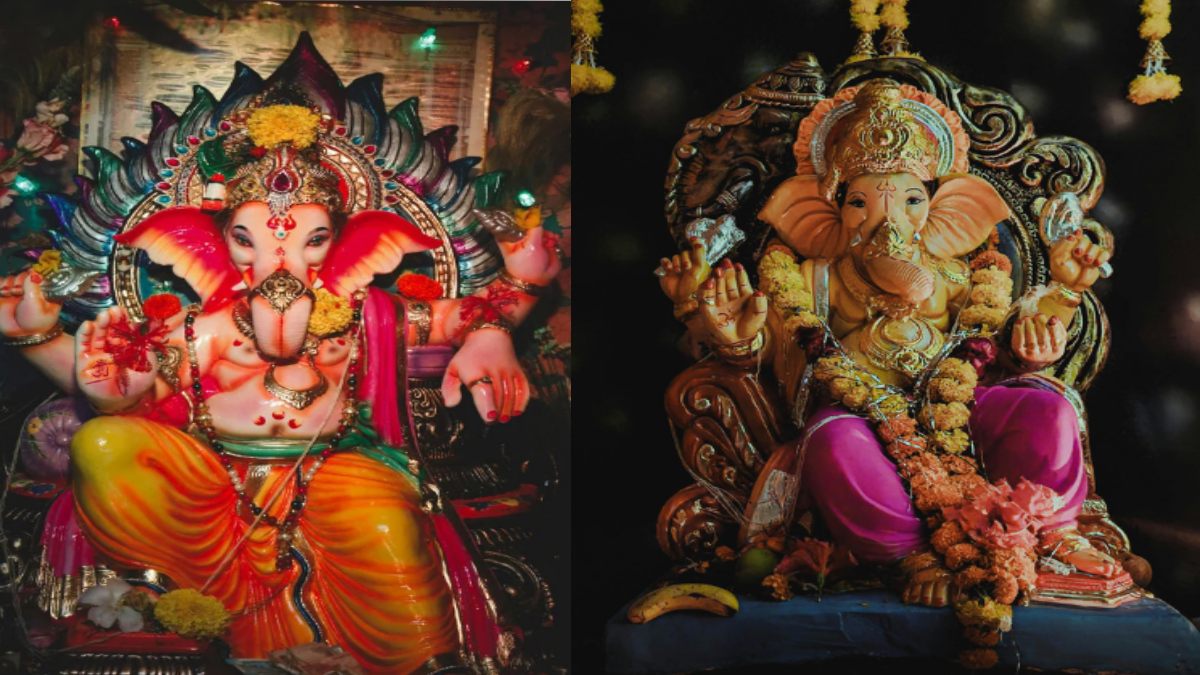
One of the most well-known traditions is the installation of a Ganesha idol in homes, temples and public pandals. The idol is festively decorated with flowers, garlands, lights and traditional ornaments.
The installation ceremony is called Pranapratishtha and involves rituals to symbolically invoke the divine presence into the idol. Devotees pray daily and offer various foods to Lord Ganesha.
Modaks are popular among Ganesha’s sweet dumplings. Modak is commonly regarded as his favourite food and represents sweetness, wisdom and spiritual fulfilment.
Other offerings may include fruits, coconut, jaggery and traditional sweets. Durva grass and red flowers are also commonly offered during worship.
The Importance of Ganesh Visarjan
Ganesh Chaturthi concludes with Ganesh Visarjan, when the idol is carried in procession and immersed in water. The idol is often followed by the devotees chanting the phrase “Ganpati Bappa Morya”.
The immersion has a deeper philosophical meaning. The idol is made of earthly materials and eventually returns to nature. It symbolizes the temporary nature of physical existence and the cycle of creation and dissolution.
Many families celebrate the festival for one and a half, three, five, seven or ten days, depending on their traditions. The tenth day, Anant Chaturdashi, is particularly associated with large-scale Ganesh Visarjan celebrations.
Ganesh Chaturthi and public celebrations
Ganesh worship has ancient roots, but the modern form of large public celebrations in Maharashtra became particularly prominent during the late 19th century. Indian freedom activist and social reformer Bal Gangadhar Tilak was instrumental in popularizing the Ganesh festival in the 1890s.
Public celebrations brought people together across social boundaries and formed an environment of shared cultural identity during British colonial rule. It evolved into the celebrated community events we see today.
Mumbai, Pune and many other parts of Maharashtra are famous for their elaborate Ganesh pandals and processions. But Ganesh Chaturthi is also celebrated with enthusiasm in Karnataka, Goa, Telangana, Andhra Pradesh, Tamil Nadu, Gujarat, Odisha and many other regions.
The Environmental Side of Ganesh Chaturthi
Environmental awareness has become a significant part of the festival in recent years. Traditional clay idols are increasingly encouraged because they can dissolve more naturally in water. Concerns have been raised about idols made of plaster of Paris and certain synthetic paints, which can contribute to water pollution.
Many communities now promote eco-friendly Ganesha idols, natural colours, artificial immersion tanks and reusable decorations. These efforts enable devotees to keep the spiritual meaning of the festival while reducing its environmental impact.
The Deeper Meaning of Ganesh Chaturthi
At its heart, Ganesh Chaturthi is a festival about new beginnings. Ganesha’s elephant head is often interpreted as a symbol of wisdom, while his large ears represent attentive listening. His association with removing obstacles reminds devotees that challenges are a natural part of life but can be approached with patience, intelligence and faith.
The festival also encourages people to come together. Families prepare food, children participate in decorations, communities organize cultural programmes and devotees gather for prayers. In this way, Ganesh Chaturthi connects mythology and spirituality with everyday life.
From the story of Ganesha’s remarkable birth to the joyous chants of the visarjan procession, every part of Ganesh Chaturthi carries symbolism. It celebrates devotion while reminding people about humility, wisdom, impermanence and the importance of returning to nature.



Comments 0