
Have you ever said something positive and then added “touch wood” to stop it jinxing itself? Maybe you said you have been healthy all year, that everything is going well at work or that you haven’t had any major problems recently. Almost reflexively you might reach for a wooden table door chair and tap it.
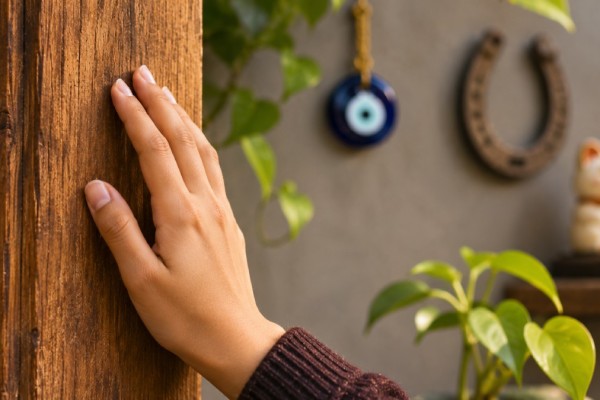
This small gesture is common to people of all ages. In India and the UK people say “touch wood” (knock on wood in America). It sounds simple but its history is folklore, religion and even an old children’s game.
But where did this superstition actually come from? There is no one-size-fits-all explanation but there are several theories that provide interesting clues.
Related Articles


What Does 'Touch Wood' Mean?
touch wood is used after someone makes a positive statement or expresses hope about something. It’s symbolic of asking for good fortune to continue (not something bad) and preventing it from happening (to begin with).
Someone might say “I haven’t fallen sick this year, touch wood”. The person then touches the wooden surface and hopes that good health continues.
The phrase is closely related to the idea of not tempting fate. People say it when they think speaking too boldly about their good fortune might somehow invite bad luck.
Related Articles


In the US we would say knock on wood. The wording is different but both mean basically the same thing.
Did the superstition come from ancient tree spirits?
One popular explanation ties the tradition to ancient European beliefs about trees.
Trees were sacred in many pre-Christian traditions and associated with spirits or supernatural powers. Oak, ash, hawthorn and holly were particularly significant in some communities.
People touched or knocked on trees in order to seek protection, express gratitude for good fortune or drive away bad spirits.
Another version is that knocking on wood stopped evil spirits from hearing people talk confidently about their good luck. Making a sound supposedly stopped these spirits interfering with people’s happiness.
Although these explanations are common, historians have not accepted them as the origin of the modern expression.
The Christian Connection: Is It Related to the Holy Cross?
Another explanation is that it has Christian roots and the wooden cross used at the crucifixion of Jesus Christ.
Touching wood means seeking divine protection. This gesture is said to have developed from the symbolic importance attached to the wooden cross.
However, there is no historical evidence that the modern usage derived from this Christian tradition.
It remains one of several explanations that have been associated with the superstition over time.
The Surprising Theory: An Old Children's Game
One particularly interesting explanation is that the modern practice goes back to a 19th century British children’s game called “Tiggy Touchwood”.
The game was a variation of tag. Players could protect themselves from being caught by touching a wooden object (tree, post or door).
So long as a player was in contact with the wooden surface he couldn’t be tagged.
British folklorist Steve Roud has said that this game may have influenced the modern superstition. Touching wood for protection could gradually move from children’s playgrounds into everyday adult conversations.
This theory is thought to be a possible explanation of how the modern custom came into being (though it does not settle the question of its earliest origins).
When Did People Start Saying 'Touch Wood'?
Although ancient beliefs are associated with it, written records of the expression are relatively recent.
The language-history website World Wide Words says an early example of the British expression touch wood was in 1899; knock on wood appeared in written records around 1905 for Americans.
Other historical references suggest that it was in use earlier during the 19th century.
The gap between the age of possible traditions and available written records makes it hard to say exactly when the expression first entered everyday language.
Why Do People Still Touch Wood Today?
Most people who use the expression today may not really believe that touching a wooden surface can change your luck. For many it has just become part of everyday conversation.
Psychologically small rituals can give reassurance when people are uncertain about the future. Saying “touch wood” may make someone feel like they have done something symbolic to protect a positive situation.
This behaviour is also related to human nature, we look for patterns and control when outcomes are uncertain.
People in different parts of the world do similar things. Some cultures have their own variations on touching iron or performing other symbolic gestures to avoid bad luck.
A Superstition That Became an Everyday Habit
Whether the expression came from beliefs about tree spirits, Christian symbols or a Victorian children’s game we don’t know.
What’s clear is that touch wood has stuck around as a familiar part of everyday language. It’s used humorously, casually or automatically after someone mentions good fortune.
There is no scientific evidence that touching wood wards off misfortune; but the habit persists because it’s a simple way to express hope and accept life’s uncertainties.
So next time you say “Everything is going well, touch wood” know that this little expression has a lot longer and more curious history than it seems at first sight.




Comments 0