
Diwali is celebrated as the festival of lights all over India. Prayers, sweets, decorations and festive get-togethers bring families and communities together but there is one tradition that has remained popular in many Indian households playing cards on Diwali night.
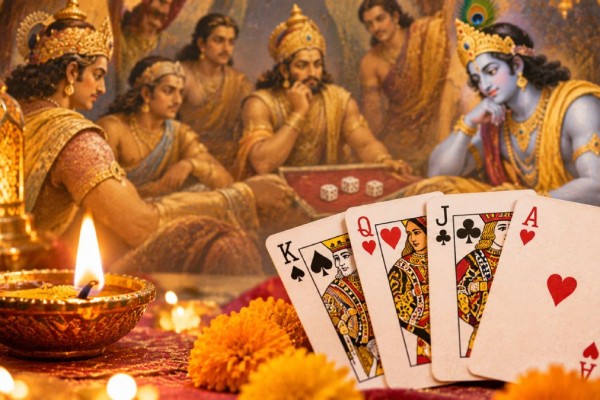
Teen Patti and Rummy to traditional card games families sit around tables after Lakshmi Puja for a few rounds of Taash. It may be seen as festive entertainment but it is also associated with an interesting story from Hindu mythology about Lord Shiva and Goddess Parvati.
The popular legend says that the divine couple once played dice and Goddess Parvati won. Over time, this mythological connection was linked with the idea that playing games of chance on Diwali brings prosperity and good luck throughout the year.
Related Articles

The Mythological Story Behind Playing Cards on Diwali
The tradition of playing games during Diwali is often associated with a story about Lord Shiva and Goddess Parvati.
Shiva and Parvati played dice game on the night of Diwali in popular Hindu mythology. Parvati won the game and the story became associated with belief that people who play games of chance on this auspicious occasion will be prosperous throughout the year.
The legend is connected to the religious and cultural traditions surrounding Diwali (the festival being associated with wealth, fortune and Goddess Lakshmi).
Related Articles


There are different versions of the story in different religions and cultures but the central idea is the divine game between Shiva and Parvati and its association with the custom of playing games during the festival.
From Ancient Dice Games to Modern Playing Cards
Interestingly, the mythological story is about dice and not modern playing cards.
Traditional Indian games like Chaupar (dice) and Pachisi (boards) were played with dice, boards and strategic movement of playing pieces. They were popular forms of entertainment as well as appearing in ancient Indian literature and mythology.
The Mahabharata, for example, has the famous dice game between Yudhishthira and Kauravas. This game resulted in Pandavas losing their kingdom and being central to events leading up to Kurukshetra war.
Over the generations, Diwali and games of chance association continued to grow. Playing cards became part of festive gatherings (replaced or accompanying traditional dice games in many households).
Today card games like Teen Patti and Rummy are among the most familiar activities connected with Diwali celebrations.
Why Is Playing Cards on Diwali Auspicious?
The belief around Diwali card games is closely linked to prosperity and good fortune.
Goddess Lakshmi (wealth, abundance and prosperity) is worshipped during Diwali. Families say that playing games of chance after performing Lakshmi Puja symbolically invites financial good luck for the coming year.
The popular belief in the Shiva-Parvati dice legend also plays a part here.
For some households playing cards is an auspicious festive activity (not just a form of entertainment). But this is not a requirement of Hindu worship (a cultural and religious belief).
Not every Hindu family practices it, and playing cards is not an essential ritual that must be done for celebrating Diwali.
Teen Patti and Rummy: The Most Popular Diwali Card Games
Over the years, many card games have become part of Diwali celebrations. Teen Patti and Rummy are two of the most popular ones.
Teen Patti: (also known as three card poker) is played with three cards dealt to each player. Players play based on their own cards and the betting activity going on during the game.
Rummy: Rummy is a card game where cards are arranged into valid sequences and sets. Players have to watch their cards carefully and plan their moves.
In addition to these games, families play other variations of traditional card games during the holidays.
For many people these games are a way to spend time with relatives and friends, make memories and add fun to the celebrations.
What do ancient Hindu texts say about dice playing?
Diwali and dice games are associated in traditional religious literature.
The Brahma Purana is one of the texts which refer to ritual significance of dice playing during Diwali period. Historical discussions on festival also mention Shiva and Parvati’s dice game and tradition of playing games of chance.
In a Sahapedia article about Diwali traditions, researchers explain how dice playing became associated with the festival and how it continued in different communities.
Historical sculptures in the Ellora caves also show Lord Shiva and Goddess Parvati playing dice (the cultural importance of the divine game in Indian art is evident here).
These references show that the association between dice games and Hindu religious traditions has a long cultural history although it is difficult to know exactly when modern Diwali card parties evolved.
Is Gambling on Diwali a Religious Requirement?
While Diwali card games are a popular belief, gambling is not mandatory religious activity.
Some families do it as a form of entertainment and as a gesture of prosperity but should not be read as religious instruction to gamble or financial betting.
Hindu religious traditions also warn against excessive gambling. The dice episode in the Mahabharata is one of the most prominent examples of how gambling can result in financial loss, conflict and personal suffering.
Families who play Diwali card games like to keep it fun and low stakes.
At the end of the day Diwali is a festival about light, prosperity, devotion and togetherness. Families celebrate with cards or traditional games or sweets or prayers but the spirit of the festival remains the same.




Comments 0