
Pregnancy is one of the most remarkable processes in human biology. Over approximately nine months, the body undergoes significant physical and hormonal changes to support the growth of a baby and prepare for birth. Understanding the anatomy involved in pregnancy and childbirth can help expectant parents better understand what is happening inside the body throughout this journey.
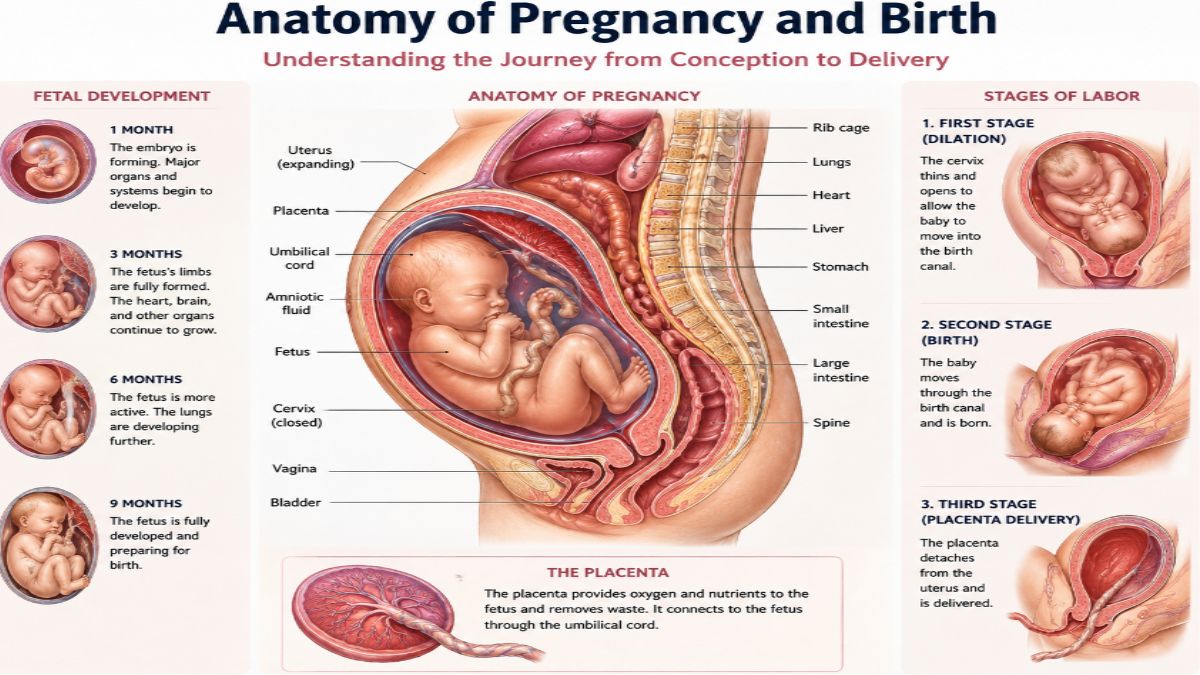
From the uterus and placenta to the cervix and birth canal, each structure has an important role. As pregnancy progresses, these organs adapt to accommodate the growing fetus and eventually support labour and delivery.
The Uterus: The Baby's Home
The uterus is a muscular, hollow organ located in the pelvis. Before pregnancy, it is relatively small, but it expands dramatically as the fetus grows.
Related Articles


The lining of the uterus, called the endometrium, changes during pregnancy to support implantation and the developing pregnancy. The muscular wall of the uterus, known as the myometrium, later plays a central role in labour by contracting to help move the baby through the birth canal.
As the uterus expands, it also changes the position of some surrounding organs. This contributes to several familiar pregnancy symptoms, including increased pressure on the bladder and changes in digestion.
The Placenta: Supporting the Pregnancy
The placenta develops during pregnancy and connects the developing fetus with the mother's circulation through the umbilical cord.
Related Articles


It performs several essential functions. The placenta helps provide oxygen and nutrients to the fetus while assisting with the removal of carbon dioxide and other waste products. It also produces hormones that help maintain pregnancy and prepare the mother's body for childbirth and breastfeeding.
The placenta remains attached to the uterine wall during pregnancy. After the baby is born, the placenta is delivered during the third stage of labour.
The Amniotic Sac and Fluid
The fetus develops inside the amniotic sac, a membrane-filled structure within the uterus. Amniotic fluid surrounds the fetus and provides cushioning.
The fluid also allows the fetus to move, which is important for normal physical development. It helps maintain a relatively stable environment and protects against some forms of physical pressure.
The amount and appearance of amniotic fluid are monitored during pregnancy when clinically indicated.
The Cervix
The cervix is the lower portion of the uterus that connects to the vagina. During most of pregnancy, it remains relatively closed and helps support the pregnancy.
As labour approaches, the cervix undergoes important changes. It gradually softens, shortens and opens, a process known as effacement and dilation.
Full dilation is generally around 10 centimetres. This opening allows the baby's head to pass from the uterus into the birth canal during vaginal delivery.
The Vagina and Birth Canal
The vagina is a muscular canal that connects the cervix with the outside of the body. During vaginal birth, it forms part of the passage through which the baby travels.
The pelvic bones and surrounding muscles also play an important role in childbirth. The size and shape of the pelvis, the baby's position and the progression of labour can all influence how delivery occurs.
The Baby During Pregnancy
Fetal development occurs continuously throughout pregnancy. In the early weeks, foundational structures and organs begin to develop. As pregnancy progresses, the fetus grows and its organs mature.
The fetus is connected to the placenta by the umbilical cord, which contains blood vessels that transport oxygen and nutrients and carry waste products between the fetus and placenta.
Healthcare professionals monitor fetal growth and wellbeing during prenatal appointments using physical examinations, ultrasound and other tests when appropriate.
What Happens During Labour
Labour is commonly described in three stages.
The first stage begins with regular contractions that lead to progressive cervical dilation. It includes an early or latent phase and an active phase. Contractions generally become stronger and closer together as labour progresses.
The second stage begins when the cervix is fully dilated and ends with the birth of the baby. During this stage, contractions and maternal pushing help move the baby through the birth canal.
The third stage begins after the baby is born and ends with delivery of the placenta. The uterus continues to contract, helping separate and deliver the placenta and reduce bleeding.
Not every labour follows exactly the same pattern. The length and experience of labour can vary considerably between individuals and pregnancies.
How the Body Prepares for Birth
Hormones have a major role in preparing the body for labour. Changes involving hormones such as oxytocin and prostaglandins contribute to uterine contractions and cervical changes.
The uterus becomes increasingly active during labour, contracting to help the cervix dilate and eventually move the baby downward. After birth, continued uterine contractions help the uterus begin returning toward its pre-pregnancy size and help control bleeding.
Vaginal Birth and Caesarean Birth
A vaginal birth involves the baby passing through the cervix and vagina. However, sometimes a caesarean birth (C-section) is recommended when vaginal delivery may pose a significant risk to the mother or baby or when labour does not progress safely.
During a caesarean birth, the baby is delivered through surgical openings made in the abdomen and uterus. The decision to perform a C-section depends on individual medical circumstances.
Understanding the Anatomy Can Build Confidence
Pregnancy and childbirth involve complex interactions between the uterus, cervix, placenta, amniotic sac, pelvic structures and hormonal systems. Each part has a specific purpose, working together to support fetal development and eventually facilitate birth.
Learning about these structures can make the physical changes of pregnancy easier to understand and can help expectant parents have more informed conversations with their obstetrician, midwife or other maternity-care professional.
Every pregnancy and birth is different. If you have questions about your anatomy, pregnancy symptoms, fetal development or plans for delivery, discuss them with your healthcare provider for advice tailored to your individual circumstances.



Comments 0