
Krishna Janmashtami is one of the most celebrated festivals of Hinduism and is the birth of Lord Krishna, the eighth incarnation of Lord Vishnu. Each year, millions of devotees in India and the world perform fasting, prayers, devotional songs, temple visits and midnight celebrations of Krishna’s divine birth. In the run up to Janmashtami 2026 many devotees have lost consciousness of whether the festival will be celebrated on September 4 or September 5. It’s because the Panchang calculations, Ashtami Tithi timings, Rohini Nakshatra and sunrise-based observances are different. However, both dates can be considered correct in the traditions and local culture.
Krishna Janmashtami 2026 will be celebrated on Friday, September 4, according to the popular Hindu calendars. The festival is associated with the Ashtami Tithi of Krishna Paksha in the month of Bhadrapada. Since Lord Krishna is believed to have been born at midnight, the fast is observed in the early evening and the main birth celebrations are performed at night when the lunar date is in place. But the exact date of observance is different according to the local Panchang and the tradition followed by a particular temple or community.
The reference to September 5 is because the Ashtami Tithi and associated astronomical calculations can extend beyond midnight. In some places and traditions, the relevant Tithi may continue into the early hours of September 5. In addition, different schools of Hindu calendar calculation use different methods to determine festival days. Some consider the Tithi to be best after midnight, while others take account of the sunrise-based calculations.
Related Articles
Rohini Nakshatra is also an important component of Krishna Janmashtami. As per Hindu tradition, Lord Krishna is born on the Rohini Nakshatra. So some devotees and temples are very fond of having Rohini on the night of Janmashtami. When Ashtami Tithi and Rohini Nakshatra cannot be exactly the same, it is not as if one date is right and the other is wrong; rather, it reflects the different traditional methods used to determine the festival.
On Janmashtami, the devotees usually fast for the entire day and break the fast according to the rules of their own custom. Some take only fruits and milk and others fast without food and water. The fast is usually continued till midnight when Lord Krishna's birth is celebrated. They then pray, take fruits, sweets and other devotional gifts and break the fast as per their local customs.
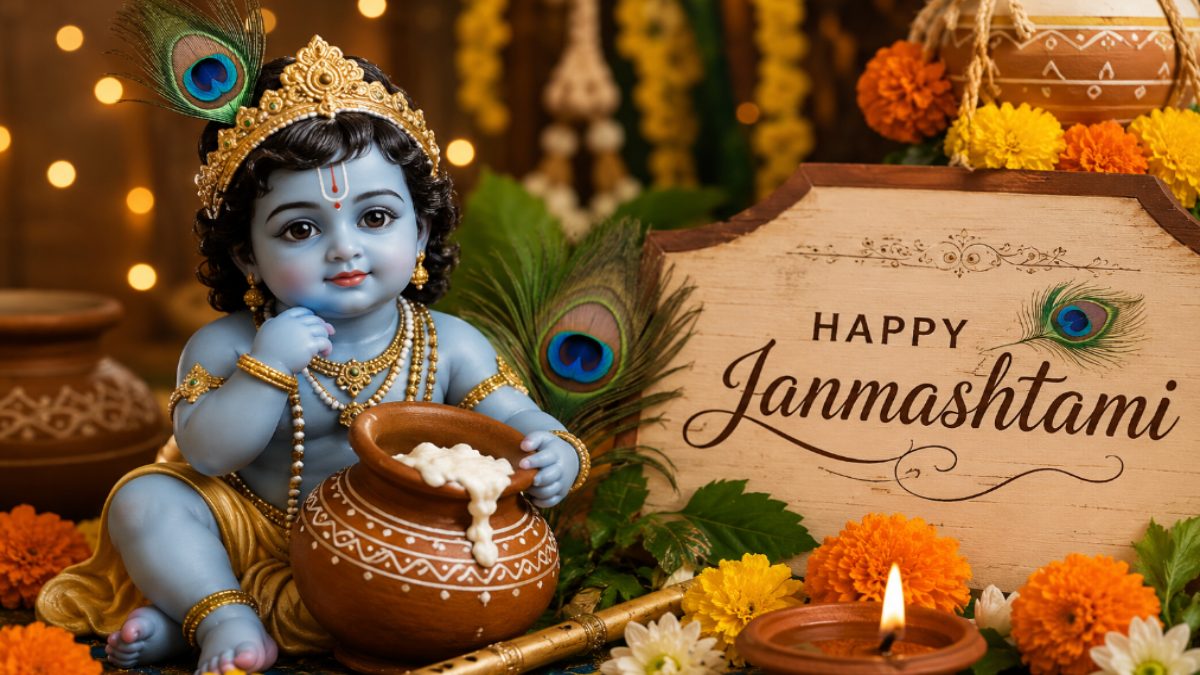
The midnight period is quite special since Lord Krishna is believed to have been born at midnight in Mathura. All the temples are festively decorated with flowers, lights and images of Krishna. At midnight, devotees meet for prayers, bhajans and celebrations. The idol of baby Krishna is placed in a decorated cradle and devotees perform ceremonial rituals while chanting devotional names of the Lord. Conch shells and bells may be sounded to celebrate the divine birth.
Related Articles


Janmashtami celebrations are most elaborate in places associated with Krishna's life - Mathura, Vrindavan, Gokul, and Dwarka. Temples in these places draw large numbers of devotees during the festival. In many parts of India, children and artists recreate scenes from Krishna's childhood through devotional performances, music and traditional dance.
One of the most celebrated traditions associated with Krishna Janmashtami is Dahi Handi, particularly in Maharashtra and parts of Western India. Inspired by stories of young Krishna and his friends stealing butter and curd from pots kept out of reach, groups of participants form human pyramids to break a pot suspended high above the ground.
The festival also has a deep spiritual significance. The Janmashtami fast itself is said to bring peace, prosperity and spiritual growth for devotees. But Krishna’s life is the very epitome of righteousness, wisdom, love and dedication in the victory of good over evil. The teachings of Krishna in the Bhagavad Gita are still inspiring millions of people from all over the world and the festival is a manifestation of the importance of faith, duty, compassion and moral values in everyday life.
If Janmashtami falls on September 4 or September 5, 2026, devotees should follow the Panchang and tradition observed in their region or by their preferred temple. September 4 is the principal date widely observed for Krishna Janmashtami in 2026, while September 5 appears in some calendars because of the continuation of the relevant Tithi and differences in observance. Ultimately, the essence of the festival remains the same—celebrating the birth of Lord Krishna with devotion, prayer and joy.



Comments 0