
Oily skin is a common skin type that results when the sebaceous glands produce too much sebum. Natural oils will protect and hydrate the skin, but when too much oil is produced you can end up with clogged pores, acne breakouts, blackheads, and an unwanted shiny look on your skin. The good news is that with the proper skincare routine and healthy lifestyle habits, oily skin can be controlled well. Here are 5 simple tips to keep your skin clean, balanced, and healthy.
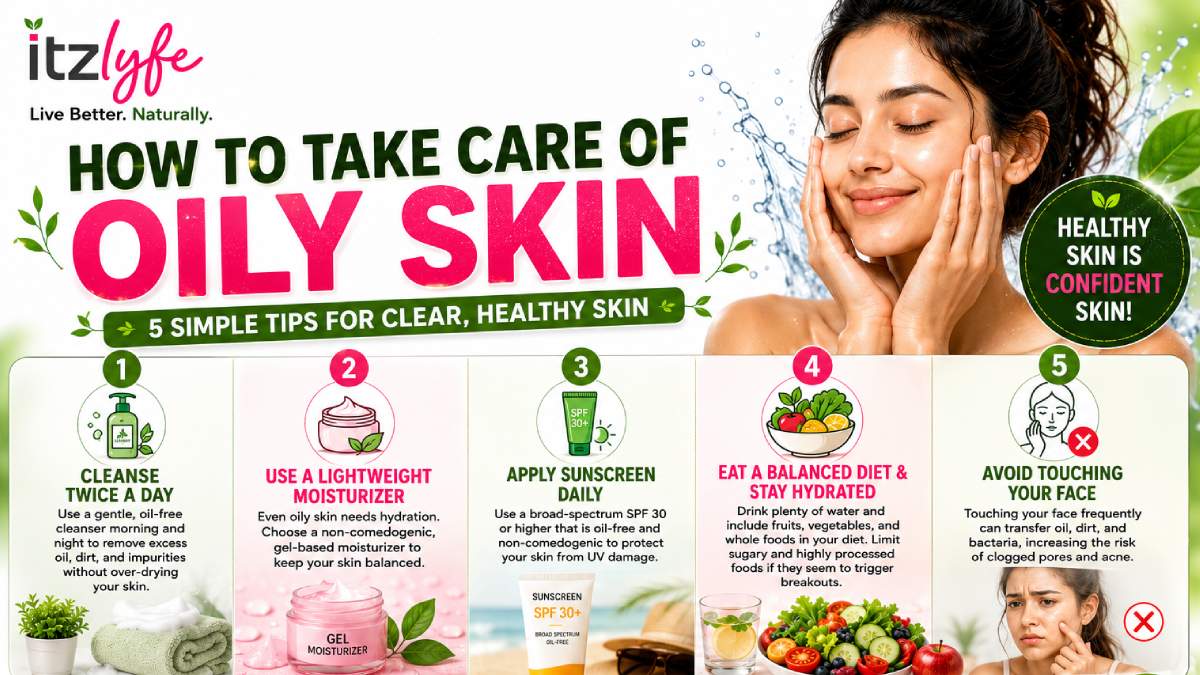
The first step in taking care of oily skin is to clean your face twice a day. Use a gentle oil-free cleanser during the morning and evening to remove oil, sweat, dirt, and makeup. Cleansing prevents clogged pores without undermining the natural skin protection. Don’t use harsh soaps or wash your face too hard because the oil on the face will irritate it and cause even more oil production.
Many people with oily skin skip moisturizer because they believe it is greasier. But oily skin still needs hydration. Choose a moisturizer that is light and non-comedogenic without clogging pores. Proper hydration will retain the natural balance of the skin and prevent the skin from becoming more oily to compensate for dryness.
Related Articles


Finally, and most importantly, sunscreen every day is a must for everyone. UV rays can damage the skin and, as a result, premature aging, pigmentation, and skin cancer are more likely to occur. We recommend applying a broad-spectrum sunscreen with SPF 30 or more for oily or acne-prone skin. Oil-free, non-comedogenic sunscreens are safe to use without leaving a greasy residue.
Your daily diet also plays a very important role in skin health. You should drink lots of water to keep yourself hydrated and eat fruits, vegetables, whole grains, lean proteins, and healthy fats to keep your skin healthy. There is no one diet that prevents acne for everyone, and some people find that avoiding sugary drinks, refined carbohydrates, and highly processed foods helps improve their skin. Being aware of your individual triggers is useful.
Last but not least, don’t touch your face so much. Your hands touch dirt, oil, and bacteria all day. Touching your face frequently can transfer these impurities to your skin and put you at risk of clogged pores, irritation, and acne breakouts. No one should pick or squeeze pimples because it can cause inflammation, scarring, and infection.
Related Articles


Additionally, consider using blotting papers during the day to control excess shine without overwashing your face. Wash pillowcases, towels, and makeup brushes regularly to reduce bacteria buildup and select makeup products that are "oil-free" or "non-comedogenic."
If you have persistent acne, extremely oily skin, and/or skin irritation that you can’t manage despite a good skincare routine, consult a qualified dermatologist. They have the skills to provide treatments tailored to your specific skin type and concerns.
Oily skin has great potential to be balanced, clear, and naturally radiant if maintained with regular treatment, the right hydration system, sun protection, and healthy habits.




Comments 0