
Paryushan Parva is one of the most important and spiritually significant festivals observed by the Jain community. And in contrast with festivals which are primarily associated with elaborate celebrations, Paryushan is really all about self-discipline, introspection, forgiveness, compassion and purification of the soul. In this time people who are devoted to prayer, meditation, fasting, scriptural study and review of thoughts and actions are more active.
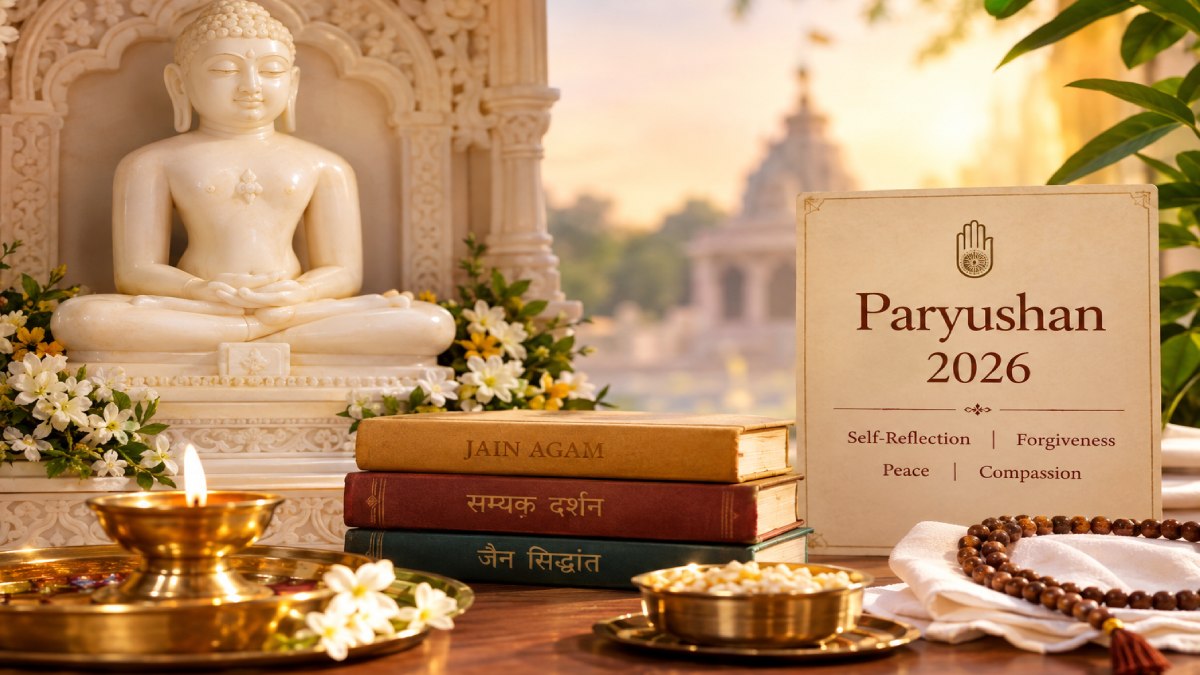
Paryushan will once again bring Jain families and communities together for a spiritual renewal in 2026. The exact dates and duration can differ between the major Jain traditions, particularly Shwetambar and Digambar Jain communities, so devotees generally follow the calendar and customs of their respective tradition.
When is Paryushan 2026?
Paryushan is observed in the month of Bhadrapada according to the Jain calendar which is usually in August or September. Shwetambar community observes Paryushan for 8 days while Digambar community has a period named Das Lakshan Parva which is to be celebrated for 10 days.
Related Articles

In 2026 Paryushan falls in the late-August to early-September period. Because Jain religious calendars can vary by tradition and location, devotees should check their local Jain temple or community calendar for the exact observance dates.
The last day of Paryushan for many Shwetambar Jains is called Samvatsari, a day dedicated to repentance and forgiveness.
What is the significance of Paryushan?
Paryushan is associated with spiritual discipline and moving closer to one's inner self. So this festival makes devotees temporarily step away from material distractions and concentrate on spiritual development.
Related Articles
One of its core principles is self-reflection. Jains hold that we need to look at our actions, thoughts and words and analyze our actions, thoughts and words and see whether we have done harm to other living beings and what we have done that is harmful to them.
Paryushan also focuses on the Jain principle of Ahimsa or non-violence. Jain philosophy is very much in favor of protecting all forms of life. At the festival, devotees might be even more conscious of their food choices, daily activities and interactions with others.
Another important principle is Aparigraha or non-attachment. Paryushan is an opportunity to reflect on excessive attachment to possessions, desires and worldly concerns.
Important Rituals in Paryushan.
1. Fasting
Fasting is one of the most famous of Paryushan’s practices. Some devotees are fully fasting, others choose modified forms of fasting according to their health, age and spiritual practice.
Fasting is not only about not eating food. It is also about self-control and discipline and concentration as well as concentration for the spiritual. Long, hard fasting is bad for health.
2. Pratikraman
Pratikraman is a major spiritual practice during Paryushan. It involves reflecting on one's actions and seeking forgiveness for mistakes or harmful behaviour.
Devotees may recite prayers and scriptures as they think of their behavior to better themselves and to grow. The practice makes people see the mistakes they are doing and not hide them.
3. Religious Study.
Paryushan is also a time to study Jain scriptures and listen to the religious discourses. Jain devotees can pray in temples, participate in community prayers and listen to spiritual teachers.
Scriptural study is how devotees learn to apply Jain principles in one’s daily life.
4. Meditation and prayer.
Meditation and prayer are important elements of the festival. These practices promote calmness, concentration and awareness.
Devotees can spend more time meditating, in temple worship and contemplation to reduce attachment and to feel inner peace.
5. Samvatsari and forgiveness.
The last day of Paryushan is particularly significant for many Shwetambar Jains. Samvatsari is associated with annual repentance and forgiveness.
People are forgiving their family members, friends, colleagues and others who they may have hurt in the past (knowingly or unknowingly). The old term "Micchami Dukkadam" is widely used to ask for forgiveness of any hurt through thoughts, words or actions.
The practice reflects the Jain belief that true spiritual progress includes owning up to one’s own mistakes and having a forgiving attitude.
Paryushan and the message of forgiveness.
Paryushan’s message on forgiveness is that forgiveness can’t be limited to one activity. It is an encouragement for us to let go of anger, resentment and pride.
On the one hand forgiveness is humility and on the other side of that, forgiveness is compassion. All of these will improve relations and emotional and spiritual well-being at the same time.
For devotees to forgive themselves for what’s been done before in the past and make the most of this, they are supposed to have a sense of responsibility for themselves, I think.
Food and lifestyle during Paryushan.
Many Jains follow dietary restrictions during Paryushan, and based on individual practices and community traditions. Some devotees avoid root vegetables, and follow other dietary rules. Fasting and eating only during certain periods may also be observed.
The focus is on simplicity and mindful consumption rather than indulgence. Food choices are related to the larger Jain principle of reducing harm to living beings.
A Festival Focused on Inner Transformation
Paryushan is very much about internal change; not about external celebration. It is a chance to slow down and think through what you are doing and to be more compassionate and disciplined.
For Jain families, the festival is a time for community participation and to disseminate spiritual values from one generation to another. Children and younger ones can go to temple and to their parents’ temple, religious storytelling and forgiveness ceremonies.
If Paryushan 2026 comes and its message is indeed relevant beyond religious boundaries:
- Practice compassion
- Control harmful impulses
- Reduce unnecessary attachment
- Reflect on mistakes
- Forgive others
The festival is best summed up in self-discipline, non-violence, repentance and forgiveness. For devotees this is a time to clean the mind, develop spiritual knowledge and get back in touch with the spirit once more and with less of a self-grumpy attitude.


Comments 0