
Trataka, an ancient yogic practice of staring at a fixed point, has gained new interest among those looking for traditional techniques to improve concentration and calm the mind. Often practiced in front of a candle flame, it is intended to get the attention there (only one point, and not distracted over the many) and not the mind to move from one thing to another.
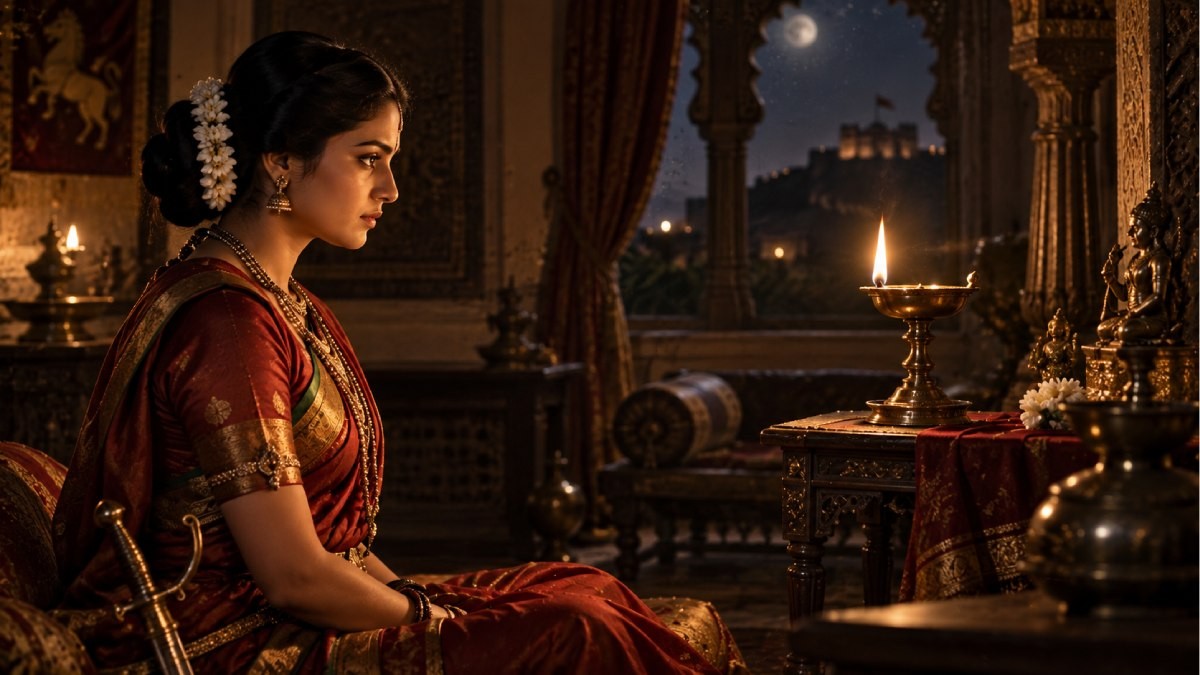
The practice is associated with historical figures and traditional accounts of disciplined mental training, including the claims about Rani Lakshmibai. But Trataka is well-known in classical yoga literature, and there is relatively little evidence that Rani Lakshmibai herself practiced the technique. Hence, the association should be viewed as traditional or reported, not as fact.
Trataka has a much older history. It is described in classical Hatha Yoga literature, including the Hatha Yoga Pradipika where steady gazing is included among traditional yogic cleansing practices.
Related Articles

What is Trataka meditation?
Trataka in Sanskrit means steady or fixed gazing. For a person to sit comfortably and keep their eyes on one object without purposefully stepping away from the object they look at.
A candle flame is the most popular object, as it provides a small, bright and relatively stable point of focus. Practitioners can stare at the flame up to a point of focus until the eyes naturally start to water, but beginners are advised not to force themselves or cause discomfort.
Trataka can also involve focusing on a small dot, symbol, image or another fixed object. Traditional descriptions distinguish between external gazing and internal concentration; the practitioner closes the eyes and watches the visual impression that remains.
Related Articles
The basic idea is simple: instead of following every thought that comes in the mind, attention is repeatedly brought back to one point.
This is particularly true in Trataka as it is more closely related to concentration practice. Research on its effects is still limited, but some studies have focused on the effects of yogic visual concentration on attention and cognitive performance.
How Candle-Gazing Is Practised?
A basic version of Trataka can be performed in a quiet room with a candle placed at a comfortable distance and roughly at eye level.
The practitioner sits comfortably, keeps the body relatively still and looks gently at the flame. The goal is not to stare aggressively but to keep relaxed attention on the flame.
When thoughts come up, attention is brought back to the candle. Beginners can start with a short session rather than trying to keep their eyes open for a long period.
In classical practice, the external gazing phase may eventually be followed by closing the eyes and observing the after-image of the flame. This is a transition from focusing on an external object to internal visualisation.
The practice should not cause great eye pain or strain. Anyone with discomfort should stop rather than force the exercise.
Why is Trataka associated with concentration?
One of the central ideas in Trataka is ekagrata, or one-pointed concentration. Everyday attention is constantly pulled towards sounds, screens, conversations, memories, and other stimuli.
Candle-gazing gives the mind one object to concentrate on.
Most of the time, practitioners think that the repeated return to one point will help you be more steady and more aware. Recent research has explored the connection between Trataka and attention, but the evidence is limited and more research is needed to make such claims.
There are also contemporary accounts of candle meditation that suggest it promotes relaxation and less mental distraction. We should never present such benefits as well-known medical benefits.
The Rani Lakshmibai Connection
Rani Lakshmibai, the queen of Jhansi and one of the most prominent figures in the Indian Rebellion of 1857, is remembered for her military leadership and resistance to British rule. She was involved in the revolt and died in battle in 1858.
Stories connected to Trataka place the practice in the context of discipline, concentration, and mental strength. But not even reliable historical sources are reliable enough to show that she herself had a candle-gazing meditation routine.
That is particularly important because Trataka’s ancient origins can be documented through yoga texts, and claims about its use by one historical figure need separate evidence.
Trataka is still a traditional concentration and meditation method. It is simple, in fact. There is no sophisticated equipment and the basic exercise is simply to be quiet and just think about one point.
Trataka can be very interesting for people interested in traditional Indian meditation and this helps to demonstrate how yogic practices have long been investigating visual attention, concentration and mental stillness.



Comments 0