
Acne can be frustrating, especially when breakouts continue despite following what seems like a careful skincare routine. While hormones, genetics, medications and other factors can influence acne, some everyday skincare habits may irritate the skin or make existing breakouts worse.
Sometimes, the solution is not adding another product to your routine but simplifying it. Understanding common skincare mistakes can help you build a gentler and more consistent approach to caring for acne-prone skin.
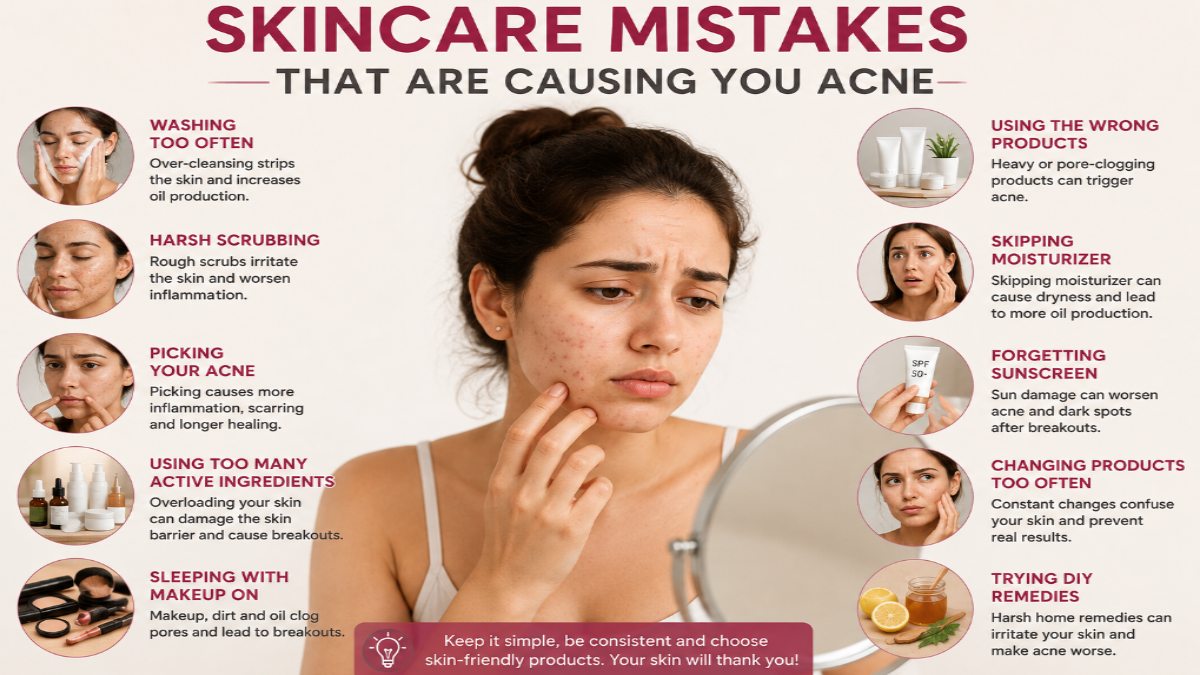
1. Washing Your Face Too Often
It may seem logical that washing your face repeatedly will remove oil and prevent acne. However, excessive cleansing can strip the skin's protective barrier and cause dryness and irritation.
Related Articles


For many people, gently cleansing the face twice a day and after heavy sweating is sufficient. Use lukewarm water and avoid aggressively rubbing the skin.
If your skin feels tight, burning or unusually dry after cleansing, your cleanser may be too harsh or you may be cleansing too frequently.
2. Scrubbing Acne Too Aggressively
Scrubbing harder does not make pimples disappear faster. Rough exfoliating brushes, abrasive scrubs and vigorous rubbing can irritate inflamed skin.
Related Articles
Instead, choose gentle skincare products and avoid physically attacking active breakouts. Acne is an inflammatory skin condition, so reducing unnecessary irritation is important.
3. Picking or Popping Pimples
One of the most tempting habits is squeezing a pimple. Although it may appear to remove the problem temporarily, picking can increase inflammation and potentially contribute to post-acne marks and scarring.
Try to keep your hands away from your face as much as possible. If a spot is particularly painful or persistent, a dermatologist can recommend appropriate treatment.
4. Using Too Many Active Ingredients
Acne can encourage people to experiment with multiple products at once. A routine might include exfoliating acids, retinoids, acne treatments, masks and other powerful ingredients.
Combining too many active products can cause irritation, dryness and a damaged skin barrier. Irritated skin may become more uncomfortable and harder to manage.
Introduce products gradually and give your skin time to adjust. If you are using prescription acne treatment, follow your dermatologist's instructions rather than adding several additional actives independently.
5. Choosing Products That Do Not Suit Your Skin
Not every popular skincare product is appropriate for every person. Heavy creams, oils, makeup or hair products may contribute to clogged pores in some acne-prone individuals.
Look for products labelled non-comedogenic when appropriate, but remember that this label does not guarantee that a product will work perfectly for everyone.
Pay attention to how your skin responds and discontinue products that consistently seem to trigger irritation or breakouts.
6. Sleeping With Makeup On
Leaving makeup on overnight can contribute to clogged pores and irritation, particularly if products are not designed for prolonged wear.
Make removing makeup part of your evening routine. Use a gentle makeup remover or cleanser that effectively removes the products without excessive rubbing.
Clean makeup brushes and sponges regularly as well, because they can accumulate oil, makeup residue and microorganisms.
7. Skipping Moisturiser
People with oily or acne-prone skin sometimes avoid moisturiser because they believe adding hydration will worsen breakouts.
However, acne treatments and frequent cleansing can make skin dry. A suitable lightweight, non-comedogenic moisturiser can help support the skin barrier.
Healthy skin does not have to feel squeaky clean or completely oil-free.
8. Forgetting Sunscreen
Sun exposure can worsen some forms of post-acne pigmentation and contribute to premature skin ageing. Sunscreen is therefore an important part of a daytime skincare routine.
Choose a broad-spectrum sunscreen that feels comfortable on your skin and is suitable for acne-prone skin if necessary.
If sunscreen repeatedly causes breakouts or irritation, try a different formulation rather than abandoning sun protection altogether.
9. Constantly Changing Your Routine
Skincare trends can make it tempting to try a new product every few days. However, constantly changing your routine makes it difficult to determine what is actually helping or irritating your skin.
Unless a product causes a clear adverse reaction, give an appropriate routine enough time to work. Acne treatments often require consistent use over weeks rather than producing overnight results.
10. Ignoring Your Hair and Hair Products
Hair products can sometimes come into contact with facial skin, particularly around the forehead and temples. Oils, styling products and conditioners may contribute to breakouts in susceptible individuals.
Keep hair clean, avoid allowing heavy styling products to remain on the face and wash pillowcases regularly.
11. Following Every DIY Skincare Trend
Social media is full of home remedies promising instant clear skin. Ingredients such as lemon juice, baking soda, toothpaste or undiluted essential oils can irritate the skin and are not reliable acne treatments.
"Natural" does not automatically mean gentle or safe. Established skincare ingredients and professional advice are generally preferable when treating persistent acne.
When Should You See a Dermatologist
If acne is painful, widespread, persistent or leaving scars, professional evaluation can make a significant difference. A dermatologist can determine the type and severity of acne and recommend evidence-based treatment.
Seek medical advice sooner if breakouts are affecting your confidence or emotional well-being. Acne is common and treatable, and you do not have to manage severe symptoms alone.
Clearer skin is not necessarily about having the longest skincare routine. In many cases, avoiding unnecessary irritation is just as important as choosing the right treatment.
Cleanse gently, moisturise appropriately, protect your skin from the sun, avoid picking, introduce active ingredients carefully and give treatments time to work. Most importantly, remember that acne is not caused by poor hygiene or a lack of effort.
If your breakouts continue despite a consistent routine, consult a dermatologist for personalised advice rather than repeatedly adding new products.




Comments 0