
Oily skin occurs when the sebaceous glands produce excess sebum, the natural oil that helps protect and lubricate the skin. While sebum is essential for maintaining the skin barrier, too much can leave the face looking shiny and may contribute to clogged pores, blackheads and acne in some people.
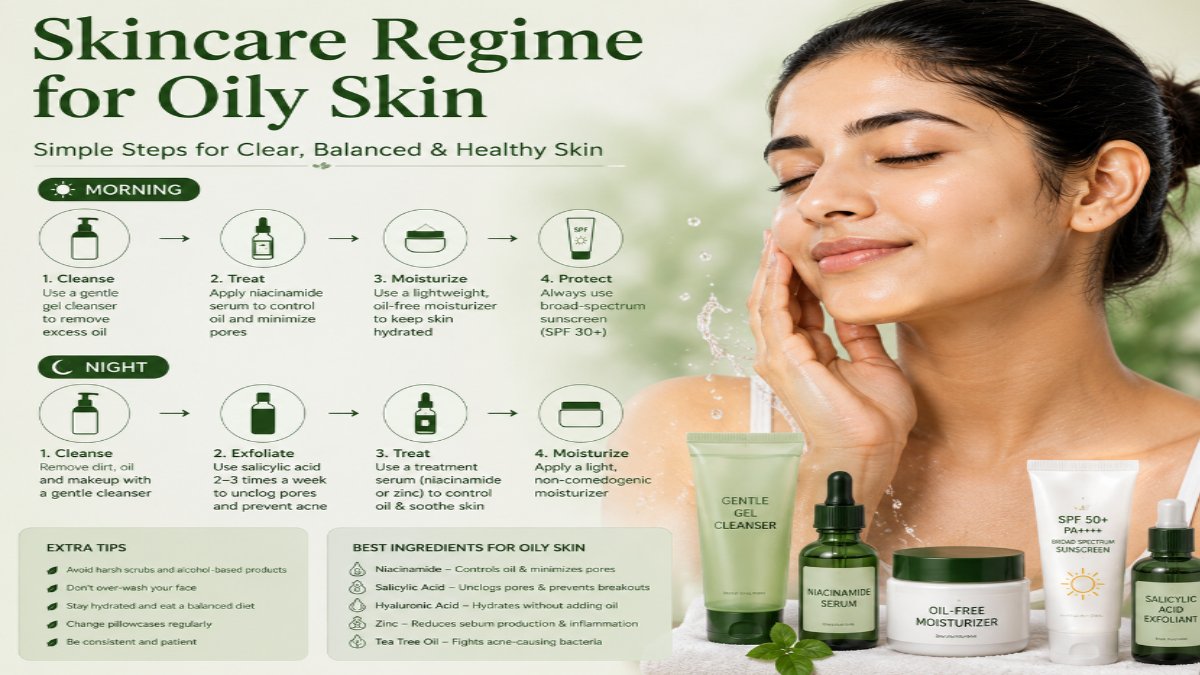
The good news is that oily skin does not need an aggressive routine. In fact, repeatedly scrubbing or stripping away natural oils can irritate the skin and potentially make the problem more difficult to manage. A consistent routine focused on gentle cleansing, lightweight hydration and sun protection is usually a better approach.
Step 1: Cleanse Gently
Start your morning and evening routine with a gentle cleanser. A cleanser can remove excess oil, sweat, dirt and makeup without unnecessarily disrupting the skin barrier.
Related Articles


Look for a product labelled non-comedogenic if you are prone to clogged pores. Gel or foaming cleansers may feel comfortable on oily skin, but avoid products that leave your face feeling extremely tight or dry after washing.
Washing your face excessively throughout the day is generally unnecessary. If your skin becomes shiny, blotting papers can be a convenient option for temporarily reducing surface oil.
Step 2: Consider Salicylic Acid
Salicylic acid is a beta hydroxy acid (BHA) commonly used in skincare products designed for oily or acne-prone skin. Because it can penetrate into pores, it may help remove dead skin cells and reduce pore congestion.
Related Articles


If you are new to salicylic acid, start with a lower-strength product and use it according to the manufacturer's directions. Overuse can cause dryness, irritation or peeling.
People with sensitive skin should introduce active ingredients gradually and stop if significant irritation develops.
Step 3: Add Niacinamide
Niacinamide, a form of vitamin B3, is another popular skincare ingredient. It can support the skin barrier and may help improve the appearance of enlarged pores and uneven skin tone.
Products containing niacinamide are available in cleansers, serums and moisturisers. You do not necessarily need a high-concentration serum to benefit from the ingredient.
As with any new product, introduce it gradually and monitor how your skin responds.
Step 4: Don't Skip Moisturiser
One of the most common mistakes people with oily skin make is avoiding moisturiser. Oily skin still needs hydration.
Choose a lightweight, non-comedogenic moisturiser. Gel-based or water-based formulas can provide hydration without feeling excessively heavy.
Keeping the skin barrier healthy is important because excessive dryness and irritation can make a skincare routine harder to tolerate.
Step 5: Use Sunscreen Every Morning
Sunscreen is essential regardless of skin type. UV exposure can contribute to premature skin ageing, pigmentation and skin damage.
For oily skin, look for a broad-spectrum sunscreen with a lightweight, non-greasy or gel-like texture if that feels more comfortable. Applying adequate sunscreen consistently is more important than choosing a product based solely on its finish.
Reapply when necessary, particularly during prolonged outdoor exposure.
Step 6: Exfoliate Carefully
Exfoliation can help remove accumulated dead skin cells, but more is not always better. Physical scrubs with rough particles may irritate the skin, particularly if you already have active acne.
A gentle chemical exfoliant may be preferable for some people. However, avoid combining multiple strong exfoliating products at once unless advised by a dermatologist.
Ingredients to Look For
Depending on your skin concerns, useful ingredients may include:
- Salicylic acid: Helps unclog pores and remove dead skin cells
- Niacinamide: Supports the skin barrier and may help with the appearance of oiliness and pores
- Hyaluronic acid: Provides lightweight hydration
- Ceramides: Help support the skin barrier
- Adapalene: A topical retinoid that can be useful for acne, but it should be introduced carefully and according to medical or product guidance
What to Avoid
Avoid constantly washing your face, using harsh alcohol-heavy products or aggressively scrubbing oily areas. These approaches can lead to irritation and dryness.
Also, remember that "oil-free" does not automatically mean a product is better for every person with oily skin. Individual tolerance and the overall formulation matter.
When to See a Dermatologist
If oily skin is accompanied by persistent acne, painful pimples, significant inflammation, scarring or dark marks, a dermatologist can recommend an appropriate treatment plan.
Prescription treatments may be helpful when over-the-counter products are not enough. A dermatologist can also determine whether another skin condition is contributing to excessive oiliness.
Managing oily skin is less about eliminating every trace of oil and more about maintaining balance. A simple routine of gentle cleansing, appropriate active ingredients, lightweight moisturiser and daily sunscreen can help keep skin comfortable and healthy-looking.
Give new products time to work, introduce active ingredients gradually and avoid changing your entire routine at once. Healthy skin does not have to feel completely matte all day the goal is a comfortable, well-maintained skin barrier rather than removing every bit of natural oil.




Comments 0