
A one-hour workout in the morning is undoubtedly better than doing no physical activity at all. Regular exercise supports cardiovascular fitness, muscle strength, metabolic health, mental wellbeing, and overall quality of life. However, as concerns about sedentary lifestyles continue to grow, health experts are emphasizing an important distinction: being physically active for a short period does not necessarily eliminate the effects of remaining inactive for most of the rest of the day.
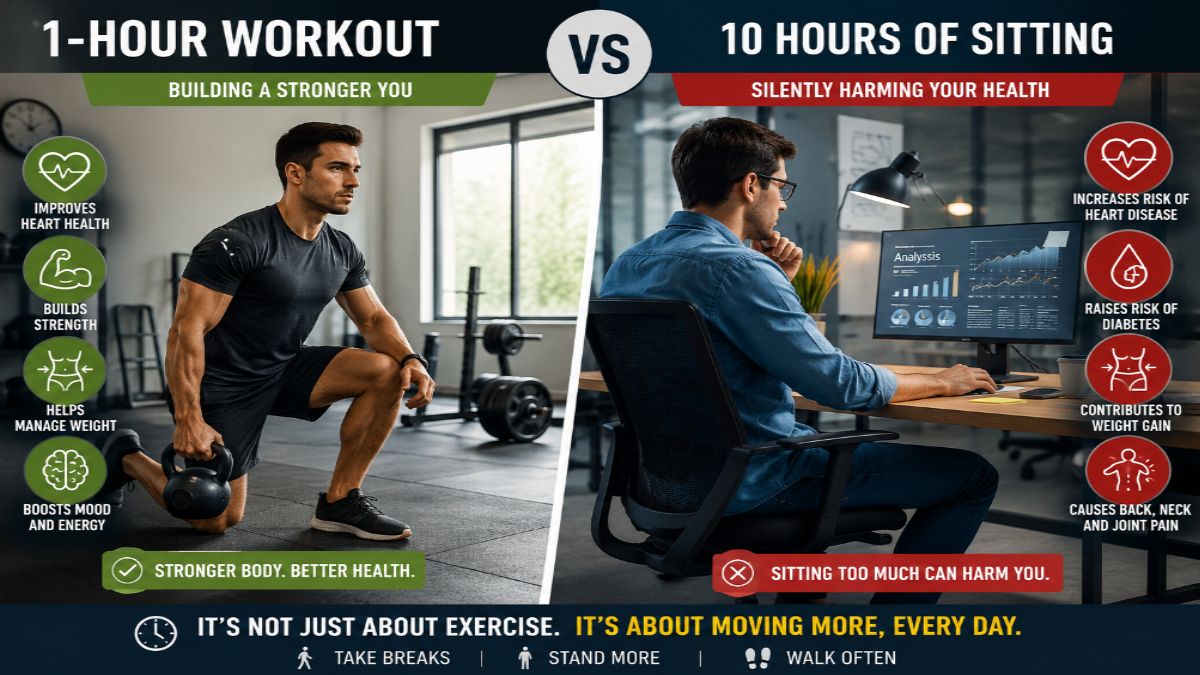
For people who spend eight, nine, or even 10 hours sitting at a desk, commuting, watching television, or using digital devices, the rest of the day can involve very little movement. This pattern can be particularly common among office workers and people whose jobs require prolonged screen time.
Why prolonged sitting can be a problem
The human body is designed to move regularly. Sitting for extended periods reduces muscle activity, particularly in the large muscles of the legs. When long periods of sitting become a routine part of daily life, they can contribute to poorer metabolic health and reduced overall physical activity.
Related Articles

Research has associated high amounts of sedentary behaviour with several health concerns, including cardiovascular disease, type 2 diabetes, obesity, musculoskeletal problems, and premature mortality. These associations can be influenced by many factors, including a person's overall activity level, diet, sleep, age, and existing health conditions.
This does not mean that sitting for a particular number of hours automatically causes disease. Instead, it highlights why the overall pattern of movement across the day matters.
A morning workout still matters
The message should not be interpreted as suggesting that people should stop exercising. Quite the opposite is true.
Related Articles


A structured morning workout can provide substantial benefits. Depending on the type and intensity, exercise can improve cardiovascular fitness, strengthen muscles and bones, support healthy body weight, improve insulin sensitivity, and enhance mood.
A brisk walk, cycling session, strength-training workout, swimming session, yoga routine, or other suitable physical activity can all contribute to a healthier lifestyle.
The key issue is what happens after the workout.
Someone may complete a 60-minute workout at 7 a.m. and then spend the next 10 hours sitting at work. Another person might exercise for 30 minutes but also walk during breaks, climb stairs, move around the workplace, perform household tasks, and take short walks throughout the day. Both people are exercising, but their total daily movement patterns are different.
Break up long periods of sitting
One practical approach is to avoid remaining seated continuously for several hours. Short movement breaks throughout the day can make a meaningful difference to overall activity.
People working at desks can stand up regularly, walk while taking phone calls, use the stairs when practical, refill their water bottle, or take a brief walk during a break. Meetings that do not require sitting may sometimes be conducted while standing or walking.
Even simple household activities can add movement to the day. Walking while listening to an audio programme, gardening, cleaning, shopping, or playing with children can contribute to daily physical activity.
The goal is not necessarily to turn every minute into exercise. Instead, it is to reduce uninterrupted sedentary time and make movement a normal part of the day.
Pay attention to workplace habits
Modern work environments can unintentionally encourage prolonged sitting. Employees may arrive at work, sit at a desk for hours, commute home while seated, and then spend the evening on a sofa or in front of a screen.
Creating a more movement-friendly routine can help. Setting reminders to stand, taking brief walking breaks, adjusting workstation arrangements, and deliberately incorporating movement into lunch or coffee breaks are relatively simple strategies.
People who work remotely can face a similar challenge because the boundaries between work and personal time may become blurred. Scheduling movement breaks can help prevent an entire working day from passing with minimal physical activity.
Combine exercise with everyday movement
A healthy routine should ideally include both planned exercise and regular everyday movement. Adults should follow established physical-activity recommendations appropriate to their age and health status, while also avoiding excessive sedentary behaviour where possible.
Strength training is particularly valuable because maintaining muscle mass and strength becomes increasingly important with age. Aerobic activities such as walking, cycling, swimming, or jogging can support cardiovascular fitness. Flexibility and balance activities may also be useful depending on individual needs.
Importantly, people do not need to make every activity intense. Moderate movement performed consistently can be more realistic and sustainable than attempting demanding workouts that are difficult to maintain.
Listen to your body
People with heart disease, diabetes, joint problems, obesity, or other medical conditions should discuss appropriate exercise levels with a healthcare professional. Anyone experiencing symptoms such as chest pain, unexplained breathlessness, dizziness, or fainting during physical activity should seek medical attention rather than attempting to exercise through those symptoms.
The larger lesson is simple: exercise is valuable, but movement should not be confined to one hour of the day. A morning workout can be an excellent foundation for health, but regularly breaking up long periods of sitting can make the rest of the day more active.
Instead of thinking, “I exercised, so I can sit all day,” a healthier mindset is, “I exercised this morning, and I will continue moving throughout the day.” Small choices standing up, walking more, taking the stairs, stretching, and interrupting long periods of sitting can collectively create a more active lifestyle.
Ultimately, good health is shaped by the complete picture of daily habits. A workout is an important piece of that picture, but it works best when combined with regular movement, nutritious food, adequate sleep, stress management, and other healthy behaviours.




Comments 0