
Kalki Jayanti is an important Hindu observance associated with Lord Kalki, who is traditionally described as the final and future avatar of Lord Vishnu. Unlike many of Vishnu’s other incarnations, Kalki is believed to appear at the end of Kali Yuga rather than belonging to a completed chapter of sacred history. This makes Kalki Jayanti particularly significant from a spiritual perspective.
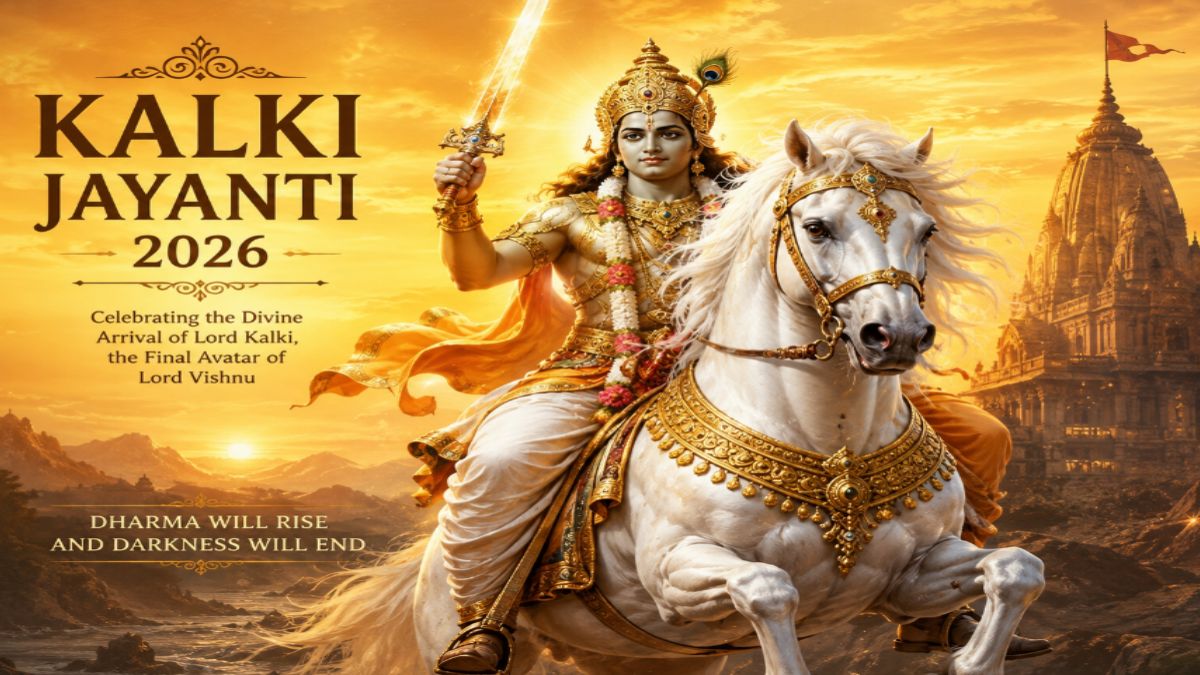
The story of Kalki is found in Hindu scriptures and later religious traditions, where he is portrayed as the divine force who will restore dharma, remove widespread adharma and help establish a renewed cosmic order.
As devotees observe Kalki Jayanti in 2026, the festival offers more than an opportunity to remember a powerful figure from Hindu mythology. It also invites reflection on timeless questions about morality, responsibility, hope and the balance between good and evil.
Related Articles


Who Is Lord Kalki
According to Hindu tradition, Lord Vishnu appears in different forms whenever cosmic order is threatened. The concept of the Dashavatara, or ten principal avatars of Vishnu, includes forms such as Matsya, Kurma, Varaha, Narasimha, Vamana, Rama, Krishna and Buddha in traditions that include Buddha in the sequence. Kalki is traditionally regarded as the tenth and final avatar.
Kalki is described as a warrior-like divine figure who will appear at the conclusion of Kali Yuga. Sacred texts and traditional descriptions associate him with a white horse and a radiant sword, powerful symbols representing the destruction of adharma and the restoration of righteousness.
The imagery surrounding Kalki is therefore highly symbolic. The sword can be understood as representing the removal of ignorance and injustice, while the white horse is associated with purity, power and divine movement.
Related Articles
What Is The Significance Of Kali Yuga
Hindu cosmology describes time through four major ages, or Yugas: Satya Yuga, Treta Yuga, Dvapara Yuga and Kali Yuga.
Satya Yuga is traditionally considered an age in which dharma is strongest. As the cosmic cycle progresses through the other Yugas, righteousness is said to gradually decline. Kali Yuga is described as the final and spiritually challenging age of the current cycle.
Descriptions of Kali Yuga focus on the weakening of ethical values, increasing materialism, conflict and the decline of truth and compassion.
The story of Kalki therefore represents the idea that decline is not permanent. Even when darkness appears overwhelming, Hindu philosophy presents cosmic existence as cyclical. The end of one phase eventually gives way to renewal.
Kalki’s Message About Dharma
One of the strongest messages associated with Kalki is the restoration of dharma. Dharma has a broad meaning and can refer to righteousness, duty, moral order and the principles that sustain individual and cosmic life.
The Kalki tradition reminds devotees that dharma is not merely an abstract religious concept. It can also be reflected in everyday choices speaking truthfully, acting responsibly, treating others with compassion and standing against injustice.
The arrival of Kalki is therefore interpreted as a divine response to the extreme decline of righteousness. His story reinforces the belief that adharma may appear powerful for a time, but it cannot permanently replace the cosmic principle of dharma.
A Powerful Message Of Hope
Perhaps the most meaningful aspect of Kalki Jayanti is its message of hope.
The imagery surrounding Kali Yuga can appear dark, but the story ultimately points toward transformation. Kalki represents the belief that destruction can be followed by renewal and that a period of moral decline does not have to define the future forever.
This idea can have relevance even outside the literal interpretation of the prophecy. Individuals often experience periods of uncertainty, conflict or personal difficulty. The story of Kalki encourages the belief that difficult circumstances can change and that positive transformation remains possible.
Cosmic Balance And The Cycle Of Time
Kalki is also connected with the Hindu understanding of cosmic balance. Vishnu is traditionally known as the preserver in the Hindu trinity of Brahma, Vishnu and Shiva. His avatars are believed to appear when preservation of dharma requires divine intervention.
The Kalki narrative takes this concept to its ultimate stage. At the conclusion of Kali Yuga, the avatar is expected to restore righteousness and prepare the way for the beginning of a new cosmic cycle.
Rather than viewing time as a straight line with a single beginning and end, Hindu cosmology often presents existence as cyclical. Creation, preservation, transformation and renewal occur repeatedly.
Kalki therefore represents not simply an ending, but a transition.
How Devotees May Observe Kalki Jayanti
Religious observances can vary according to regional traditions, family practices and individual beliefs. Devotees may worship Lord Vishnu, recite Vishnu-related prayers, read passages from sacred texts and reflect on the principles of dharma.
Some devotees may also observe fasting or visit temples dedicated to Vishnu. Acts of charity, compassion and service can provide a meaningful way of expressing the values associated with righteousness.
The emphasis should be on devotion and personal reflection rather than merely following rituals mechanically.
Why Kalki Jayanti Remains Relevant Today
The story of Lord Kalki belongs to a vast and ancient religious tradition, but its central themes remain remarkably relevant. Questions about truth, justice, responsibility and hope continue to shape human life.
Kalki Jayanti encourages people to think about their own contribution to dharma. Instead of waiting for a future divine transformation, the symbolism can inspire individuals to bring greater honesty, compassion and responsibility into their own lives.
The festival ultimately carries a profound message: darkness may be part of a larger cycle, but it is not necessarily the final destination.
For devotees, Lord Kalki represents the promise that dharma can be restored, balance can return and a new beginning can emerge from an age of decline. Kalki Jayanti 2026 can therefore be observed not only as a remembrance of Vishnu’s final avatar, but also as an opportunity to reflect on how truth, courage, hope and righteousness can shape the world around us.




Comments 0