
Pitru Paksha is a very important period in the Hindu lunar calendar to remember and honour our ancestors. Shraddha and Tarpana are rituals that families perform for gratitude and prayers for our departed family members as well. Water is given in a particular position of the hand, Pitru Teertha.
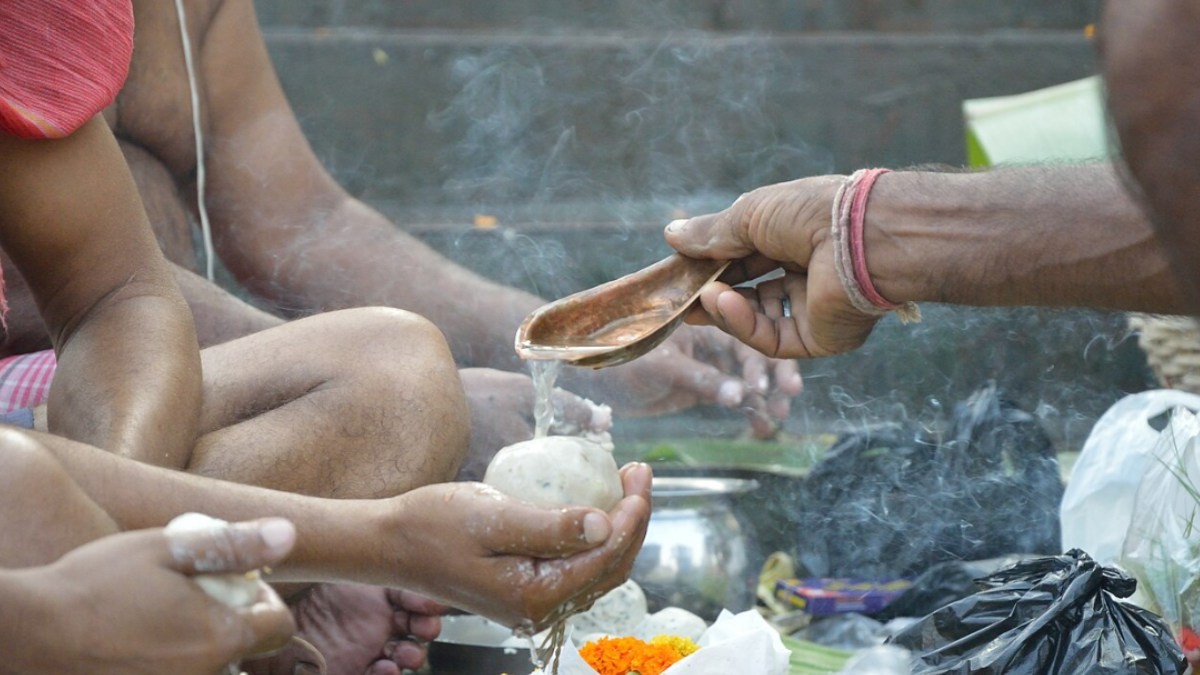
What Is Pitru Teertha?
In Hindu ritual traditions, different parts of the hand are associated with different types of offerings. Pitru Teertha refers to the part of the hand for offerings made to ancestors.
Water given to the ancestors during Tarpana is released from the area near the base of the thumb. This is different from Deva Teertha, which is for offerings to deities and other traditional hand positions during ritual practices.
Related Articles
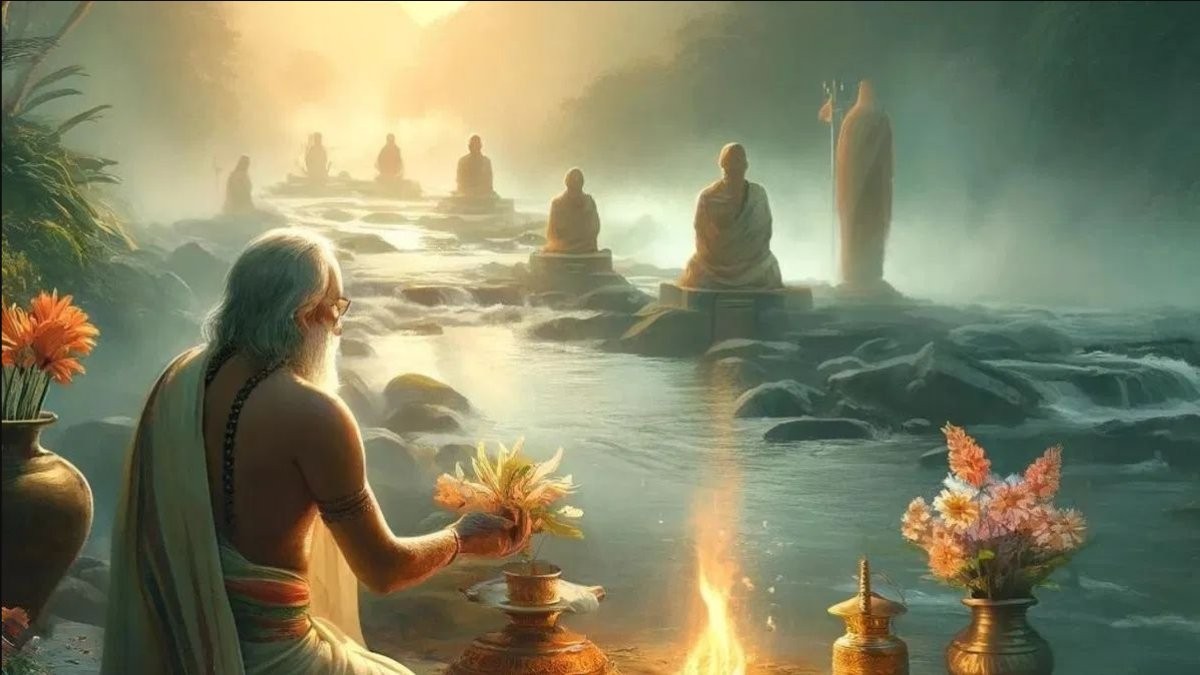

The practice represents the different nature of offerings made for ancestors from those made for other spiritual purposes.
Why Is Water Offered During Tarpana?
Water is a central part of Hindu ritual practices and often is a symbol of purification, life, and continuity. During Tarpana, water is offered to the departed ancestors.
Tarpana is associated with satisfying or offering with reverence. So devotees think of the ritual as an expression of thankfulness, gratitude, and remembrance rather than simply a water donation.
Related Articles
Family members may recite mantras or names of ancestors as they make the offerings, depending on their tradition.
Pitru Teertha and the Meaning of Shraddha
Shraddha is the word that indicates faith, sincerity, and reverence. Shraddha rituals performed during Pitru Paksha are to honour deceased ancestors and to acknowledge their place in the family’s lineage.
Water given by Pitru Teertha becomes part of this ritual symbolism. The specific hand position helps to establish that the offering is being made to the Pitrs, or ancestors, according to traditional ritual rules.
How Is Tarpana Traditionally Performed?
The details of Tarpana differ from community to community and family. In many rituals, the person performing the ritual sits in a prescribed direction, takes water in the hands, and releases it while reciting prayers or mantras dedicated to the ancestors.
Sesame seeds (til) are also used along with water in some forms of Tarpana. The exact procedure is guided by family customs or a knowledgeable priest.
Why the Hand Position Matters
Hindu rituals often assign symbolic significance to particular gestures and positions. Pitru Teertha is used for ancestral offerings, so there is a clear difference between different ritual acts.
The practice also reflects the larger sense of precision in traditional ceremonies—where direction, posture, materials, mantras, and gestures can all have meaning.
Pitru Paksha 2026
During Pitru Paksha 2026, families in India and Hindu communities around the world will be remembering their ancestors according to their regional lunar calendars. The exact Shraddha date can be set according to the tithi of the ancestor’s death and local calendar calculations.
People who follow these rituals generally follow what their family, community, or region does.
A Tradition of Remembrance
Pitru Teertha's offering of water is a long-term ceremony of remembrance. But Pitru Paksha not only helps families know their ancestral history but also to thank the ancestors for their help and keep the tradition.
Tarpana and Shraddha are times for devotees to remember the people who came before them with faith, respect, and sincerity.



Comments 0